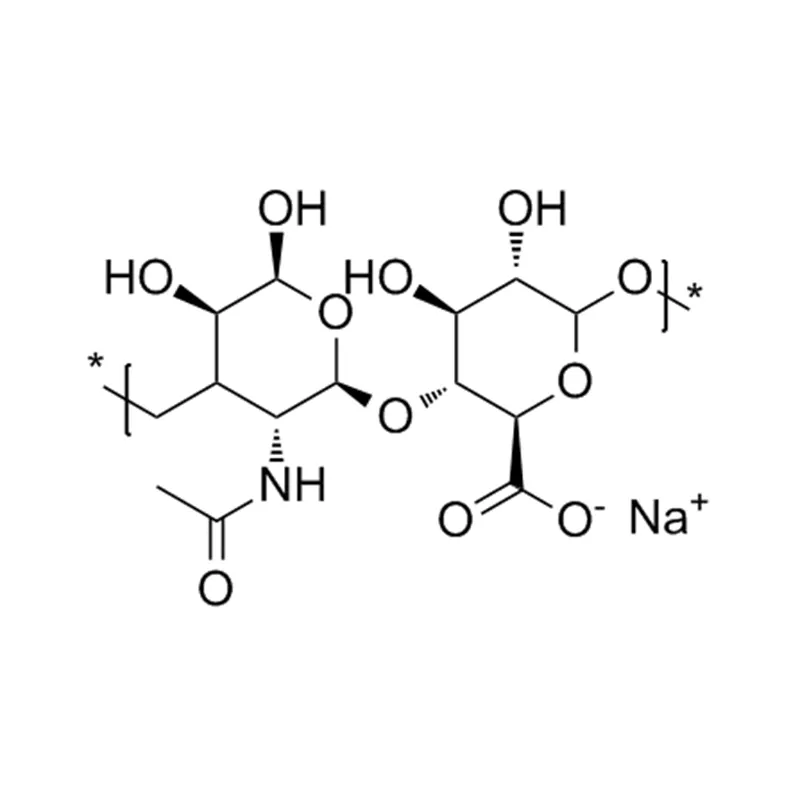
Sodium Hyaluronate
Sodium hyaluronate, also known as sodium glycosaminoglycan, is a bioactive substance widely distributed within the human organism. It is a linear high-molecular mucopolysaccharide constructed from repeated disaccharide units of glucuronic acid and N-acetylhexosamine, with a molecular weight of approximately 1,000,000.
Upon dissolution in water, sodium hyaluronate yields a viscous, elastic solution that matches the physiological pH and ionic strength of human body fluids. Benefiting from its flexible molecular conformation, the material can be smoothly administered via fine-bore syringes.
Healon is the commercial form of purified, non-inflammatory sodium hyaluronate. When 10 mg of Healon is dissolved in 1 mL normal saline, the resulting solution achieves viscosity 200,000 times higher than aqueous humor or pure saline. With protein content controlled below 0.5%, Healon is supplied as an ultra-pure and sterile solution.
Parameters
| Melting point | >209°C (dec.) |
| alpha | D25 -74° (c = 0.25 in water): Rapport et al., J. Am. Chem. Soc. 73, 2416 (1951) |
| storage temp. | -20°C |
| solubility | H2O: 5 mg/mL, clear, colorless |
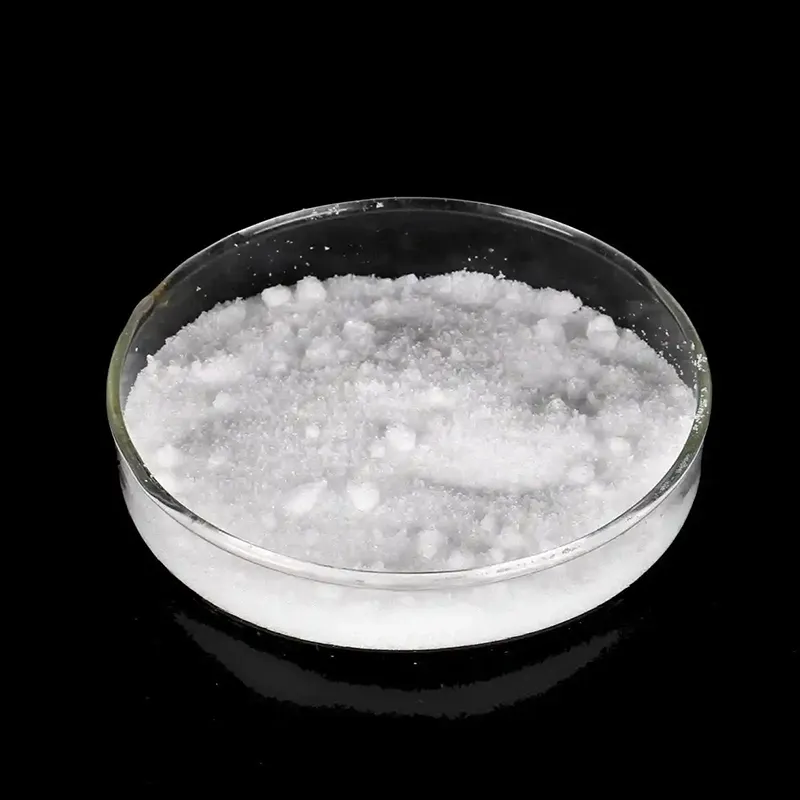
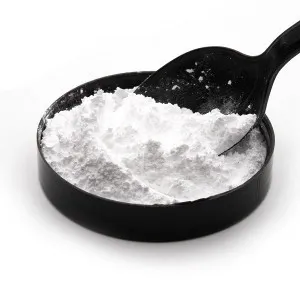
| form | Powder |
| color | White to cream |
| PH | pH(2g/l,25℃) : 5.5~7.5 |
| biological source | chicken (rooster comb) |
| Water Solubility | SOLUBLE |
| Merck | 13,4776 |
| Stability: | Stable. Incompatible with strong oxidizing agents. |
| InChI | InChI=1/C14H23NO11.Na/c1-4(17)15-5-2-6(18)7(3-16)24-14(5)26-10-8(19)9(20)13(23)25-11(10)12(21)22;/h5-11,13-14,16,18-20,23H,2-3H2,1H3,(H,15,17)(H,21,22);/q;+1/p-1/t5-,6+,7-,8-,9-,10+,11+,13-,14+;/s3 |
| InChIKey | MAKUBRYLFHZREJ-JWBQXVCJSA-M |
| SMILES | [C@@H]1(O[C@H]2[C@H](O)[C@H]([C@H](O)O[C@@H]2C(=O)[O-])O)O[C@H](CO)[C@@H](O)C[C@H]1NC(=O)C.[Na+] |&1:0,2,3,5,6,9,15,18,21,r| |
| LogP | -6.623 (est) |
| CAS DataBase Reference | 9067-32-7(CAS DataBase Reference) |
Safety Information
| Hazard Codes | B,Xi |
| Risk Statements | 36/37/38 |
| Safety Statements | 22-24/25-36/37/39-27-26 |
| WGK Germany | 3 |
| RTECS | MT7250000 |
| F | 3-10 |
| HS Code | 39139000 |
| Toxicity | LD50 oral in rabbit: > 1gm/kg |

Application Scope of Sodium Hyaluronate
Sodium hyaluronate boasts diversified grading standards and extensive applicability across a broad spectrum of industries.
It can be deployed as biochemical reagents for proteins and carbohydrates, as well as reference standards. It acts as a core raw material covering organic synthesis, cosmetics, pharmaceuticals and dietary supplements.
Functionally, it serves as a nutritional fortifier, food additive and cosmetic raw material belonging to organic sodium carboxylate. In daily chemicals, it delivers outstanding moisturizing performance. Within the pharmaceutical sector, it can be used as reaction substrates or active pharmaceutical ingredients (API), and it is an essential component for health care formulations.
Furthermore, sodium hyaluronate is applied in enzyme and coenzyme preparations, impurity reference samples, and various inorganic chemical related scenarios.