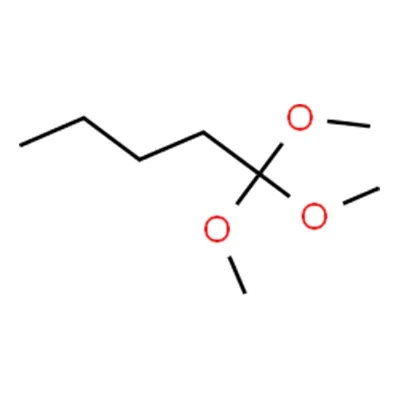
1,1,1‑Trimethoxypentane CAS#13820‑09‑2
Trimethyl orthovalerate serves as an important synthetic intermediate. It is applied in the synthesis of 1,2,4‑triazolo[1,5‑c]pyrimidine derivatives, which act as human adenosine A3 receptor ligands. Besides, it can be used as a precursor for the preparation of N‑sulfonyl imines, N‑sulfinyl imines and imidates.
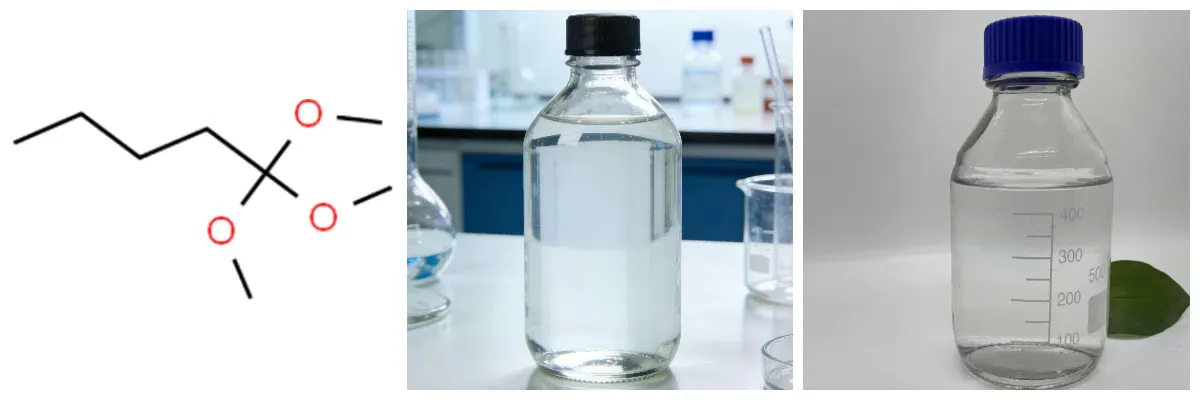
1,1,1-Trimethoxypentane Chemical Properties |
Boiling point | 164-166 °C (lit.) |
density | 0.941 g/mL at 25 °C (lit.) |
refractive index | 1.408-1.41 |
Fp | 41 °C |
storage temp. | Flammables area |
solubility | Chloroform (Slightly), DMSO, Methanol (Slightly) |
form | clear liquid |
color | Colorless to Almost colorless |
Sensitive | Moisture Sensitive |
Merck | 14,9717 |
BRN | 1739200 |
Stability: | Unstable in acidic solution, Unstable In Acidic Solution |
InChI | 1S/C8H18O3/c1-5-6-7-8(9-2,10-3)11-4/h5-7H2,1-4H3 |
InChIKey | XUXVVQKJULMMKX-UHFFFAOYSA-N |
SMILES | CCCCC(OC)(OC)OC |
CAS DataBase Reference | 13820-09-2(CAS DataBase Reference) |
NIST Chemistry Reference | Pentane, 1,1,1-trimethoxy-(13820-09-2) |
EPA Substance Registry System | Pentane, 1,1,1-trimethoxy- (13820-09-2) |
Safety Information |
Hazard Codes | Xi,F |
Risk Statements | 36/37/38-10-36/38 |
Safety Statements | 37/39-26-16-36 |
RIDADR | 1993 |
WGK Germany | 3 |
TSCA | TSCA listed |
HazardClass | 3 |
PackingGroup | III |
HS Code | 29159000 |
Storage Class | 3 - Flammable liquids |
Hazard Classifications | Eye Irrit. 2 |
Product Application of 1,1,1‑Trimethoxypentane CAS#13820‑09‑2
Trimethyl orthovalerate has been used in the preparation of:
various 9‑O‑acyl derivatives of N‑acetyl‑ and N‑glycoloyl‑neuraminic acid
2‑methyl, 2‑ethyl, 2‑propyl and 2‑butyl‑3‑benzimidazolyl‑4(3H)‑quinazolinones
Product Basic Information
Basic Identifiers
Product Name: 1,1,1‑Trimethoxypentane
Synonyms: Trimethyl orthovalerate, Orthovaleric acid trimethyl ester, Pentane,1,1,1‑trimethoxy‑, trimethyl‑valerate
CAS: 13820‑09‑2
MF: C₈H₁₈O₃
MW: 162.23
EINECS: 237‑496‑5
Appearance: Colorless to almost colorless clear liquid
MOQ (Minimum Order Quantity): 1 FCL (Full Container Load)
HS Code: 29159000
Chemical & Physical Properties
Boiling point: 164‑166 °C (lit.)
Density: 0.941 g/mL at 25 °C (lit.)
Refractive index: 1.408‑1.41
Flash point: 41 °C
Storage temp: Store in flammables designated area, cool and dark place
Solubility: Slightly soluble in chloroform and methanol; soluble in DMSO
Form: Clear liquid
Sensitivity: Moisture‑sensitive
Stability: Stable under alkaline conditions; unstable and prone to hydrolysis in acidic solution
Hazard Classification: Flammable liquid Category 3, Skin Irritant Category 2, Eye Irritant Category 2
Production Preparation Method
1,1,1‑Trimethoxypentane (Trimethyl orthovalerate) is mainly synthesized via the classic Pinner reaction route. Valeronitrile reacts with anhydrous methanol under low‑temperature condition with anhydrous hydrogen chloride as acid catalyst to generate methyl pentanimidate hydrochloride intermediate. Subsequent alcoholysis with excess methanol yields crude trimethyl orthovalerate.
The crude mixture is neutralized, washed, dried, and purified by vacuum fractional distillation to obtain finished product with typical GC purity ≥97%. Strict moisture‑isolation measures are required throughout the whole production and purification workflow to avoid hydrolysis of ortho‑ester structure.
Detailed Application Scenarios
Pharmaceutical Intermediate Synthesis
Trimethyl orthovalerate acts as a key ortho‑ester building block for pharmaceutical R&D and fine‑chemical synthesis. It participates in constructing 1,2,4‑triazolo[1,5‑c]pyrimidine derivatives for human adenosine A3 receptor ligand research. It is applied for preparing 9‑O‑acyl derivatives of N‑acetyl‑neuraminic acid and N‑glycoloyl‑neuraminic acid, as well as serial benzimidazolyl‑quinazolinone heterocyclic compounds. It also serves as critical precursor for manufacturing N‑sulfonyl imines, N‑sulfinyl imines and imidate intermediates for drug‑molecule modification.
Organic Synthetic Reagent & Protecting‑Group Agent
Thanks to its acid‑labile ortho‑ester structure, it can be used as a selective protecting‑group reagent for hydroxyl groups in multi‑step organic synthesis. It remains stable under alkaline reaction environment and can be de‑protected rapidly under mild acidic conditions, which improves synthetic selectivity for complex natural‑product and heterocyclic‑molecule synthesis.
Fine‑Chemical Research Raw Material
It is widely adopted in lab‑scale custom synthesis projects for heterocyclic compounds, new‑drug candidate screening, and carbohydrate‑derivative modification. It is seldom used in large‑volume consumer‑end products, most output serves custom fine‑chemical and pharmaceutical‑research orders.
Upstream & Downstream Product Information
Upstream Raw Materials
Core raw materials: Valeronitrile, anhydrous methanol, anhydrous hydrogen chloride gas; auxiliary materials including neutralizing agent, drying agent for post‑treatment purification.
Downstream Derivatives
Heterocyclic pharmaceutical intermediates (triazolopyrimidine, quinazolinone derivatives), N‑sulfonyl / N‑sulfinyl imines, imidate compounds, acyl‑modified neuraminic‑acid derivatives, various custom lab‑synthesized fine‑chemical molecules.
Safety & Handling Information
This substance is classified as flammable liquid, skin and eye irritant. Vapor may form flammable mixtures with air.
Skin contact: Take off contaminated clothing, rinse skin thoroughly with plenty of running water.
Eye contact: Rinse eyes continuously with large‑volume clean water for at least 15 min, seek medical assistance if irritation persists.
Inhalation: Move victim to fresh‑air area; give respiratory support if breathing difficulty occurs.
Ingestion: Do NOT induce vomiting; seek medical advice promptly.
Storage warning: Keep container tightly sealed. Store in cool, well‑ventilated flammable‑liquid warehouse. Strictly isolate from moisture, acidic substances, heat sources, open flame and strong oxidants.
Operation suggestion: Work under adequate ventilation; wear chemical‑resistant gloves, safety goggles and flame‑proof protective apparel; use non‑spark tools to prevent static‑electric ignition.
Transport classification: UN 1993, Hazard Class 3, Packing Group III.
Packaging & Transportation
Available Packaging Options
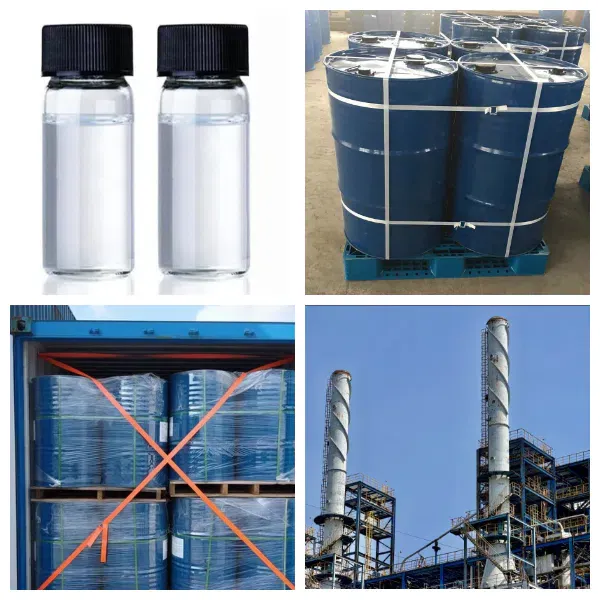
Bulk industrial packing: 200L UN‑certified steel drum for flammable liquid
Intermediate bulk container: IBC tote tank for large‑volume FCL shipment
Lab trial packing: 1L / 5L sealed fluorine‑lined plastic or metal sample container. Custom packaging solutions are acceptable upon special project requirements.
Delivery Cycle
Spot inventory order: 2‑3 working days
New customized production batch: 7‑10 working days
Full‑container sea shipment: Subject to container booking schedule.
Transport Requirement
Classified as UN1993 flammable liquid Class 3 PG III, dangerous goods shipment. Packages must be kept sealed to avoid moisture ingress. Separate transport away from acids, oxidizing agents, food and daily‑use articles. Complete shipping documents including MSDS, COA, UN‑packing certification are provided for each shipment.
After‑sales Service Support
Document service: Free supply of batch‑by‑batch COA, MSDS, technical specification sheet and UN‑packing relevant certificates.
Technical support: Our fine‑chemical technical team provides application guidance, compatibility reference and storage‑condition suggestion within 24 working hours.
Quality complaint handling: If confirmed quality defects appear after goods arrival, re‑delivery, product exchange or partial refund can be arranged. Customers need to submit photos, videos and order information within 7 days upon receipt. Damages caused by improper storage, moisture exposure or wrong operation will not be covered by replacement service, yet technical consultation will still be offered.
Sample service: Small‑quantity lab test samples can be provided for customer’s pre‑bulk‑order evaluation.
Customer Application Cases
Case 1: Pharmaceutical R&D laboratory
A pharmaceutical research institute purchases our high‑purity 1,1,1‑Trimethoxypentane as starting material for adenosine A3 receptor ligand compound synthesis. The product meets strict impurity‑control requirements for early‑stage drug‑candidate research, supporting multi‑batch lab synthesis work.
Case 2: Custom fine‑chemical synthesis enterprise
A custom‑synthesis chemical plant uses our trimethyl orthovalerate for heterocyclic quinazolinone derivative preparation. Stable GC‑purity and low‑moisture index reduce side‑reaction risks during synthesis and improve product yield consistency.
Case 3: Carbohydrate‑chemistry research institution
This product is adopted for modifying neuraminic‑acid derivatives. Its low‑moisture packaging effectively avoids ortho‑ester hydrolysis during storage and feeding, ensuring repeatability of experimental results.
FAQ Frequently Asked Questions
Q1: Why is 1,1,1‑Trimethoxypentane moisture‑sensitive?
A: It belongs to ortho‑ester chemical family. It will hydrolyze gradually when exposed to water, and hydrolysis speed accelerates sharply under acidic environment. Therefore tight sealing and moisture‑proof storage are essential.
Q2: What is the typical purity grade for commercial supply?
A: Standard industrial‑for‑synthesis grade ≥97 % (GC). Higher purity specifications can be custom‑produced according to customer requirements.
Q3: Can this product be stored under normal room temperature?
A: Short‑term storage works under cool room temperature inside tightly‑closed original drums. For long‑term stockpile, cool and dark flammable‑liquid storage area is recommended; avoid temperature fluctuation and humidity.
Q4: Is this product dangerous goods for transportation?
A: Yes. It is UN1993, Hazard Class 3 flammable liquid, Packing Group III. It must follow dangerous‑goods logistic procedures for sea, land or air shipment.
Q5: What is the shelf‑life under recommended storage?
A: Under original sealed, cool dry and moisture‑isolated storage environment, shelf‑life is 12 months. Once opened, consume as quickly as possible to prevent hydrolysis caused by moisture absorption.
Factory & Equipment Show
Our fine‑chemical workshop is equipped with low‑temperature reaction units, vacuum distillation purification systems, moisture‑isolation filling facilities and dedicated flammable‑liquid storage zone. Every batch undergoes strict GC detection, moisture test and impurity analysis before delivery to guarantee batch‑to‑batch consistency.
Fast delivery time
Inventory 2‑3 working days New production 7‑10 working days