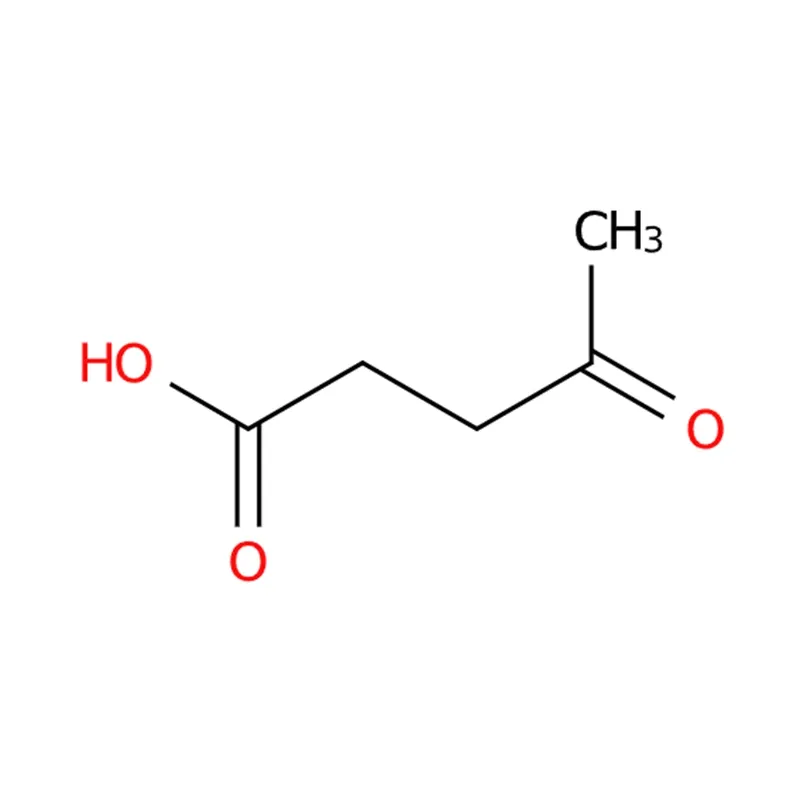
Product Description of Levulinic Acid (CAS#123‑76‑2)
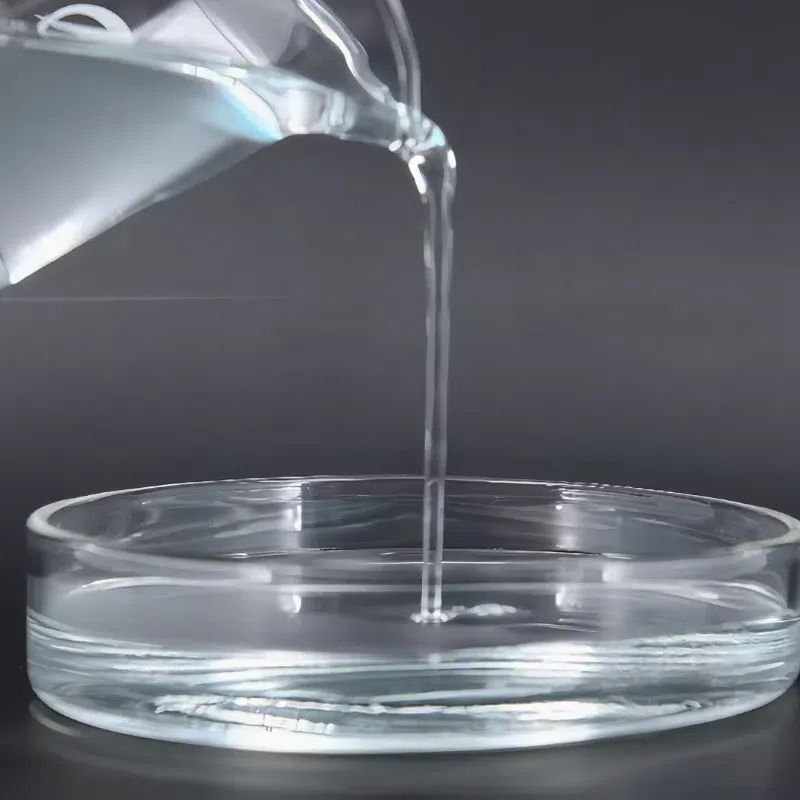
Levulinic Acid is an organic compound with molecular formula C₅H₈O₃. It features good solubility in water and a wide range of organic solvents, yet shows insolubility against non‑polar solvents such as gasoline, kerosene, turpentine and carbon tetrachloride.
It maintains favorable stability under atmospheric distillation conditions. Upon prolonged heating, it undergoes dehydration to form unsaturated γ‑lactone, offering valuable potential for further chemical synthesis and derivative development.
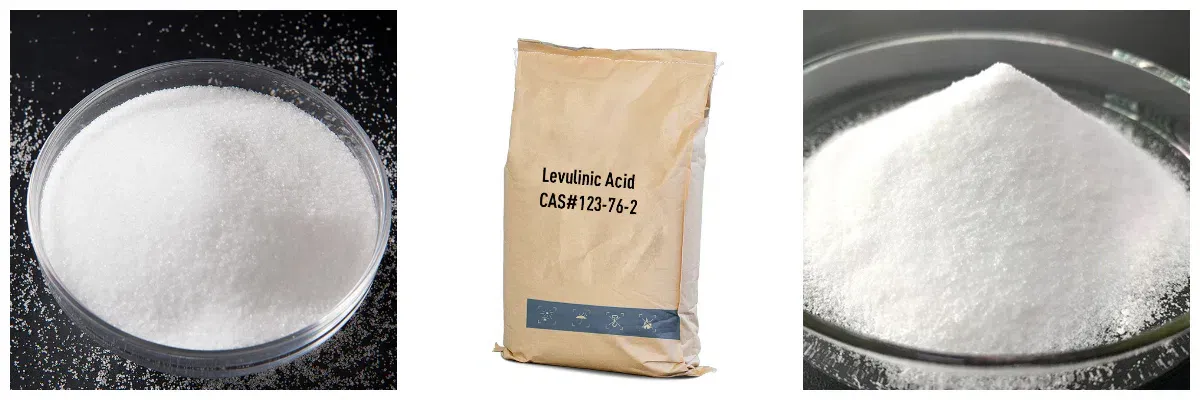
Levulinic acid Chemical Propertie
| Melting point | 30-33 °C (lit.) |
| Boiling point | 245-246 °C (lit.) |
| Density | 1.134 g/mL at 25 °C (lit.) |
| Vapor pressure | 1 mm Hg ( 102 °C) |
| Refractive index | n20/D 1.439(lit.) |
| FEMA | 2627 | LEVULINIC ACID |
| Fp | 280 °F |
| Storage temp | Store below +30°C. |
| Solubility | 675g/l |
| Form | Liquid After Melting |
| Pka | pKa 4.65(H2O,t = 25,c=0.03-0.001) (Uncertain) |
| Color | Clear yellow |
| Odor | at 100.00 %. sweet caramel acidic acetoin buttery |
| Odor Type | caramellic |
| Water Solubility | Soluble in water ( 675g/L at 20°C). |
| Sensitive | Light Sensitive |
| Merck | 145472 |
| JECFA Number | 606 |
| BRN | 506796 |
| InChIKey | JOOXCMJARBKPKM-UHFFFAOYSA-N |
| LogP | -0.498 |
| CAS DataBase Reference | 123-76-2(CAS DataBase Reference) |
| NIST Chemistry Reference | Pentanoic acid, 4-oxo-(123-76-2) |
| EPA Substance Registry System | Levulinic acid (123-76-2) |
Safety Information
| Hazard Codes | Xn,C |
| Risk Statements | 22-36/37/38-34-R34-R22 |
| Safety Statements | 26-45-36/37/39-S45-S36/37/39-S26 |
| RIDADR | 3261 |
| WGK Germany | 3 |
| RTECS | OI1575000 |
| TSCA | Yes |
| HazardClass | 8 |
| PackingGroup | III |
| HS Code | 29183000 |
| Toxicity | LD50 orally in Rabbit: 1850 mg/kg LD50 dermal Rabbit > 5000 mg/kg |
Product Application of Levulinic Acid (CAS#123‑76‑2)
Benefiting from its dual‑function structure containing carboxylic acid and ketone groups, levulinic acid exhibits rich chemical reactivity for diversified downstream development. It is capable of esterification, halogenation, hydrogenation, oxidative dehydrogenation and condensation reactions to generate various high‑value derivatives. These derivatives find extensive deployment in the manufacturing of resins, pharmaceuticals, fragrances, industrial solvents, coatings, printing inks, rubber‑plastic additives, lubricant additives and surfactants across multiple industries.
Within the pharmaceutical sector, its calcium salt is incorporated into intravenous formulations. Working as a nutritional ingredient, it promotes bone formation and preserves normal nerve and muscle activity. Levulinic acid also acts as a key intermediate for synthesizing indomethacin and multiple plant growth regulators.
Moreover, bisphenolic acid obtained from levulinic acid can be processed into water‑soluble resins for the paper industry, notably for filter‑paper production. Meanwhile, levulinic acid functions as an important building‑block intermediate for pesticide and dye synthesis.
![1,5,7-Triazabicyclo[4.4.0]dec-5-ene CAS#5807-14-7](https://tianjinxinming.cdn.aihuazhi.cn/250/2026_03_30_140250_png_27b7a2471e.webp)