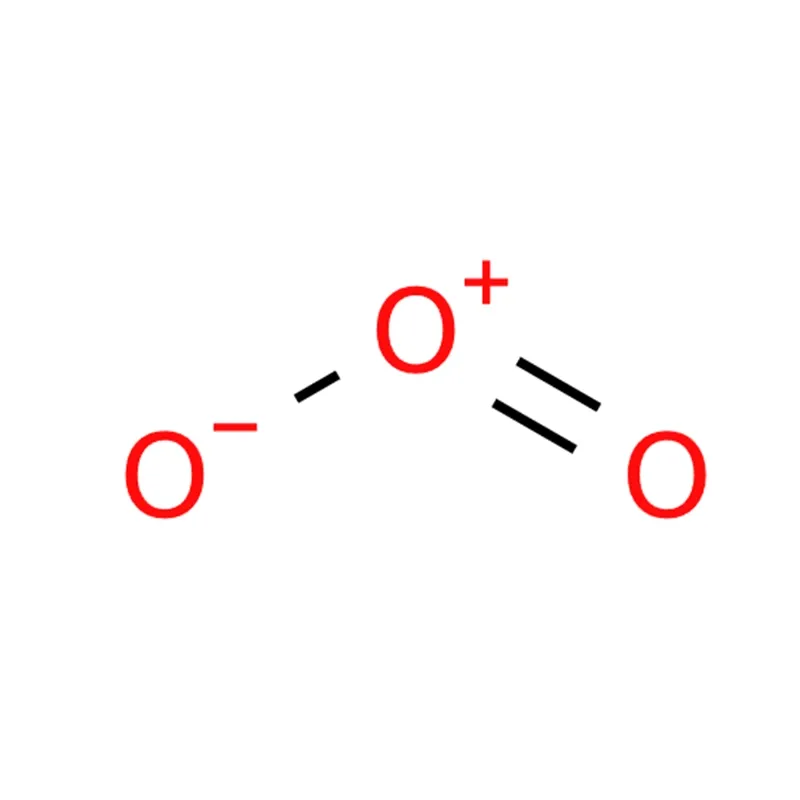
Ozone CAS#10028‑15‑6
Ozone demonstrates outstanding water solubility. At 20°C, its solubility reaches roughly 0.35 g/L, around 13 times that of oxygen. Its aqueous solution, commonly referred to as ozonated water, delivers improved stability compared with gaseous ozone. Nevertheless, cool‑dark storage is still required. Maintained below 4°C under light‑shielded conditions, ozonated water can preserve its activity for several hours.
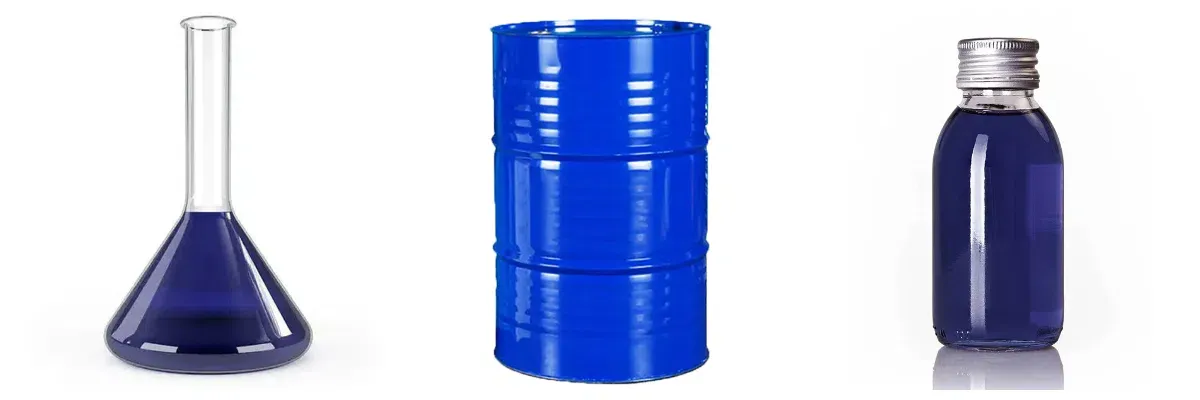
Ozone Chemical Properties
| Melting point | 193℃ |
| Boiling point | -110℃ |
| Density | 1.46 g/cm3 |
| Vapor pressure | 55kPa at -12℃ |
| Solubility | slightly soluble in H2O |
| Form | blue gas |
| Color | Blue or violet-black solid or unstable colorless gas or dark-blue liquid |
| Odor | Pungent odor, detectable at 0.01 to 0.04 ppm; sharp disagreeable odor at 1 ppm |
| Odor Threshold | 0.0032ppm |
| Water Solubility | 570mg/L at 20℃ |
| Exposure limits | TLV-TWA 0.1 ppm (~0.2 mg/m3) (ACGIH, NIOSH, and MSHA), 0.2 ppm (~0.4 mg/m3) (OSHA); IDHL 10 ppm (NIOSH). |
| Stability: | Unstable - may decompose spontaneously and violently to oxygen. Mixtures containing a moderate partial pressure of ozone, and pure ozone at even low pressures are both potentially explosive. May react very violently with combustible materials and reducing agents, such as organics. Even small quantities of organic material, such as traces of g |
| LogP | -0.87 at 20℃ |
| EPA Substance Registry System | Ozone (10028-15-6) |
Safety Information
| RIDADR | 1956 |
| OEL | Ceiling: 0.1 ppm (0.2 mg/m3) |
| HazardClass | 2.2 |
| Hazardous Substances Data | 10028-15-6(Hazardous Substances Data) |
| Toxicity | LC50 inhal (rat) |
| 4.8 ppm (4 h) | |
| PEL (OSHA) | |
| 0.1 ppm (0.2 mg/m3) | |
| TLV-TWA (ACGIH) | |
| 0.1 ppm (0.2 mg/m3) | |
| STEL (ACGIH) | |
| 0.3 ppm (0.6 mg/m3) | |
| IDLA | 5 ppm |
Ozone CAS#10028‑15‑6
Ozone is a powerful oxidizing agent with remarkable water‑soluble performance. At 20°C, its water solubility is around 13 times higher than oxygen, readily forming high‑activity ozonated water with strong oxidation capacity. Ozonated water features better stability than gaseous ozone. Stored below 4°C and protected from light, it can maintain effective activity for several hours, supporting diversified applications across water treatment, disinfection and other industrial fields.
Product Usage
Ozone enjoys broad‑spectrum application across multiple industries. Within water‑treatment scenarios, it acts as an efficient disinfectant for drinking‑water disinfection. As an alternative to chlorine‑based disinfection, it avoids the generation of carcinogenic disinfection by‑products. Furthermore, ozone is deployed for the treatment of printing‑dyeing wastewater, pharmaceutical‑process wastewater and municipal sewage. It delivers reliable performance in decolorization and pollutant degradation. Besides, it can effectively improve water quality for aquaculture systems.