Nicarbazin CAS#330-95-0
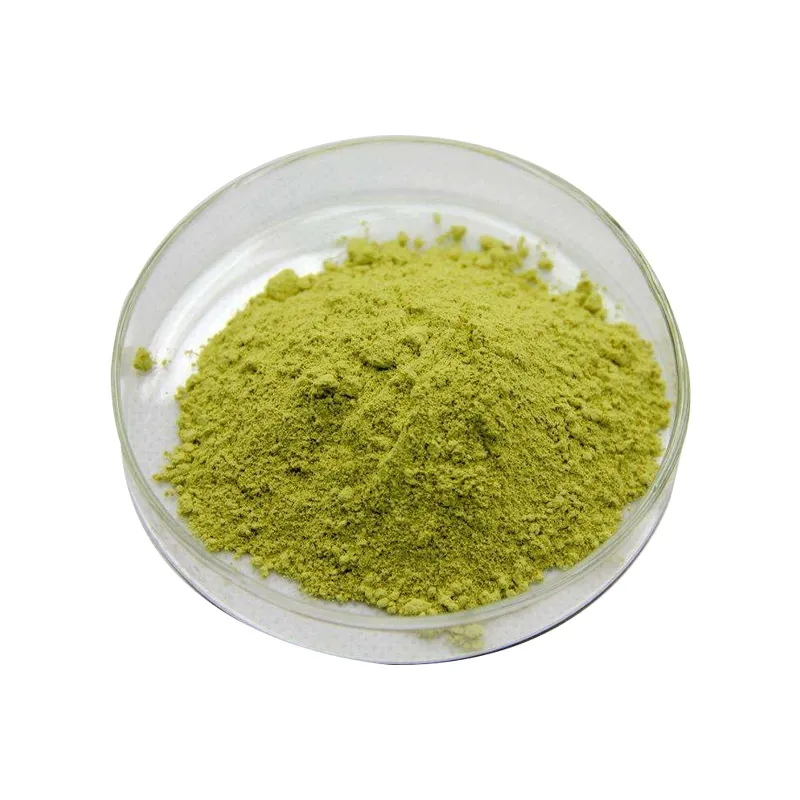
Nicarbazin appears as an odorless, light yellow crystalline powder. Its melting point falls within the range of 265–275 °C, accompanied by thermal decomposition upon reaching this temperature range. This active veterinary ingredient is non‑hygroscopic, meaning it resists moisture absorption and caking under normal dry storage conditions. It shows extremely low solubility profiles: practically insoluble in water, ethanol, chloroform and ether, with only faint solubility in dimethylformamide. Users need to be mindful of its chemical stability limits. When subjected to wet grinding together with water, the substance will undergo slow decomposition; the degradation reaction accelerates markedly under dilute acidic environments. This characteristic must be taken into account during premix formulation, granulation and feed compounding processes to prevent loss of active content and weakened anticoccidial efficacy.
| Nicarbazin Chemical Properties |
| Melting point | 265-267 °C |
| Boiling point | 541.86°C (rough estimate) |
| density | 1.4663 (rough estimate) |
| refractive index | 1.6000 (estimate) |
| storage temp. | 0-6°C |
| solubility | DMSO: soluble0.5mg/mL |
| form | Solid |
| color | Yellow to Dark Yellow |
| Major Application | clinical testing |
| InChI | InChI=1S/C13H10N4O5.C6H8N2O/c18-13(14-9-1-5-11(6-2-9)16(19)20)15-10-3-7-12(8-4-10)17(21)22;1-4-3-5(2)8-6(9)7-4/h1-8H,(H2,14,15,18);3H,1-2H3,(H,7,8,9) |
| InChIKey | UKHWDRMMMYWSFL-UHFFFAOYSA-N |
| SMILES | C1(=CC=C([N+]([O-])=O)C=C1)NC(NC1=CC=C([N+]([O-])=O)C=C1)=O.C1(C)=NC(=NC(C)=C1)O |
| EPA Substance Registry System | Nicarbazin (330-95-0) |
| Safety Information |
| Hazard Codes | Xi |
| Risk Statements | 36/37/38 |
| Safety Statements | 26-36 |
| WGK Germany | 3 |
| RTECS | FE0900000 |
| TSCA | TSCA listed |
| HS Code | 38249099 |
| Storage Class | 11 - Combustible Solids |
| Hazard Classifications | Eye Irrit. 2 Skin Irrit. 2 STOT SE 3 |
| Hazardous Substances Data | 330-95-0(Hazardous Substances Data) |
Product Application Of Nicarbazin CAS#330-95-0
<h2>Application Scenarios</h2>
<h3>Anticoccidial Agent for Poultry Farming</h3>
Nicarbazin is a well-established coccidiostat and antiprotozoal raw material targeting Coccidia parasites. It interferes with the intracellular development cycle of Eimeria species that trigger avian coccidiosis, reducing intestinal lesions, cutting flock mortality and protecting the growth performance of broilers. It is widely formulated into veterinary feed premixes for continuous preventive administration in commercial chicken farms. It remains one of the preferred active ingredients for coccidiosis control due to its stable efficacy and relatively low risk of rapid parasite resistance.
<h3>Wildlife Population Reproductive Control</h3>
Nicarbazin serves as a wildlife contraceptive tool for resident Canada geese and other waterfowl. When ingested via treated bait, it disrupts the formation of the vitelline (yolk) membrane inside bird eggs. This structural failure prevents normal embryo development, resulting in non-viable eggs without stopping the birds from laying eggs. This approach offers a humane, non-lethal strategy to manage overabundant waterfowl populations in urban, park and waterfront areas, and it has also been explored for feral pigeon population regulation in some regions.
<h3>Laboratory Research Material for Avian Science</h3>
It is a standard research compound for avian reproduction studies. Researchers use it to explore the biological mechanisms of egg membrane formation, embryonic development and reproductive physiology of birds. It is also commonly adopted in trials investigating how different administration and delivery methods influence plasma concentrations of 4,4′‑dinitrocarbanilide (DNC). DNC is the core active anticoccidial component within the nicarbazin molecular complex, and measuring its blood and egg levels helps scientists evaluate dosage absorption, distribution and bioavailability under field and laboratory conditions.
<h3>Veterinary Premix Intermediate</h3>
As a key active raw material for feed mills and veterinary formulation factories, nicarbazin is blended with carriers such as corn cob powder, starch and mineral carriers to produce uniform medicated premixes. Strict homogenization control is required during processing to guarantee consistent drug intake across the whole flock. Formulators must observe regional regulatory limits, withdrawal periods and compatibility rules when combining it with other feed additives or ionophore coccidiostats.
<h2>Packaging & Transportation</h2>
<h3>Standard Packaging Specification</h3>
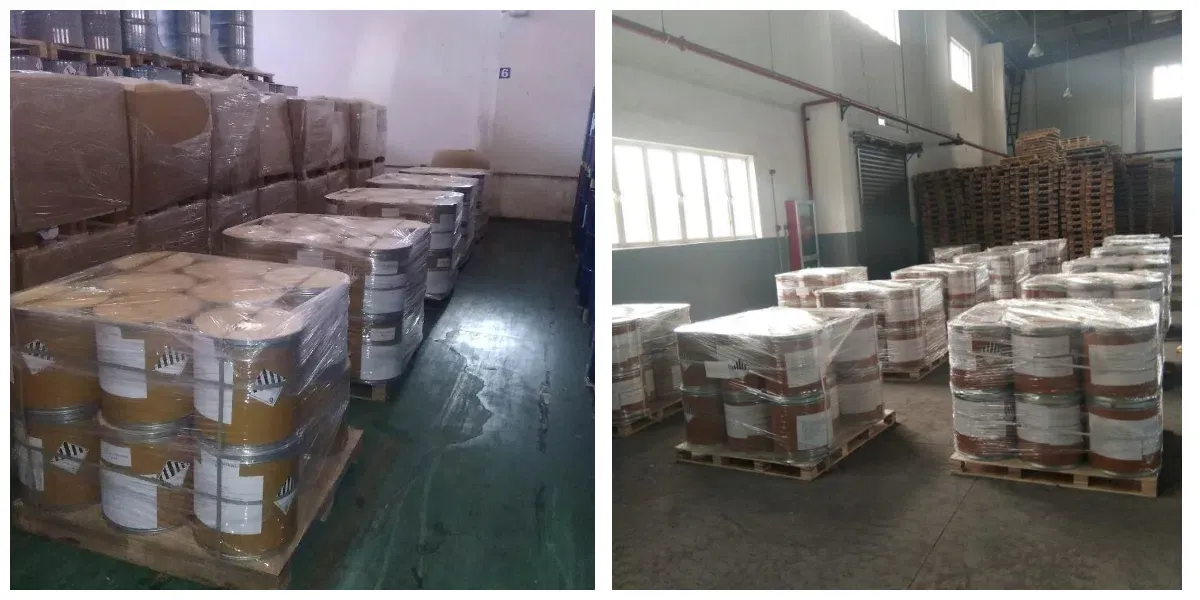
Our standard bulk packing is 25kg kraft fiber drum with double PE inner liner to keep the powder sealed and free from dust contamination. Custom packaging solutions and private labeling can be arranged for long-term stable buyers. All outer drums are printed with GHS hazard marking, product identity, batch number, net weight and traceability information.
<h3>Shipping & Storage Guidance</h3>
Nicarbazin is classified as non-dangerous goods for sea freight, which supports straightforward customs clearance. Store the product in a cool, dry and well-ventilated warehouse. Keep drums tightly closed, segregated from acidic materials, strong oxidants and high heat sources. Avoid long-term storage under high-temperature conditions. Under proper sealed storage, the product maintains stable physical properties and biological activity until expiry.
<h2>Quality Control & Compliance Documents</h2>
Every production batch is fully tested before shipment. Our QC testing covers appearance, assay content, melting range, impurity profile and particle size distribution. A formal COA (Certificate of Analysis) will be provided along with shipment documents. Third-party inspection such as SGS can be arranged upon the buyer’s request. We manufacture following veterinary raw material specifications to ensure consistent batch-to-batch quality for feed additive and research customers.
<h2>Delivery Schedule</h2>
<h3>Fast Lead Time Arrangement</h3>
We maintain regular stock for standard specifications to support flexible delivery:
In-stock goods: Shipment can be arranged within 2–3 working days after order confirmation and payment.
New production orders: The production and preparation cycle takes 7–10 working days. Our sales team will update production progress regularly for out-of-stock batches.
<h2>After‑sales & Technical Support</h2>
We provide one-stop after-sales service and professional technical guidance for all nicarbazin customers. Our technical team can share premix mixing guidance, dosage reference, compatibility warnings, residue control suggestions and SDS documents. If you encounter dispersion challenges, test result deviation or questions about wildlife bait formulation after receiving the cargo, please contact our sales engineer promptly. We will respond and provide practical solutions within 24 working hours. New customers can get free consultation on regulatory registration requirements for veterinary and wildlife control use.
<h2>Typical Customer Cooperation Cases</h2>
We have built stable long-term partnerships with veterinary premix manufacturers, large integrated poultry groups, wildlife control research institutions and animal health distributors worldwide. One of our regular clients, a premix producer in Southeast Asia, purchases our nicarbazin on an FCL basis for broiler anticoccidial premix production. They choose us for stable assay value and consistent particle size, which helps them achieve excellent mixing uniformity in their production line. Another partner imports our material for wildlife research projects; they value our complete document package and stable supply to support their field trials on waterfowl reproductive management.
<h2>FAQ</h2>
<h3>Q1: What is DNC and why is it important for nicarbazin performance?</h3>
A1: Nicarbazin is an equimolar complex of DNC (4,4′‑dinitrocarbanilide) and HDP. DNC is the primary active component responsible for both anticoccidial activity and the egg-hatching inhibition effect. Monitoring DNC plasma and egg levels is a key way to assess absorption and efficacy in research and field applications.
<h3>Q2: Can nicarbazin be used in laying hens for egg production?</h3>
A2: Normally, nicarbazin is not recommended for commercial laying hens. It will interfere with egg vitelline membrane formation and reduce egg hatchability, which causes economic losses for layer farms. It is mainly approved for broiler starter feed and specialized wildlife contraceptive bait.
<h3>Q3: Can I get samples for formula testing before bulk FCL order?</h3>
A3: Lab samples are available for your evaluation. We provide small sample packs for lab analysis and formulation trial. Sample freight can be negotiated. Our MOQ for bulk order is 1 FCL.
<h3>Q4: What documents can you provide for import customs clearance and registration?</h3>
A4: We provide commercial invoice, packing list, COA, SDS and bill of lading. Certificate of Origin and other supporting certificates can be applied according to your local veterinary and wildlife chemical registration requirements.