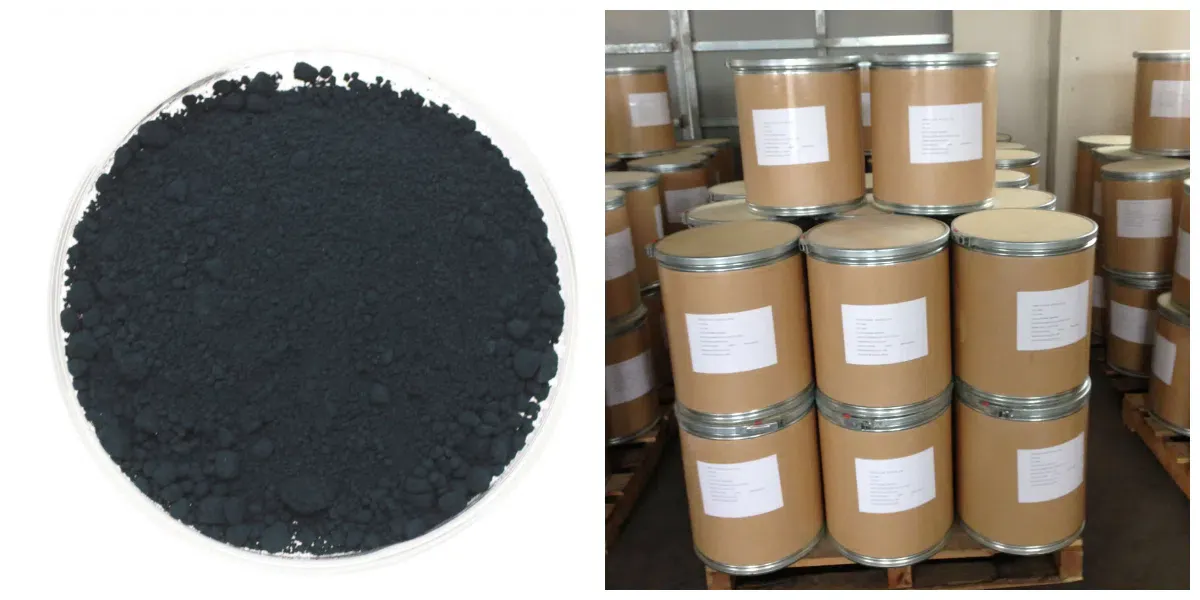
Cupric oxide CAS#1317‑38‑0
Copper(II) oxide delivers blue‑green pigmentation for ceramics. A naturally occurring mineral obtained through mining, it serves as a precursor for copper‑based products such as fungicides and wood preservatives. It can be incorporated into antifouling paints for boat hulls and outdoor wooden structures exposed to fresh‑water and seawater environments.
Though occasionally utilized in animal feed, it is not an ideal choice, since its copper bioavailability is lower compared with alternatives including cupric acetate and basic copper carbonate. Further applications involve the manufacturing of superconductors, batteries, and it functions as a catalyst in numerous industrial processes.
Cupric oxide Chemical Properties |
Melting point | 1326 °C |
bulk density | 500kg/m3 |
density | 6.315 |
refractive index | 2.63 |
storage temp. | no restrictions. |
solubility | Aqueous Acid (Slightly), Methanol (Slightly) |
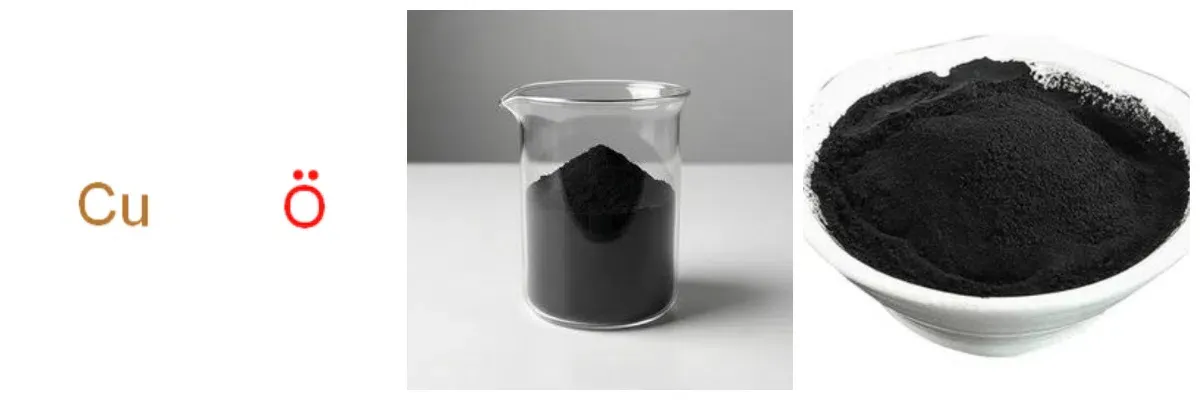
form | powder |
color | Brown to black |
Specific Gravity | 6.3-6.49 |
Odor | at 100.00%. odorless |
PH | 7 (50g/l, H2O, 20℃)(slurry) |
Water Solubility | insoluble |
Merck | 14,2646 |
crystal system | Monoclinic |
Space group | C2/c |
Lattice constant | a/nmb/nmc/nmα/oβ/oγ/oV/nm30.468370.342260.512889099.54900.0811 |
Exposure limits | ACGIH: TWA 1 mg/m3 |
Dielectric constant | 18.1(Ambient) |
Stability: | Stable. Incompatible with reducing agents, hydrogen sulfide, aluminium, alkali metals, finely powdered metals. |
Major Application | battery manufacturing |
Cosmetics Ingredients Functions | ANTIMICROBIAL |
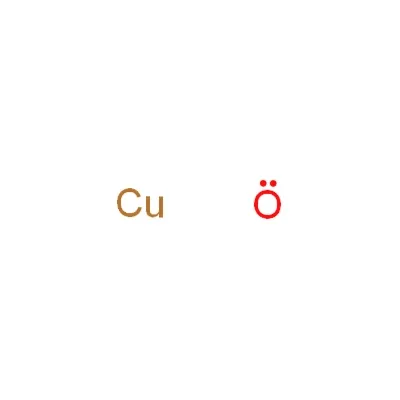
InChI | 1S/Cu.O |
InChIKey | QPLDLSVMHZLSFG-UHFFFAOYSA-N |
SMILES | [Cu]=O |
CAS DataBase Reference | 1317-38-0(CAS DataBase Reference) |
NIST Chemistry Reference | Copper(ii) oxide(1317-38-0) |
EPA Substance Registry System | Cupric oxide (1317-38-0) |
Safety Information |
Hazard Codes | Xn,Xi,N |
Risk Statements | 22-37-50 |
Safety Statements | 22-36-61-60-29 |
OEB | D |
OEL | TWA: 0.1 mg/m3 |
RIDADR | UN 3077 9 / PGIII |
WGK Germany | 1 |
RTECS | GL7900000 |
TSCA | TSCA listed |
HazardClass | 9 |
HS Code | 28255000 |
Storage Class | 13 - Non Combustible Solids |
Hazard Classifications | Aquatic Acute 1 |
Hazardous Substances Data | 1317-38-0(Hazardous Substances Data) |
Toxicity | LD50 orally in Rabbit: 470 mg/kg |
IDLA | 100 mg Cu/m3 |
Cupric oxide CAS#1317-38-0
<h2>Product Application</h2>
<h3>Glass, Enamel & Ceramic Industry</h3>
Cupric oxide acts as a stable colorant to produce blue‑green shades in glazes and ceramic bodies. It also serves as a polishing agent for optical glass and anti‑wrinkle additive for paint formulations. It is widely adopted for making colored glass, artistic enamel ware and decorative ceramic products.
<h3>Chemical Catalysis & Oil Processing</h3>
It works as an organic synthesis catalyst, hydrogenation agent and petroleum desulfurizer. It can remove sulfur impurities from fuel oil and grease. It is also used as a carrier for other organic catalysts and raw material for manufacturing various copper compounds.
<h3>Analytical & Rayon Production</h3>
Cupric oxide is used for gas analysis and carbon/nitrogen detection in organic testing. It is a key raw material in the production of artificial silk (rayon). It can also be used to prepare artificial gemstones.
<h3>Nutrient & Feed Additive</h3>
Copper is an essential trace nutrient. It supports iron absorption, red blood cell formation and bone health maintenance. Note that cupric oxide has relatively low copper bioavailability compared with cupric acetate and basic copper carbonate, so it is not the first choice for high‑efficiency feed supplementation.
<h2>Product Specifications</h2>
CAS No.: 1317‑38‑0
Formula: CuO
Appearance: Black fine powder
Available Grade: Industrial Grade / High Purity Grade
Cu Content: 98% min, 99% min optional
Particle size can be customized according to customer requirements.
<h2>Packing & Transportation</h2>
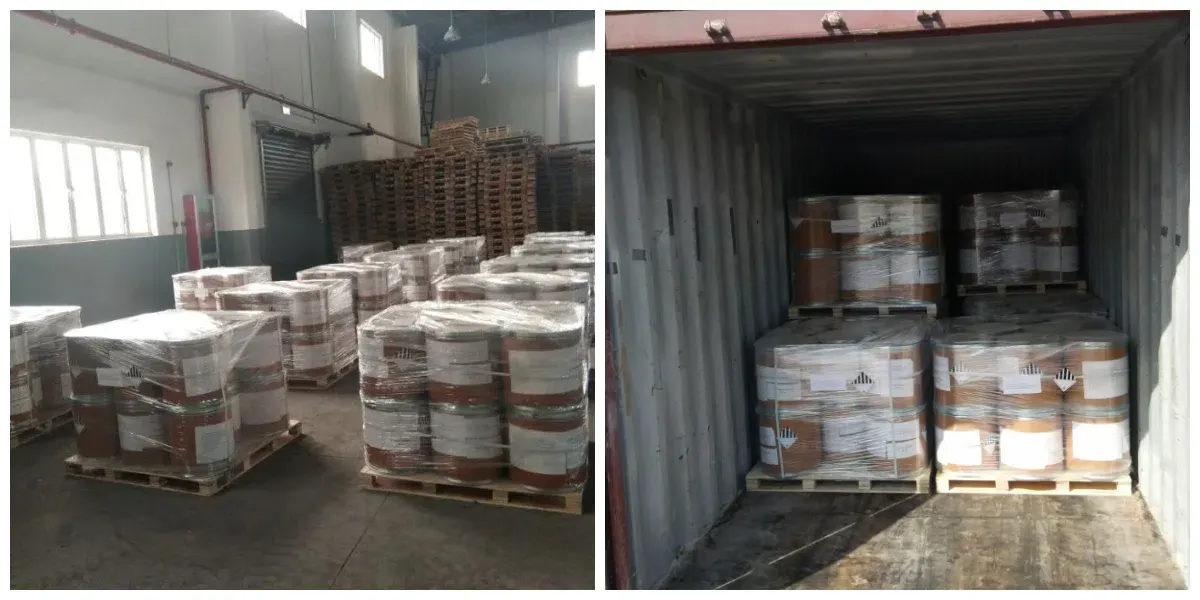
Standard packing: 25kg woven bag with inner PE liner. Iron drum or fiber drum packing is available for fine powder grade.
Keep goods sealed, dry and away from rain during transit. Separate from strong acids and food raw materials. Light loading and unloading to avoid package breakage. It is classified as environmentally hazardous substance for ocean shipment.
<h2>Our Service & After‑sales Support</h2>
We provide COA, MSDS and support SGS third‑party inspection. Free samples can be arranged for quality evaluation. Our technical team offers specification confirmation and usage guidance. If any quality discrepancy is confirmed after receiving goods, we will communicate quickly to arrange proper solutions. We support LCL and FCL bulk orders with stable factory supply.
<h2>Customer Cases</h2>
We have long‑term cooperation with ceramic glaze factories, petrochemical desulfurization plants and fine chemical manufacturers across Southeast Asia, Middle East and Latin America. Clients use our cupric oxide for ceramic coloring, catalyst preparation and copper salt synthesis. Stable batch indicators help customers keep consistent production quality.
<h2>FAQ</h2>
<h3>Q: Can cupric oxide be used directly as animal feed copper source?</h3>
A: Yes, it can be added, but its copper bioavailability is low. For better absorption, cupric acetate or basic copper carbonate is more recommended.
<h3>Q: Is sample available?</h3>
A: Yes, small trial samples are available. Sample freight can be negotiated.
<h3>Q: What documents can you provide?</h3>
A: COA, MSDS, commercial invoice, packing list, and support SGS test report.
<h3>Q: How to store cupric oxide?</h3>
A: Store in cool, dry and ventilated warehouse. Keep tightly closed, avoid moisture and strong acid materials.