Product Basic Profile
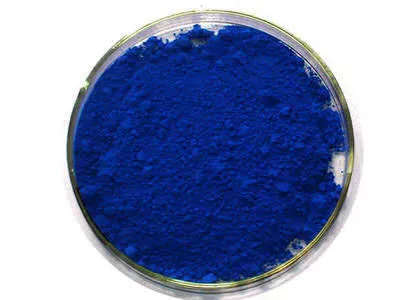
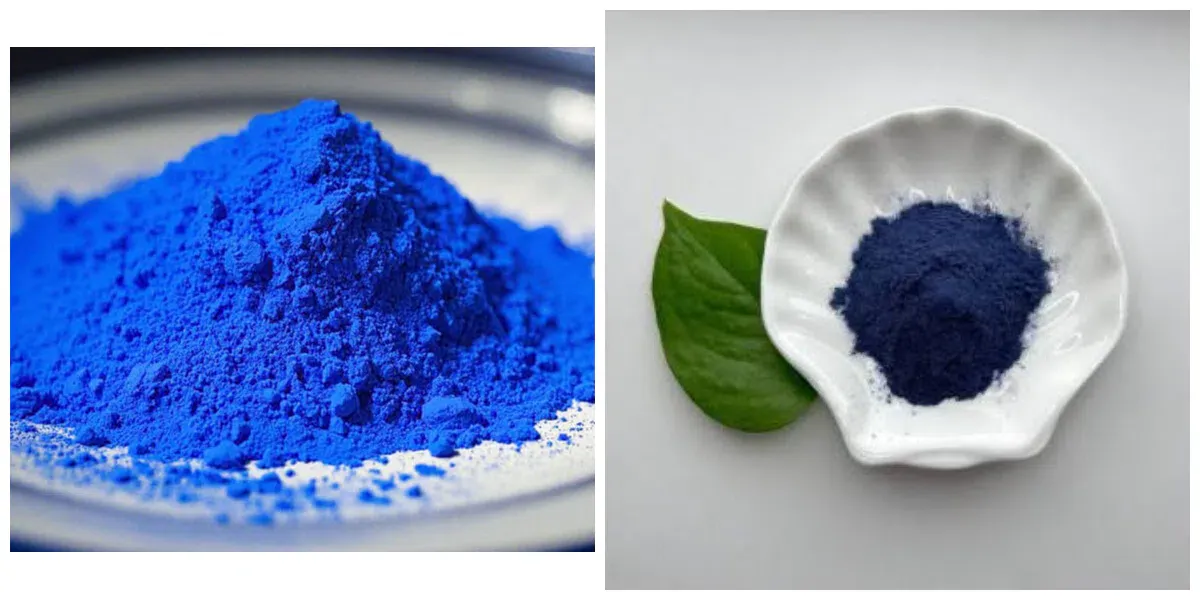
Cupric hydroxide appears as a blue powder and it is not stable. Cupric hydroxide is used as a mordant and pigment, in the manufacture of many copper salts, and for staining paper. It is used as a fungicide/bactericide on fruits, vegetables, and ornamentals. It can be used as catalyst, feed additive, and a cuprammonium rayon process reagent to make the first semi-synthetic fiber product, Rayon.
CAS Number: 20427-59-2
Chemical Formula: Cu(OH)₂
Synonyms: Copper(II) hydroxide, Copper oxide hydrated, Chiltern kocide 101, Comac
Molecular Weight: 97.56
Physical Characteristic: Blue fine powder, poorly soluble in water. It will gradually decompose when exposed to high temperature, strong light or prolonged moisture, forming copper oxide.
Core Application Scenarios
Agricultural Plant Protection
It works as a broad-spectrum contact fungicide and bactericide. Slow-release copper ions suppress spore germination and pathogen cell activity. Widely applied to citrus, tomato, cucumber, fruit trees and ornamental plants to control canker, leaf spot, blight and bacterial wildfire disease. It is compatible with most conventional agricultural spraying schedules.
| Cupric hydroxide Chemical Properties |
| density | 3.4 |
| vapor pressure | 0Pa at 25℃ |
| storage temp. | Inert atmosphere,2-8°C |
| solubility | H2O: insoluble(lit.) |
| form | Powder |
| color | Blue |
| PH | 7.69(1 mM solution);7.69(10 mM solution);7.69(100 mM solution) |
| Water Solubility | Slightly soluble in waterSoluble in acids, ammonium hydroxide, dilute hydrochloric acid, concentrated alkali and potassium cyanide. Insoluble in water, ethanol, and acetone. |
| Sensitive | Hygroscopic |
| Merck | 14,2642 |
| Solubility Product Constant (Ksp) | pKsp: 19.66 |
| Exposure limits | ACGIH: TWA 1 mg/m3 NIOSH: IDLH 100 mg/m3; TWA 1 mg/m3 |
| Stability: | Stable, but hygroscopic. Store in dry conditions. |
| InChI | 1S/Cu.2H2O/h;2*1H2/q+2;;/p-2 |
| InChIKey | JJLJMEJHUUYSSY-UHFFFAOYSA-L |
| SMILES | O[Cu]O |
| CAS DataBase Reference | 20427-59-2(CAS DataBase Reference) |
| NIST Chemistry Reference | Copper hydroxide(20427-59-2) |
| EPA Substance Registry System | Cupric hydroxide (20427-59-2) |
| Safety Information |
| Hazard Codes | Xn,N,T |
| Risk Statements | 22-37/38-41-50/53-23 |
| Safety Statements | 26-36-39 |
| RIDADR | 3262 |
| WGK Germany | 3 |
| RTECS | GL7600000 |
| TSCA | TSCA listed |
| HS Code | 28255000 |
| Storage Class | 6.1B - Non-combustible acute toxic Cat. 1 and 2 very toxic hazardous materials |
| Hazard Classifications | Acute Tox. 2 Inhalation Acute Tox. 4 Oral Aquatic Acute 1 Aquatic Chronic 1 Eye Dam. 1 |
| Hazardous Substances Data | 20427-59-2(Hazardous Substances Data) |
Industrial Raw Material & Synthesis
It serves as a core precursor to produce multiple copper salts, including copper sulfate, copper chloride and copper acetate. In textile industry, it is the key reagent for cuprammonium cellulose process, which dissolves cellulose for rayon fiber production. It also acts as mordant for textile dyeing and blue pigment for paper, ceramic glaze and artistic coating.
Other Functional Uses
Catalyst: Applied in organic synthesis reactions to promote oxidation and condensation processes.
Feed additive: Provides trace copper nutrition for livestock and aquaculture under controlled dosage.
Analytical chemistry: Used in biuret test for protein qualitative analysis in laboratory tests.
Product Specifications & Grades
We supply industrial grade cupric hydroxide with customizable purity ranges according to buyer requirements.
Appearance: Homogeneous blue fine powder, low impurity content
Moisture: Controlled strictly to reduce self-decomposition risk
Particle size: Adjustable fine powder for different formulation mixing demands
MOQ: 1 FCL (Full Container Load). Small trial orders can be discussed upon special request.
Packaging & Transportation
Packaging Options
Standard packing: 25kg sealed fiber drum or 25kg multi-layer kraft paper bag with inner PE liner. Custom packaging and labeling are available for private brand requirements. All packages are printed with GHS hazard labels, product name, batch number and net weight.
Transport & Storage Guidelines
Cupric hydroxide belongs to UN3288, hazard class 6.1 toxic substance.
Shipment: We arrange FCL sea freight. All goods are secured against shaking and moisture during transit.
Storage requirement: Keep containers tightly closed, store in cool, dry and ventilated warehouse. Keep away from direct sunlight, heat source, strong acid, reducing agents and food materials. Recommended storage temperature below 30°C.
Shelf life: 12 months under proper sealed and dry storage. Avoid long-term exposure to humid air to prevent decomposition.
Quality Assurance
Every batch is tested before shipment. We will provide full documents together with cargo: COA (Certificate of Analysis), MSDS/SDS, packing list, commercial invoice. Third-party inspection such as SGS can be accepted before loading upon buyer’s request. Our production follows stable quality control to ensure consistent purity and particle performance for your downstream formulation.
After-sales Service
Technical support: Our chemical team offers formulation consultation and handling guidance for your production or agricultural application.
Cargo tracking: We share vessel schedule and container tracking information after shipment. We assist to prepare customs clearance documents for your destination port.
Quality feedback: If any quality discrepancy found after receiving goods, please provide batch test report and photos within agreed time. We will evaluate the issue and offer proper solution quickly.
Client Cases
We have exported cupric hydroxide to multiple countries, serving agrochemical formulators, pigment factories and rayon raw material manufacturers. Our clients mainly use this material to produce agricultural copper fungicide formulations and industrial copper salt synthesis. Long-term cooperation clients appreciate our stable batch quality and complete export document support for customs clearance.
FAQ
Q1: Is cupric hydroxide stable during sea shipping for long transit?
A1: Yes. We use moisture-proof sealed packaging. As long as cargo avoids high temperature and heavy condensation during ocean transit, the powder can remain stable. We advise to store goods immediately in dry warehouse once you receive the container.
Q2: Can I get samples for lab trial before placing FCL order?
A2: Yes, lab test samples are available. Sample cost and courier freight can be discussed separately. We attach COA and MSDS with samples for your lab test.
Q3: What documents will you provide for import customs clearance?
A3: We supply COA, MSDS, packing list, commercial invoice and bill of lading. If your local authority needs extra certification, we will try our best to assist.
Q4: What substances are incompatible with cupric hydroxide?
A4: Strong acids, strong reducing agents and edible raw materials cannot be stored or transported together. It will react with acid and generate copper salt solution.
Why Choose Us
We are professional chemical raw material exporter with rich experience in inorganic copper chemical export. We guarantee stable batch quality, competitive price and one-stop export service. Our team is familiar with international chemical customs requirements for different regions, helping you reduce import clearance risk.