Product Details
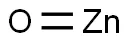
Zinc Oxide CAS#1314-13-2
Pure zinc oxide is a white, odorless powder free of mechanical impurities. It is insoluble in water but not in organic solvents such as ethanol and ether. It can be dissolved in dilute acids to form zinc salts and also in strong bases to form zincates, demonstrating the characteristics of amphoteric oxides
Zinc oxide Chemical Properties
| Melting point | 1975 °C |
| Boiling point | 1949.9°C (estimate) |
| density | 5.6 |
| bulk density | 200-700kg/m3 |
| refractive index | 2.008~2.029 |
| Fp | 27℃ |
| storage temp. | Store at +5°C to +30°C. |
| solubility | 0.0016g/l insoluble |
| form | nanopowder |
| color | White to pale yellow |
| Specific Gravity | 5.61 |
| PH | 7 (50g/l, H2O, 20℃)(slurry) |
| Odor | wh. to gray powd. or crystals, odorless, bitter taste |
| Water Solubility | 1.6 mg/L (29 ºC) |
| Crystal Structure | ZnO type |
| crystal system | Six sides |
| Merck | 14,10147 |
| Space group | P63mc |
| Lattice constant | a/nmb/nmc/nmα/oβ/oγ/oV/nm30.324950.324950.5206990901200.0476 |
| Dielectric constant | 40.0(20℃) |
| Exposure limits | ACGIH: TWA 2 mg/m3; STEL 10 mg/m3 OSHA: TWA 5 mg/m3; TWA 15 mg/m3 NIOSH: IDLH 500 mg/m3; TWA 5 mg/m3; STEL 10 mg/m3; Ceiling 15 mg/m3 |
| Stability: | Stable. Incompatible with magnesium, strong acids. |
| InChIKey | XLOMVQKBTHCTTD-UHFFFAOYSA-N |
| CAS DataBase Reference | 1314-13-2(CAS DataBase Reference) |
| NIST Chemistry Reference | Zinc oxide(1314-13-2) |
| EPA Substance Registry System | Zinc oxide (1314-13-2) |
Product Usage
Zinc oxide is mainly used in the rubber industry (as a vulcanization activator and reinforcing agent), the coatings and inks industry (as a white pigment and rust inhibitor), the pharmaceutical and cosmetic fields (raw material for external preparations and physical sunscreens), and the electronic and photovoltaic industries (transparent conductive films and buffer layers of photovoltaic modules). It can also be used as a food/feed additive (zinc nutrient fortifier), ceramic flux, and adsorbent and photocatalyst in environmental governance.