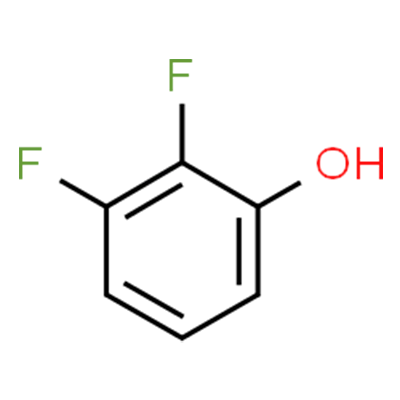
2,3‑Difluorophenol CAS#6418‑38‑8
Synthetic Procedure: In a 500 mL round‑bottom flask, dissolve 2,3‑difluorophenylboronic acid (30 g, 189.98 mmol, 1.00 eq.) in dichloromethane (250 mL). Under stirring, add hydrogen peroxide (30 mL) dropwise slowly. Keep the reaction mixture stirring at 25 °C for 2 hours.
After reaction completion, wash the mixture successively with water and saturated brine. Dry the organic phase over anhydrous magnesium sulfate, then concentrate under reduced pressure to obtain 2,3‑difluorophenol as brown oil, 23 g, yield 93%.
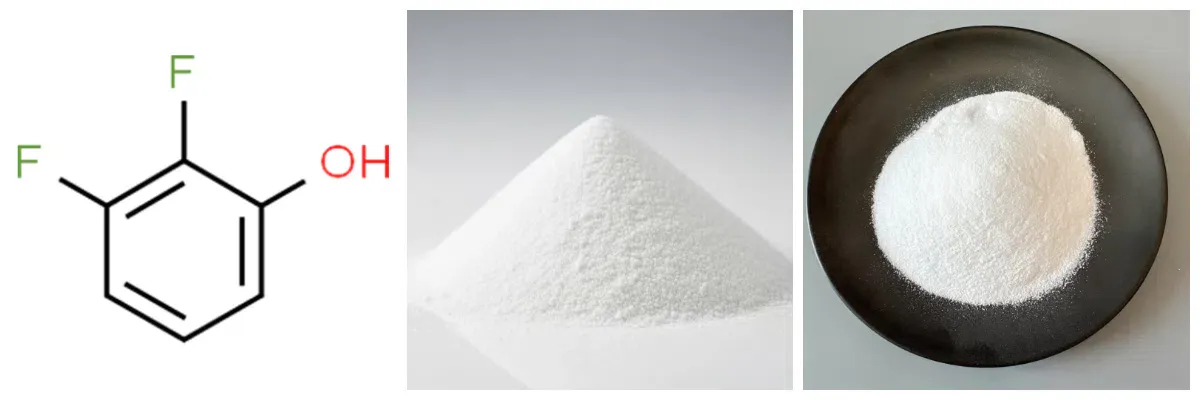
2,3-Difluorophenol Chemical Properties |
Melting point | 39-42 °C (lit.) |
Boiling point | 54 °C/25 mmHg (lit.) |
density | 1.2483 (estimate) |
Fp | 134 °F |
storage temp. | Inert atmosphere,2-8°C |
pka | 7.71±0.10(Predicted) |
form | powder to lump to clear liquid |
color | White or Colorless to Almost white or Almost colorless |
BRN | 2082265 |
InChI | InChI=1S/C6H4F2O/c7-4-2-1-3-5(9)6(4)8/h1-3,9H |
InChIKey | RPEPGIOVXBBUMJ-UHFFFAOYSA-N |
SMILES | C1(O)=CC=CC(F)=C1F |
CAS DataBase Reference | 6418-38-8(CAS DataBase Reference) |
Safety Information |
Hazard Codes | F,Xn,Xi,C |
Risk Statements | 11-22-36/37/38-34-20/21/22 |
Safety Statements | 26-45-36/37/39-16 |
RIDADR | UN 1325 4.1/PG 2 |
WGK Germany | 3 |
Hazard Note | Irritant |
HazardClass | 4.1 |
PackingGroup | III |
HS Code | 29081000 |
Storage Class | 3 - Flammable liquids |
Hazard Classifications | Acute Tox. 4 Oral |
Product Application Of
2,3‑Difluorophenol CAS#6418‑38‑8
Product Overview
2,3‑Difluorophenol (CAS#6418‑38‑8) is an important fluorinated phenolic fine chemical intermediate, with molecular formula C₆H₄F₂O and molecular weight 130.09 g/mol. Under normal ambient conditions, it appears as a white crystalline solid with a weak phenol‑like odour. The ortho difluorine substitution brings special electronic effects and unique chemical reactivity, so it is widely used in sensor materials, pharmaceutical synthesis, agrochemical development and liquid crystal related industries. It needs sealed, light‑proof storage under inert atmosphere at 2‑8°C.
Product Application
Sensor Material Synthesis
2,3‑Difluorophenol was used in the synthesis of material poly{methyl[3‑(2‑hydroxy‑3,4‑difluoro)phenyl]propyl siloxane} (PMDFPS) sensitive to toxic organophosphate. Its phenolic hydroxyl group and difluorinated aromatic ring structure form specific recognition sites for organophosphate toxic molecules, enabling the polymer sensor to achieve fast response and stable detection performance for organophosphorus poisons.
Pharmaceutical Intermediate
It acts as a key building block for the synthesis of fluorine‑containing pharmaceutical molecules. The difluorophenyl fragment can be introduced into drug skeletons through etherification, esterification and coupling reactions. It is commonly applied to prepare antibacterial agents and active compounds related to the nervous system. Fluorine modification helps improve the metabolic stability and bioavailability of target drug molecules.
Agrochemical Intermediate
This product can be derivatized into precursors for fluorinated herbicides and insecticides. Fluorine substitution optimizes the lipophilicity of molecules, strengthens binding affinity to target organisms, and effectively lowers the risk of agrochemical residues in the natural environment.
Liquid‑Crystal Material Intermediate
It serves as a polar terminal unit for ferroelectric and antiferroelectric liquid crystal compounds. The phenolic hydroxyl group supports intermolecular hydrogen bonding, while difluorine atoms adjust the molecular dipole moment. This optimizes phase transition temperature and electro‑optical response characteristics of liquid crystal mixtures.
Organic Chemical Research Reagent
It is widely used in laboratory organic synthesis research, transition metal coordination chemistry and phenolic derivative modification experiments. It can react with alkali to generate corresponding phenoxide salts for subsequent C‑O and C‑C coupling reactions.
Production & Manufacturing Method
Synthetic Route
The mainstream industrial production route adopts ether cleavage of 2,3‑difluoroanisole under acidic conditions. For laboratory preparation, diazotization‑hydrolysis of corresponding difluoroaniline substrates is an alternative route. After crude product is obtained, recrystallization or vacuum distillation is used for purification. The purity of commercial finished products can commonly reach 98% and above.
Quality Control Process
Raw materials will go through strict incoming inspection by GC or HPLC before feeding. We track reaction conversion rate in real time by gas chromatography during production. Finished goods will be tested for GC purity, melting point, moisture and heavy metal impurities. Batch‑by‑batch COA documents will be provided for every shipment.
Upstream & Downstream Products
Upstream Raw Materials
Main upstream starting materials include 2,3‑Difluoroanisole (CAS:134364‑69‑5), 2,3‑Difluoroaniline, acidic cleavage catalysts and inorganic alkali reagents.
Downstream Derivatives
Typical downstream products cover fluorinated phenyl ether pharmaceutical compounds, liquid crystal intermediate esters, the PMDFPS precursor for organophosphate sensitive polymers, and fluorophenol based pesticide intermediates.
Safety & Handling Guidance
Hazard Characteristic
2,3‑Difluorophenol is a flammable solid. It is toxic if swallowed, absorbed through skin or inhaled. It may cause severe skin burns and irreversible eye damage. The phenolic hydroxyl group is easy to oxidize under high temperature and open air, forming quinone‑type impurities.
Operation Precautions
All operations should be carried out in a well‑ventilated fume hood. Operators need to wear chemical resistant gloves, protective goggles and dust respirators. Keep the product away from heat sources, open flames and strong oxidants. Avoid direct contact with skin and eyes, and do not inhale dust or vapour. Once accidental contact occurs, flush the affected area with plenty of clean water immediately and seek medical treatment in time.
Storage Conditions
Store under inert protective atmosphere such as nitrogen or argon, with temperature controlled at 2‑8°C. The warehouse must stay cool, dry and shaded. Keep containers tightly sealed at all times. Separate storage from strong oxidants, strong alkalis and food supplies. The storage area should be equipped with leakage collection facilities.
Packaging & Transportation
Available Packaging Options
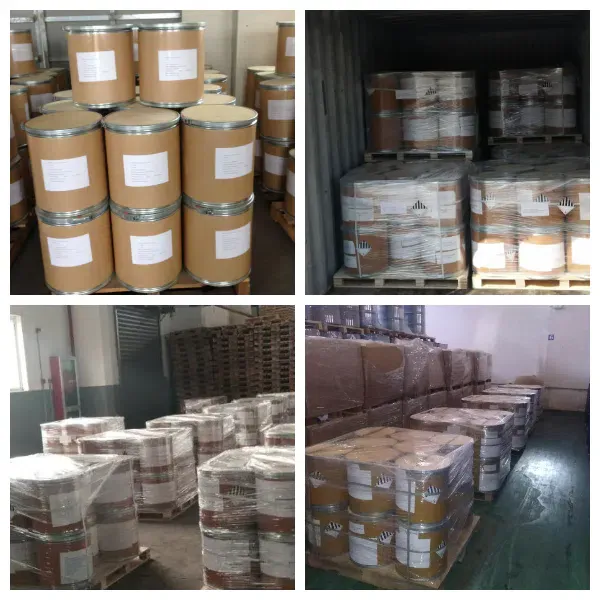
Lab sample packages adopt sealed glass bottles with aluminium foil sealing, including specifications of 10g, 50g and 100g. Industrial bulk orders are packed in sealed plastic drums of 1kg, 5kg and 25kg, with outer carton or fibreboard cases. Custom packaging solutions can be arranged according to customer requirements.
Transportation Requirements
This product belongs to dangerous goods UN2921, and all shipments must comply with relevant dangerous goods transport regulations. Low‑temperature transit is recommended. Avoid long‑time direct sunlight, high temperature exposure and rain soaking. Keep packages upright to prevent collision, seal breakage and leakage. Do not ship together with oxidants, food and daily consumer goods.
Lead Time
In‑stock goods can be arranged for delivery within 2‑3 working days. For orders requiring new customized production, the production and shipment cycle is 7‑10 working days.
After‑sales Service
We provide complete supporting documents including batch COA certificate, SDS safety datasheet and HPLC/GC test report together with goods. Extra technical documents can be supplied on request. Our professional chemist team provides technical consultation on synthesis application and storage guidance, and replies to technical inquiries within 24 working hours. If customers receive non‑conforming products, please send photos, videos and order information within 7 working days after arrival. We support re‑delivery, replacement or partial refund after confirming quality defects caused by products themselves. Damage caused by human operation or improper storage is not covered. We also offer custom synthesis service for special purity grades and related derivative compounds.
Typical Customer Cases
Case 1: Sensor‑material R&D Institute
A domestic sensor research institute purchases 2,3‑Difluorophenol to synthesize organophosphate sensitive polymer PMDFPS. Our ≥98% grade raw material meets the strict impurity control requirements for polymer synthesis. Stable batch quality ensures good repeatability of laboratory sensor material experiments.
Case 2: Fine‑pharmaceutical Factory
A fine pharmaceutical enterprise uses this compound as the starting material for fluorine‑containing drug intermediates. We supply bulk goods in 25kg industrial drums, provide full set of COA and SDS files, and maintain long‑term stable supply cooperation.
Case3: Liquid‑crystal Material Enterprise
A liquid crystal manufacturer takes this compound as the building block for ferroelectric liquid crystal molecules. We adopt strict moisture control and low‑temperature packaging scheme to guarantee product quality without degradation during long‑distance logistics.
FAQ
Q1: What is the shelf‑life of 2,3‑Difluorophenol?
A: For unopened original packages stored under the recommended 2‑8°C shaded inert atmosphere, the shelf life is 12 months. We suggest consuming it quickly once opened, because repeated air exposure will speed up oxidation and impurity generation.
Q2: Can you provide sample for lab test?
A: Yes, small lab samples ranging from 10g to 100g are available. Sample freight can be negotiated according to cooperation terms.
Q3: What solvent is suitable for dissolving 2,3‑Difluorophenol?
A: It has good solubility in common organic solvents such as ethanol, dichloromethane, toluene and THF, while it is slightly soluble in water.
Q4: What if product turns yellow after storage?
A: Yellowing is generally triggered by oxidation. Yellowed material is not recommended for high‑precision synthesis. Please follow storage rules strictly: keep tightly sealed, low temperature and inert gas protection.
Q5: Do you support international delivery?
A: Yes. We cooperate with qualified dangerous goods logistics providers for global shipment. Customers need to confirm local import rules and dangerous goods receiving requirements in advance.
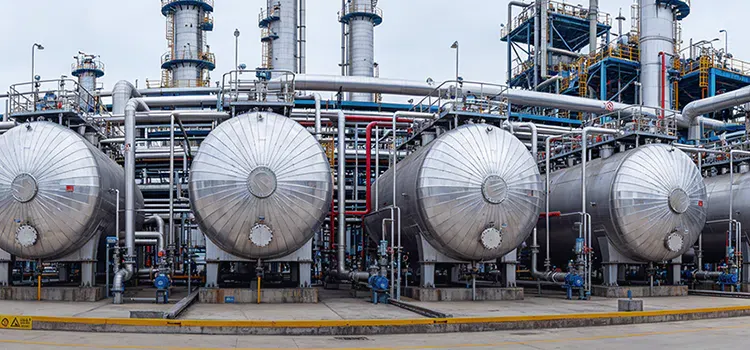
Factory & Equipment Show
Factory & Equipment Show Factory & Equipment Show
Fast delivery time Inventory 2‑3 working days New production 7‑10 working days