Thidiazuron CAS#51707-55-2
Pure material: white, odorless, tasteless crystalline solid. M.p. 210.5–212.5 °C (decomposes at 217 °C) Vapor pressure: 4×10⁻⁹ Pa (25 °C)
Solubility (25 °C): DMSO >500 g/L, DMF >500 g/L, cyclohexanone 21.5 g/L, acetone 8 g/L, methanol 4.5 g/L, ethyl acetate 0.8 g/L, hexane 6 mg/L, water 31 mg/L; insoluble in aliphatic and aromatic hydrocarbons. Partition coefficient: 59 (pH=7.3)
Stability: Stable below 200°C. Hydrolysis half-life >24 days in water at room temperature; soil half-life <60 days.
Thidiazuron Chemical Properties |
| Melting point | 213°C |
| density | 1.3493 (rough estimate) |
| refractive index | 1.6390 (estimate) |
| storage temp. | Sealed in dry,2-8°C |
| solubility | Soluble in DMSO |
| pka | 12.06±0.70(Predicted) |
| form | Solid |
| color | Light yellow to yellow |
| Merck | 13,9384 |
| BRN | 1078092 |
| Major Application | agriculture |
| InChI | InChI=1S/C9H8N4OS/c14-9(12-8-6-10-13-15-8)11-7-4-2-1-3-5-7/h1-6H,(H2,11,12,14) |
| InChIKey | HFCYZXMHUIHAQI-UHFFFAOYSA-N |
| SMILES | N(C1=CC=CC=C1)C(NC1SN=NC=1)=O |
| CAS DataBase Reference | 51707-55-2(CAS DataBase Reference) |
| EPA Substance Registry System | Thidiazuron (51707-55-2) |
Safety Information |
Hazard Codes | Xi,N |
Risk Statements | 36/37/38-51/53 |
Safety Statements | 22-26-36-61 |
RIDADR | UN 3077 9 / PGIII |
WGK Germany | 3 |
RTECS | YU1395000 |
HS Code | 2934999090 |
Storage Class | 11 - Combustible Solids |
Hazard Classifications | Aquatic Acute 1 |
Hazardous Substances Data | 51707-55-2(Hazardous Substances Data) |
Toxicity | LC50 (96-hour) for bluegill sun?sh, channel cat?sh and rainbow trout >1,000 mg/L (Hartley and Kidd, 1987); acute oral LD50 for rats >5,000 mg/kg (Hartley and Kidd, 1987), 5,350 mg/kg (RTECS, 1985). |
Thidiazuron CAS#51707‑55‑2
Product Overview
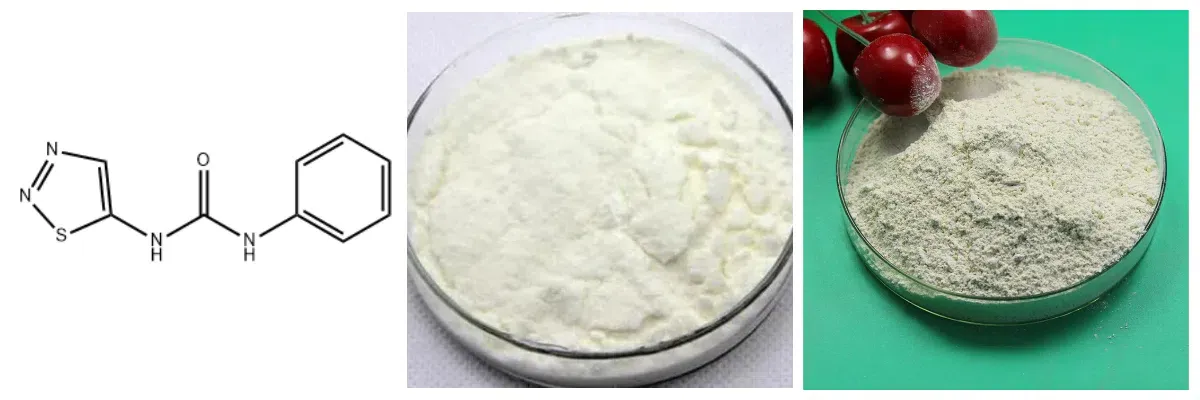
Product Name: Thidiazuron CAS No.:51707‑55‑2 Synonyms: 1‑Phenyl‑3‑(1,2,3‑thiadiazol‑5‑yl)‑urea, N‑phenyl‑N‑1,2,3‑thiadiazol‑5‑ylurea, 5‑(N‑Phenylcarbonylamino)‑1,2,3‑thiadiazole Molecular Formula: C₉H₈N₄OS Molecular Weight: 220.25 g/mol
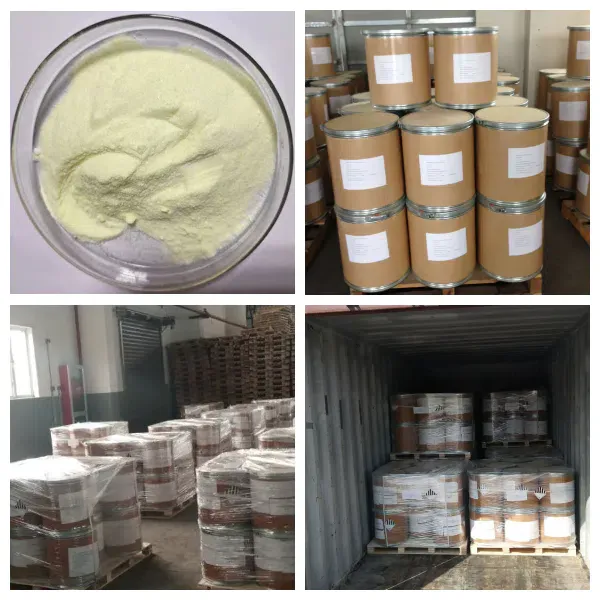
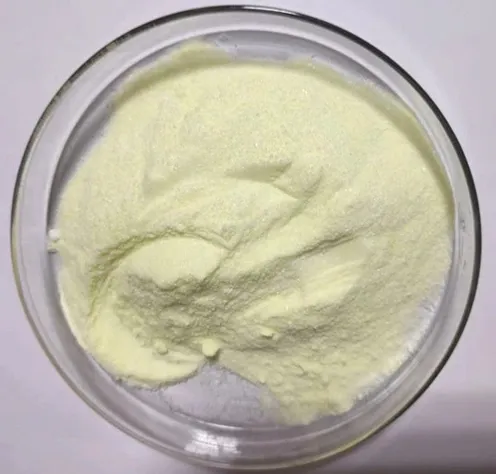
Thidiazuron is a urea‑based heterocyclic agrochemical substance, acting as plant growth regulator, defoliant and herbicide raw material. The pure material appears as light‑yellow crystalline powder. It shows cytokinin‑like biological activity and is widely applied in agricultural defoliation and plant tissue‑culture research. Our standard MOQ for bulk commercial shipment is 1 FCL (Full Container Load).
Physical & Chemical Properties
Basic Physical Parameters
Pure product: white, odorless, tasteless crystalline solid. Melting point: 210.5‑212.5 °C (decomposes at 217 °C) Vapor pressure: 4×10⁻⁹ Pa (25 °C)
Solubility at 25 °C: DMSO >500 g/L, DMF >500 g/L, cyclohexanone 21.5 g/L, acetone 8 g/L, methanol 4.5 g/L, ethyl acetate 0.8 g/L, hexane 6 mg/L, water 31 mg/L; insoluble in aliphatic and aromatic hydrocarbons. Partition coefficient: 59 (pH=7.3)
Chemical Stability
Stable below 200 °C. It remains stable in water under room temperature with hydrolysis half‑life >24 days. Its half‑life in soil is less than 60 days. Avoid mixing with strong oxidizing substances.
Hazard Profile
It may cause mild irritation to skin, eyes and respiratory tract. It is hazardous to aquatic organisms. Prevent leakage into water environment during handling.
Product Application
Thidiazuron functions as herbicide, defoliant and plant growth regulator.
Agricultural Defoliation
It is primarily used as cotton defoliant, accelerating leaf abscission for mechanical cotton harvesting and improving harvest yield and fiber quality. It is not permitted for food‑crop application. It has obtained registration for usage in the United States, while it is not approved within EU territories.
Regulatory Residue Standard (US 40 CFR 180.403(a))
US maximum residue limits for thidiazuron and its related metabolites cover livestock and cotton commodities: cattle, goat, hog, horse, sheep fat, meat and meat by‑products at 0.4 ppm; cotton gin by‑products at 24.0 ppm; undelinted cotton seed at 0.3 ppm; milk at 0.05 ppm.
Plant Tissue‑culture Research
With cytokinin‑mimicking activity, thidiazuron serves as key additive for plant tissue‑culture medium. It stimulates cell division, induces callus formation and facilitates bud regeneration for laboratory plant propagation experiments.
Manufacturing Process Highlights
Commercial‑grade thidiazuron is synthesized via condensation reaction between phenylurea and thiadiazole intermediates. The crude product goes through solvent recrystallization and purification steps to reach 98% technical‑grade purity. Strict temperature control is implemented to reduce by‑products and improve product yield.
Packaging & Transportation
Packaging Solutions
Small laboratory trial samples are packed in sealed aluminium‑foil bags. Bulk commercial goods adopt 25 kg sealed fibre drums. Standard bulk MOQ is one full container load.
Transport Regulation
UN Number: UN 3077, Hazard Class 9, Packing Group III, hazardous to aquatic environment. Shipment must comply with IMDG, ADR and IATA transportation specifications for environmentally hazardous substances. Do not load together with food, feed and drinking‑water related goods. Complete SDS, COA and hazard‑declaration documents are supplied for customs clearance.
Storage Requirements
Store in cool, dry and well‑ventilated warehouse. Recommended storage temperature is 2‑8°C under sealed condition. Keep away from oxidants, heat sources and direct sunlight. Keep containers tightly sealed to prevent moisture ingress. Under original sealed packaging, shelf‑life is 24 months. Waste residues and empty packages shall be disposed in accordance with local environmental regulations.
Delivery Time
For in‑stock products, shipment can be arranged within 2‑3 working days after formal order confirmation. For customized newly‑produced batches, the whole production and purification cycle takes 7‑10 working days.
Quality Assurance & After‑sales Service
Supplied Quality Documents
Each batch is provided with official Certificate of Analysis (COA), SDS safety‑data sheet and GC purity test report. Customized testing requirements can be accepted for agrochemical and laboratory clients.
Technical & After‑sales Support
We offer technical consultation including product application guidance, safe‑handling and storage instruction. Our export‑document team assists customers with customs‑declaration materials. Quality‑related feedback will get response within 24 working hours, and targeted solutions will be followed‑up accordingly.
Typical Customer Scenarios
Agrochemical manufacturers producing cotton‑defoliant technical material and formulation products. Biotech laboratories and research institutes engaged in plant tissue‑culture and botany research. Fine‑chemical enterprises focusing on heterocyclic urea intermediate processing.
FAQ
Q1: What purity grades are available?
A: Regular technical grade reaches ≥98.0%. Higher‑purity lab‑grade can be manufactured upon special customer request.
Q2: Can small‑volume trial order be accepted?
A: Standard MOQ for bulk shipment is one full container load. Small sample packages for evaluation can be arranged before bulk purchase.
Q3: What safety precautions should operators follow?
A: Wear safety goggles, chemical‑resistant gloves and dust‑proof respirator. Avoid skin contact, eye contact and dust inhalation. Prevent material from entering rivers or lakes to protect aquatic ecosystem.
Q4: What documents can you provide for export customs clearance?
A: Full set of shipping papers including COA, SDS, UN dangerous‑goods declaration and other supporting export documents can be provided complying with local customs requirements.