Aniline (CAS#62-53-3) Product Profile
Basic Product Overview
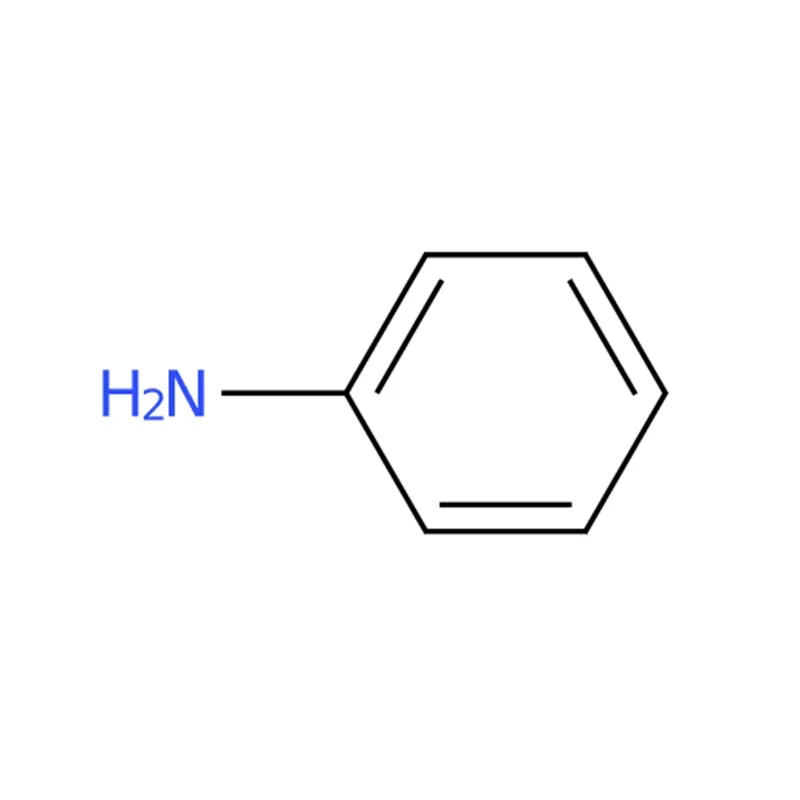
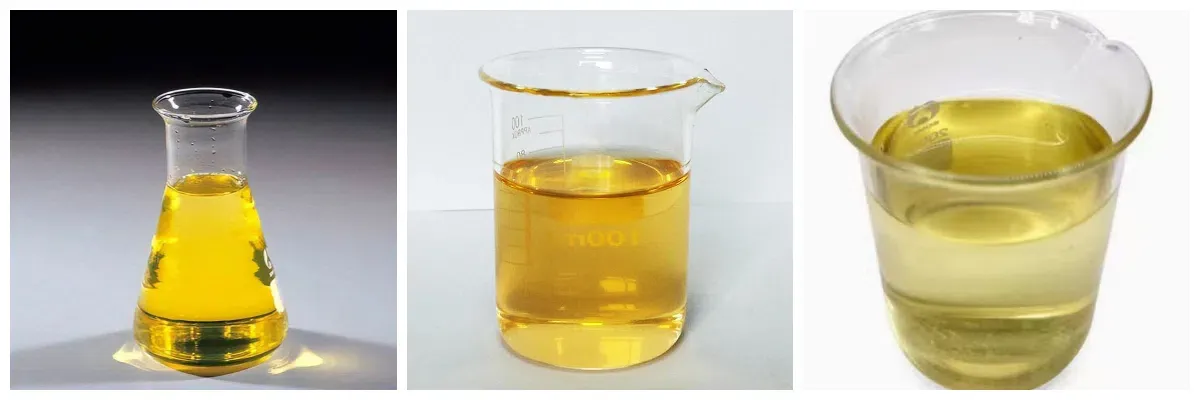
Aniline stands as the most fundamental and industrially vital aromatic amine. Structurally, it derives from benzene, where one hydrogen atom on the benzene ring is substituted by an amino group. The substance exists as a flammable, oily transparent liquid with a pungent characteristic smell.
Physical Properties & Stability
Aniline has limited solubility in water yet mixes freely with common organic solvents including ethanol, ether and chloroform. When kept under air or direct sunlight, the liquid will slowly oxidize and darken into a brown hue.
Steam distillation is the standard purification method for aniline. Adding trace zinc powder throughout distillation effectively inhibits oxidation. For long-term storage of refined aniline, 10–15 ppm sodium borohydride (NaBH₄) can be incorporated as a stabilizer to slow oxidative deterioration. Its water solution displays weak alkalinity.
Key Chemical Characteristics & Reaction Performance
Aniline readily undergoes neutralization reactions with acids to generate corresponding aniline salts.
The hydrogen atoms attached to its amino group can be replaced by alkyl or acyl groups, yielding secondary/tertiary aniline derivatives and acyl anilines respectively. Electrophilic substitution reactions of aniline primarily deliver ortho and para substituted products.
Furthermore, aniline can react with nitrite reagents to produce diazonium salts. These diazonium intermediates serve as core building blocks for manufacturing a wide range of benzene derivatives and azo colorants.
Melting point | -6 °C (lit.) |
Boiling point | 184 °C (lit.) |
density | 1.022 g/mL at 25 °C (lit.) |
vapor density | 3.22 (185 °C, vs air) |
vapor pressure | 0.7 mm Hg ( 25 °C) |
refractive index | n20/D 1.586(lit.) |
Fp | 76 °C |
storage temp. | 2-8°C |
solubility | water: soluble |
form | Liquid |
pka | 4.63(at 25℃) |
color | APHA: ≤250 |
Specific Gravity | 1.021 |
Odor | Sweet, amine-like odor detectable at 0.6 to 10 ppm |
Relative polarity | 0.42 |
PH | 8.8 (36g/l, H2O, 20℃) |
PH Range | 8.1 |
explosive limit | 1.2-11%(V) |
Water Solubility | 36 g/L (20 ºC) |
Merck | 14659 |
BRN | 605631 |
Henry's Law Constant | 1.91 at 25 °C (thermodynamic method-GC/UV spectrophotometry, Altschuh et al., 1999) |
Exposure limits | TLV-TWA skin 2 ppm (~8 mg/m3) (ACGIH), 5 ppm (~19 mg/m3) (MSHA, OSHA, and NIOSH); IDLH 100 ppm (NIOSH). |
Dielectric constant | 7.8(0℃) |
Stability: | Stable. Incompatible with oxidizing agents, bases, acids, iron and iron salts, zinc, aluminium. Light sensitive. Combustible. |
LogP | 0.9 |
CAS DataBase Reference | 62-53-3(CAS DataBase Reference) |
IARC | 2A (Vol. 27, Sup 7, 127) |
NIST Chemistry Reference | Aniline(62-53-3) |
EPA Substance Registry System | Aniline (62-53-3) |
Hazard Codes | T,N,F |
Risk Statements | 23/24/25-40-41-43-48/23/24/25-50-68-48/20/21/22-39/23/24/25-11 |
Safety Statements | 26-27-36/37/39-45-46-61-63-36/37-16 |
RIDADR | UN 1547 6.1/PG 2 |
OEL | TWA: None ppm |
WGK Germany | 2 |
RTECS | BW6650000 |
F | 46243 |
Autoignition Temperature | 615 °C |
TSCA | Yes |
HS Code | 2921 41 00 |
HazardClass | 6.1 |
PackingGroup | II |
Hazardous Substances Data | 62-53-3(Hazardous Substances Data) |
Toxicity | LD50 orally in rats: 0.44 g/kg (Jacobson) |
IDLA | 100 ppm |
Aniline is a time-tested essential industrial raw material that has supported chemical manufacturing for decades. Its largest consumption field lies in the fabrication of polyurethane materials and rubber goods. Apart from bulk demand in these sectors, moderate volumes of aniline are consumed to produce agrochemicals covering herbicides, fungicides, insecticides and animal repellents, as well as defoliants, dyestuffs, antioxidants, anti-ageing agents for rubber and vulcanization accelerators.
Beyond industrial production, aniline can also be found as a functional component in multiple daily supplies, including stove polish, shoe polish, coatings, varnish and marking ink.
Related Product List
Previous Item: Acrylonitrile, CAS#107-13-1
Next Item: Sodium Amide, CAS#7782-92-5