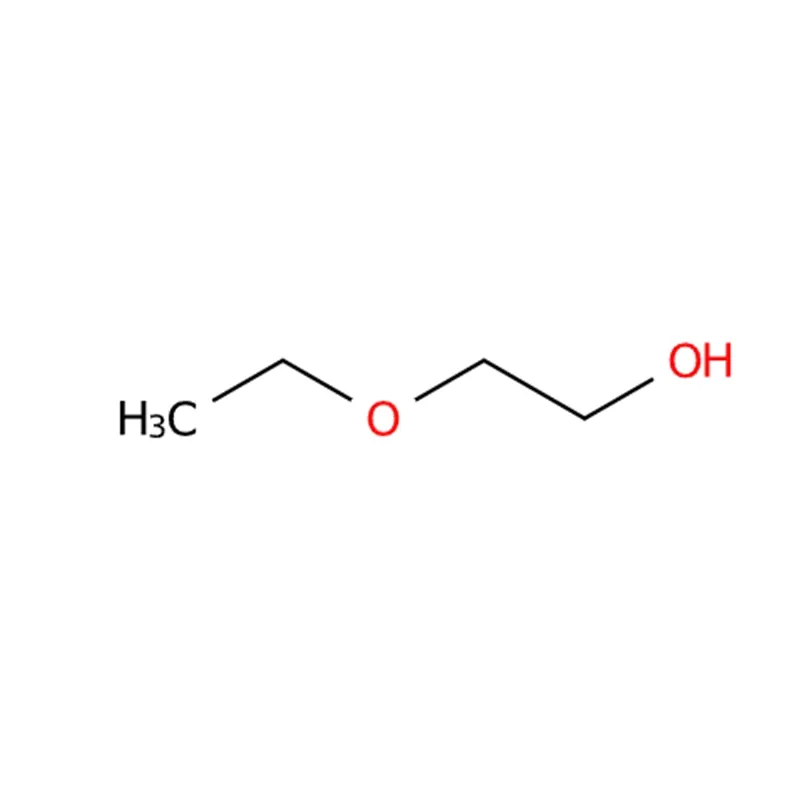
Ethylene Glycol Ethyl Ether CAS#110-80-5
Also named 2-Ethoxyethanol, it is a globally synthetic glycol ether solvent: stable, colorless and flammable liquid. Its market alias Ethyl Cellosolve (Cellosolve) is a trademark registered by Union Carbide in 1924.
It integrates the chemical features of alcohol and ether, possessing balanced water and oil solubility. Its low volatility effectively elevates overall production efficiency.
All glycol ethers are synthesized via the reaction between anhydrous alcohols and ethylene oxide.2-Ethoxyethanol Chemical Properties
2-Ethoxyethanol Chemical Properties
| Melting point | -100 °C |
| Boiling point | 135 °C(lit.) |
| density | 0.93 g/mL at 25 °C(lit.) |
| vapor density | 3.1 (vs air) |
| vapor pressure | 3.8 mm Hg ( 20 °C) |
| refractive index | n20/D 1.407(lit.) |
| Fp | 107.6 °F |
| storage temp. | Store below +30°C. |
| solubility | water: miscible |
| pka | 14.44±0.10(Predicted) |
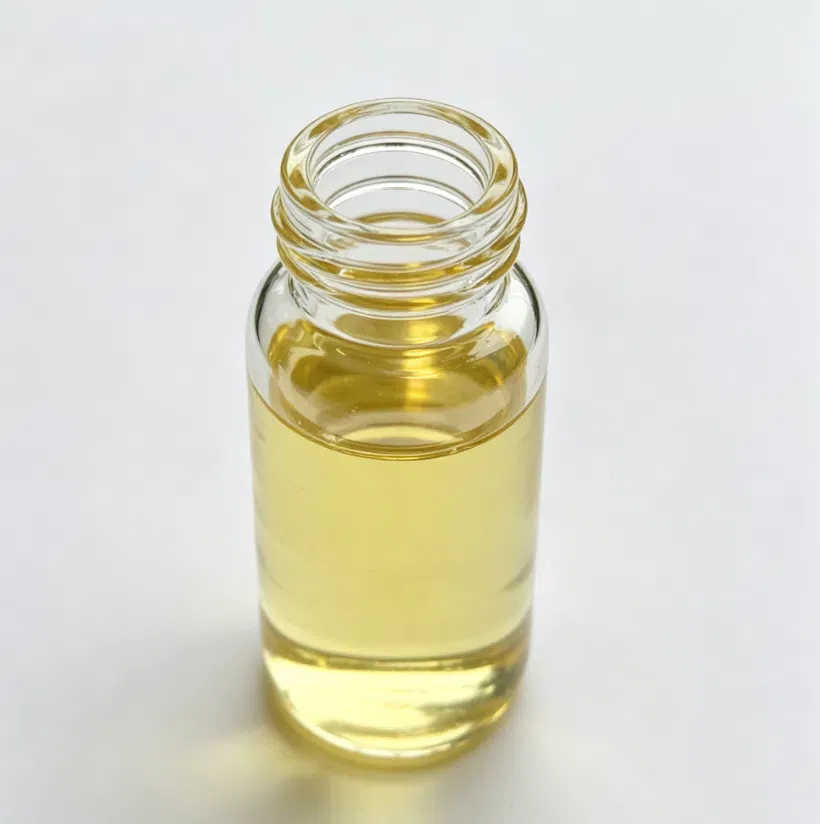
| form | Liquid |
| color | Clear, colorless |
| Odor | Sweetish; mild, pleasant, ethereal. |
| PH | 7 (20°C) |
| Odor Threshold | 0.58ppm |
| explosive limit | 1.8-15.7%(V) |
| Water Solubility | miscible |
| FreezingPoint | -70℃ |
| Thermal Conductivity | 0.169 W/(m·K) at 25 ℃ |
| λmax | λ: 215 nm Amax: 1.00 |
| λ: 225 nm Amax: 0.50 | |
| λ: 250 nm Amax: 0.20 | |
| λ: 305 nm Amax: 0.01 | |
| Merck | 143750 |
| BRN | 1098271 |
| Henry's Law Constant | 8.9×100 mol/(m3Pa) at 25℃, Johanson and Dynésius (1988) |
| Exposure limits | TLV-TWA skin 5 ppm (18.5 mg/m3) (ACGIH). . |
| Dielectric constant | 29.6(24℃) |
| Stability: | Stable. Readily forms explosive mixtures with air - note the wide explosion range. Vapour may travel considerable distance to a source of ignition. Flammable. Incompatible with strong acids, strong bases, strong oxidizing agents, aluminium, alkalies. |
| Cosmetics Ingredients Functions | SOLVENT |
| VISCOSITY CONTROLLING | |
| Cosmetic Ingredient Review (CIR) | 2-Ethoxyethanol (110-80-5) |
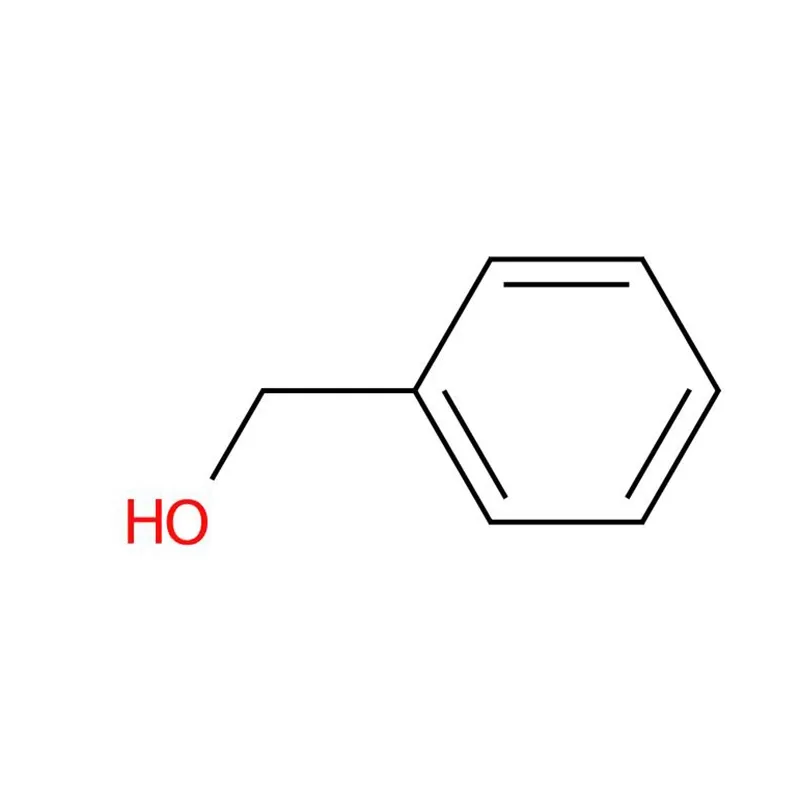
| InChI | 1S/C4H10O2/c1-2-6-4-3-5/h5H,2-4H2,1H3 |
| InChIKey | ZNQVEEAIQZEUHB-UHFFFAOYSA-N |
| SMILES | CCOCCO |
| LogP | 0.32 at 20℃ |
| Surface tension | 28.6mN/m at 20°C |
| CAS DataBase Reference | 110-80-5(CAS DataBase Reference) |
| NIST Chemistry Reference | Ethanol, 2-ethoxy-(110-80-5) |
| EPA Substance Registry System | 2-Ethoxyethanol (110-80-5) |
Safety Information
| Hazard Codes | T |
| Risk Statements | 60-61-10-20/21/22-20/22 |
| Safety Statements | 53-45 |
| OEB | B |
| OEL | TWA: 0.5 ppm (1.8 mg/m3) [skin] |
| RIDADR | UN 1171 |
| WGK Germany | 1 |
| RTECS | KK8050000 |
| Autoignition Temperature | 460 °F |
| TSCA | TSCA listed |
| HazardClass | 3 |
| PackingGroup | III |
| HS Code | 29094990 |
| Storage Class | 3 - Flammable liquids |
| Hazard Classifications | Acute Tox. 3 Inhalation |
| Acute Tox. 4 Oral | |
| Flam. Liq. 3 | |
| Repr. 1B | |
| Hazardous Substances Data | 110-80-5(Hazardous Substances Data) |
| Toxicity | Acute oral LD50 for guinea pigs 1,400 mg/kg, mice 2,451 mg/kg, rats 3,000 mg/kg, rabbits 3,100 mg/kg (quoted, RTECS, 1985). |
| IDLA | 500 ppm |
Product Applications | Ethylene Glycol Ethyl Ether CAS#110-80-5
Ethylene glycol monoethyl ether is a multi-purpose industrial solvent. It works perfectly in paint removers and lacquers, and dissolves printing ink, duplicating fluid and epoxy resin efficiently.
Ethylene glycol monobutyl ether has rich application scenarios. It can be added to hydraulic fluids and acts as a coupling agent for water-based coatings. It is also widely adopted in vinyl & acrylic paints, varnishes, spray lacquers and enamel coatings. In addition, it is an essential solvent for dry cleaning mixtures, textile processing chemicals and cosmetic raw materials.