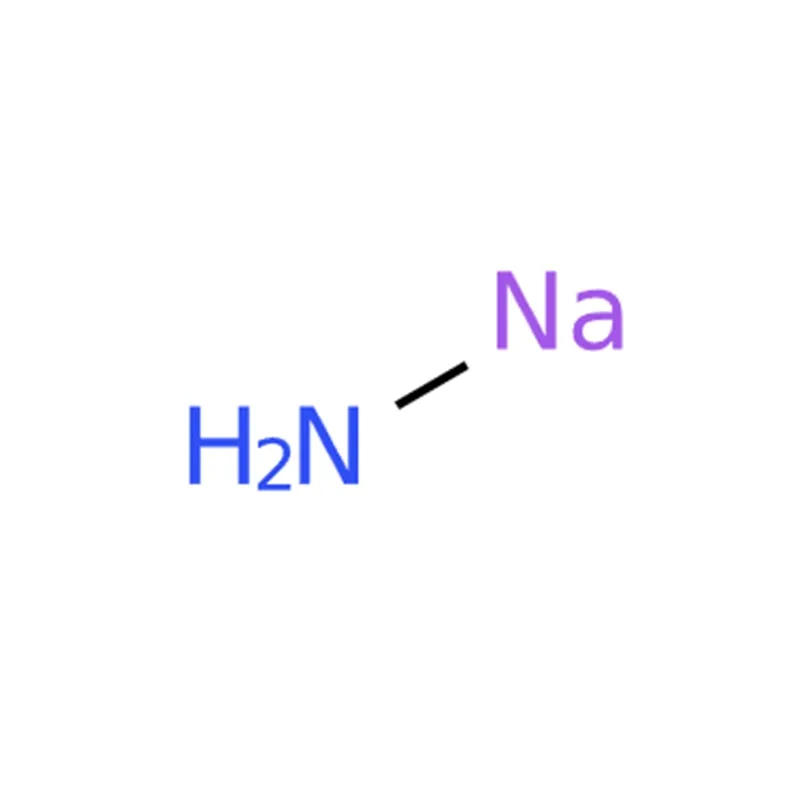
Basic Product Information
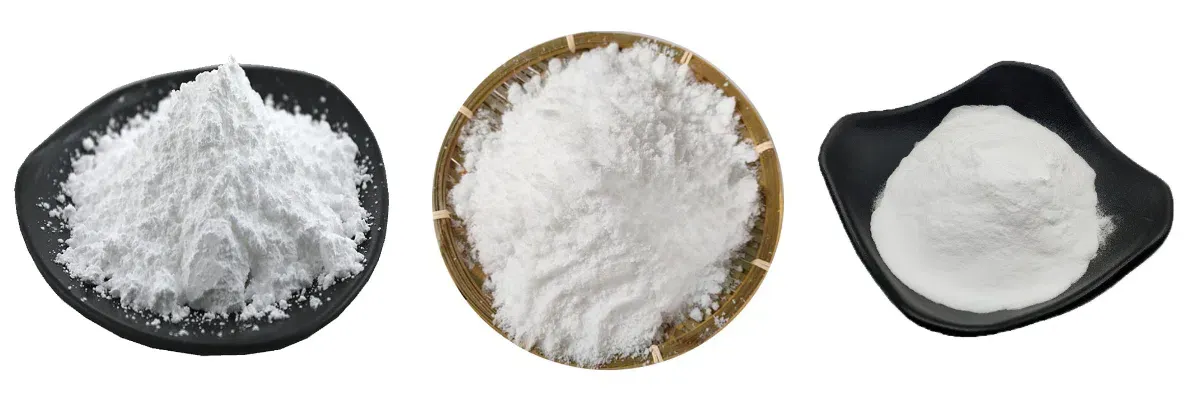
Sodium amide (NaNH₂) is alternatively called sodamide. It appears as white to olive-green crystalline powder with a characteristic ammonia smell.
Core physical indicators: Molecular weight 39.01, melting point 210°C, boiling point 400°C. Thermal decomposition occurs at 500–600°C, breaking down into sodium metal, nitrogen and hydrogen gas.
This chemical features intense reactivity with water: the reaction generates sodium hydroxide alongside ammonia vapor. It dissolves moderately in liquid ammonia and exhibits mild slow reaction with alcohols.
Unique Chemical Properties
As an ionic substance carrying NH₂⁻ amide ions, sodium amide forms when ammonia molecules lose hydrogen atoms and bind with sodium cations.
It is highly hygroscopic and prone to absorbing carbon dioxide and water vapor from ambient air, so airtight sealed packaging is mandatory for storage.
Molten sodium amide demonstrates special dissolving capacity: it can dissolve metallic materials including magnesium, zinc, molybdenum and tungsten, as well as quartz, glass and silicate substances.
Safety & Hazard Characteristics
This product is categorized as flammable, explosive, corrosive and moisture-sensitive goods.
The lone electron pair on its amino group enables strong proton capture ability, leading to violent hydrolysis in water and forming strongly alkaline solutions via the reaction: NaNH₂ + H₂O → NaOH + NH₃. It shows good solubility in liquid ammonia and hot ethanol.
Fine sodium amide dust carries toxicity. Inhalation, skin or eye contact will cause severe irritation, and direct exposure can lead to corrosive chemical burns.
Upon contact with air, sodium amide oxidizes rapidly, creating a yellow oxidized film on its surface. Certain oxidized byproducts carry explosion risks, which can be ignited by friction or heat.
Additional decomposition will take place under vacuum heating at 300–330°C, releasing nitrogen, sodium, hydrogen and ammonia. For safe preservation, store in airtight vessels filled with inert gas, and isolate from air, moisture and all fire sources.
Production Routes & Wide Application
Manufacturing Methods
Industrial mass production: Molten sodium reacts with ammonia gas under controlled temperature of 300–400°C.
Laboratory preparation: Sodium metal reacts with liquid ammonia at room temperature with catalyst assistance.
It can also undergo reaction with carbon monoxide to synthesize sodium cyanide, a vital chemical intermediate.
Core Application Scenarios
In organic synthesis processes, sodium amide serves as a multi-functional auxiliary reagent, widely applied as aminating agent, condensation promoter, dehydrating agent, dehalogenating agent, alkylating agent and polymerization initiator.
It is also a critical raw material for manufacturing multiple high-value chemicals, including hydrazine, sodium cyanide, azides, various cyanide derivatives and indigo dye.
Melting point | 210 °C (lit.) |
Boiling point | 400 °C (lit.) |
density | 1.39 g/cm3 (25℃) |
Fp | 85 °F |
storage temp. | Store below +30°C. |
solubility | reacts with H2O |
form | crystalline |
color | Greyish white powder |
Odor | Ammonia like |
Water Solubility | REACTS VERY VIOLENTLY, EVEN EXPLOSIVELY |
Sensitive | Air & Moisture Sensitive |
Merck | 148576 |
Stability: | Stability Flammable. Reacts violently with water producing very toxic fumes. In case of fire do not use water, but instead smother with soda ash. May form explosive peroxides if heated, or if stored for extended periods in contact with air or oxygen. Incompatible with water and aqueous solutions, carbon dioxide, halogenated hydrocarbo |
CAS DataBase Reference | 7782-92-5(CAS DataBase Reference) |
EPA Substance Registry System | Sodium amide (Na(NH2)) (7782-92-5) |
Hazard Codes | F,C,Xi,N |
Risk Statements | 14/15-19-34-20/21-10-67-65-63-48/20-11-36/37-15/29-14-50-29 |
Safety Statements | 26-43-45-62-7/8-43D-36/37/39-27-16-61 |
RIDADR | UN 3129 4.3/PG 2 |
WGK Germany | 2 |
F | 37917 |
Autoignition Temperature | 450 °C |
TSCA | Yes |
HS Code | 2853 90 90 |
HazardClass | 4.3 |
PackingGroup | II |
Hazardous Substances Data | 7782-92-5(Hazardous Substances Data) |
This chemical performs excellently as a condensation catalyst during organic synthesis. It is an indispensable feedstock for manufacturing Vitamin A, and also boasts versatile roles including dehydrating agent, dehalogenating reagent, alkylation agent and amination agent.
When dissolved in liquid ammonia, it dissociates NH₄⁺ ions and works as an initiator for the anionic polymerization of PVC. Beyond that, it occupies a vital position in organic synthesis and pharmaceutical production. It is adopted to manufacture a series of key chemical intermediates, such as azides, cyanide derivatives, indigo pigment and hydrazine.