
Product Details
Boron trifluoride stands as a crucial Lewis acid catalyst in organic synthesis, playing a widespread role in various key reactions such as polymerization, hydrocarbonization, alkylation, and isomerization. Due to the challenges associated with handling its gaseous form, it is typically combined with polar oxygen- or nitrogen-containing compounds to form stable complexes—these complexes are designed to meet the specific activity demands of different reaction processes.
Among these complexes, boron trifluoride diethyl etherate is one of the most extensively utilized. Furthermore, boron trifluoride possesses the ability to form complexes with a range of substances, including thioethers, ketones, anisole, phenol, amines, and numerous derivatives of these compounds.
Product Application of Boron Trifluoride Etherate (CAS# 109-63-7)
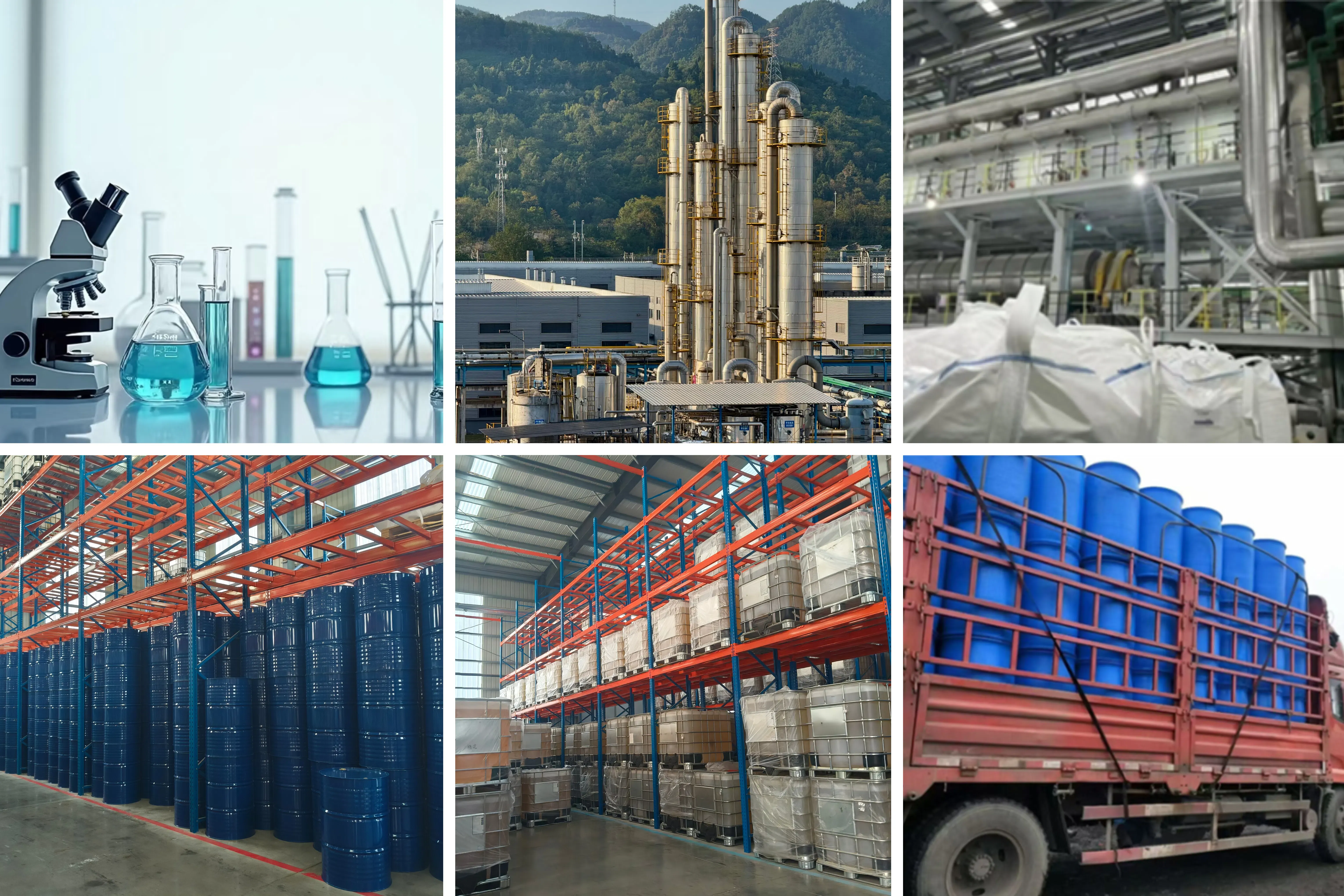
Boron trifluoride etherate is widely utilized as a cationic polymerization catalyst, and also serves as a catalyst in the production of butadiene rubber and polyformaldehyde. Additionally, it acts as a key raw material for boron-hydrogen high-energy fuels and the extraction of boron isotopes. In chemical synthesis processes, it is commonly employed as a catalyst, and it also plays an important role as a starting material for the production of boron-hydrogen high-energy dyes and the isolation of boron-10 isotopes.
Boron trifluoride diethyl etherate Chemical Properties
| Melting point | −58 °C(lit.) |
| Boiling point | 126-129 °C(lit.) |
| Density | 1.15 g/mL(lit.) |
| Vapor density | 4.9 (vs air) |
| Vapor pressure | 4.2 mm Hg ( 20 °C) |
| Refractive index | n20/D 1.344(lit.) |
| Fp | 118 °F |
| Storage temp. | Store below +30°C. |
| Solubility | Miscible with ether and alcohol. |
| Form | liquid |
| Specific Gravity | 1.126 (20/4℃) |
| Color | brown |
| Explosive limit | 5.1-18.2%(V) |
| Water Solubility | Reacts |
| Sensitive | Moisture Sensitive |
| Hydrolytic Sensitivity | 7: reacts slowly with moisture/water |
| Merck | 141,350 |
| BRN | 3909607 |
| Exposure limits | ACGIH: TWA 0.1 ppm; Ceiling 0.7 ppm |
| Stability | Stable. Highly flammable. May form explosive peroxides in contact with air or oxygen. Reacts exothermically with water to form extremely flammable diethyl ether and toxic, corrosive boron trifluoride hydrates. Also incompatible with bases, amines, alkali metals. |
| InChIKey | MZTVMRUDEFSYGQ-UHFFFAOYSA-N |
| CAS DataBase Reference | 109-63-7(CAS DataBase Reference) |
| NIST Chemistry Reference | Boron trifluoride etherate(109-63-7) |
| EPA Substance Registry System | Boron, trifluoro[1,1'-oxybis[ethane]]-, (T-4)- (109-63-7) |
Boron trifluoride diethyl etherate Chemical PropertiesSafety Information
| Hazard Codes | T,C |
| Risk Statements | 10-14-20/22-35-48/23-34-14/15-23-22 |
| Safety Statements | 16-23-26-36/37/39-45-8-28A-43 |
| RIDADR | UN 2604 8/PG 1 |
| WGK Germany | 3 |
| F | 10 |
| Autoignition Temperature | 185 °C DIN 51794 |
| TSCA | Yes |
| HazardClass | 8 |
| PackingGroup | I |
| HS Code | 29319090 |
| Hazardous Substances Data | 109-63-7(Hazardous Substances Data) |