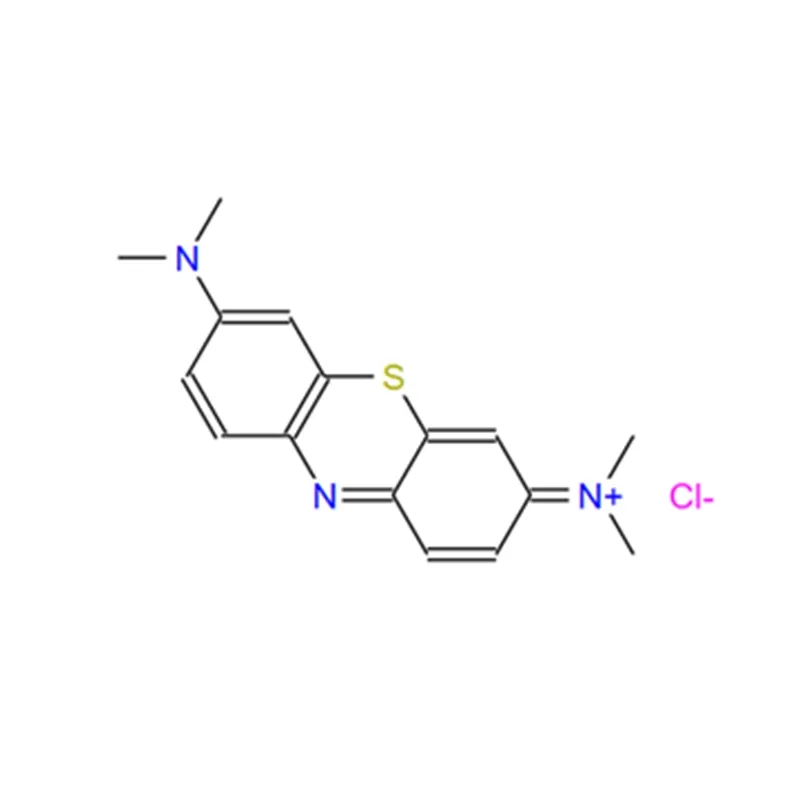
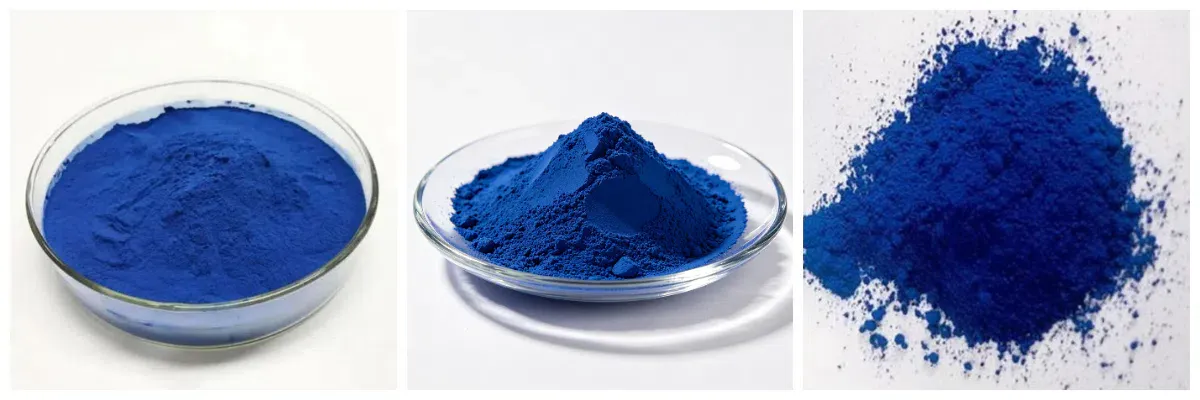
Methylene Blue (MB for short), with CAS number 61-73-4, is an organic heterocyclic compound. It appears as a dark green, glossy crystalline powder with no odor. It is readily soluble in water, forming a clear sky-blue solution upon dissolution, slightly soluble in ethanol, and insoluble in ether. As a classic reducing dye, its molecular structure contains a phenothiazine ring and possesses reversible redox properties, which is the core basis for its multifunctional applications.
This substance has excellent biocompatibility and extremely low toxic and side effects. At conventional usage dosages, it causes no significant harm to the human body and the environment. It has been certified by drug regulatory authorities in many countries and officially approved for clinical diagnosis and treatment. Since it was discovered and introduced to the scientific research and medical fields in the 19th century, methylene blue has occupied an important position in various industries for a century, relying on its unique physicochemical properties and biological activity. It is a multifunctional chemical raw material and medicinal reagent with a wide range of applications and high cost performance.
In the field of scientific research, methylene blue has become one of the commonly used reagents in laboratories due to its excellent staining performance and redox indicator properties. It can be used as a staining agent in neuroanatomical research to clearly mark the morphological structure of nerve tissue, helping researchers observe the distribution and connection of nerve fibers. In bacteriological research, it can stain bacterial cells, facilitating the differentiation of bacterial species and observation of bacterial morphology and growth status under a microscope. Meanwhile, in biochemical research, its reversible redox properties make it an ideal redox indicator, which can accurately reflect the redox state of the reaction system and assist researchers in analyzing biochemical reaction mechanisms and monitoring reaction progress.
In the field of clinical medicine, the application value of methylene blue is particularly prominent. As a specific antidote, it can specifically treat methemoglobinemia caused by poisoning from nitrites, anilines, nitrobenzenes and other toxic substances. Its mechanism of action is to reduce methemoglobin to normal hemoglobin with oxygen-carrying capacity through its own reduction effect, restoring the body's oxygen transport function and relieving hypoxia symptoms. In addition, it has been included in the standard treatment regimen for acute cyanide poisoning, which can combine with cyanide ions to reduce the toxic damage of cyanide to the body. At the same time, it can also be used to alleviate encephalopathy complications caused by ifosfamide chemotherapy, effectively improving patients' neurological function and reducing the neurological adverse reactions of chemotherapeutic drugs.
Methylene Blue Chemical Properties
| Melting point | 190 °C (dec.)(lit.) |
| Density | 1.0 g/mL at 20 °C |
| Refractive index | n20/D1.347 |
| Fp | 45 °C |
| Storage temp | room temp |
| Solubility | Soluble in water, ethanol, ethylene glycol, methyl cellosolve |
| Form | Liquid |
| Pka | 2.6, 11.2(at 25℃) |
| Colour Index | 52015 |
| color | Green |
| Specific Gravity | 0.98 |
| Odor | Odorless |
| Water Solubility | 40 g/L (20 ºC) |
| λmax | 661 nm |
| Merck | 146060 |
| BRN | 3641570 |
| Biological Applications | Detecting microorganisms; treating diabetic retinopathy,macular degeneration,malignant uveal melanomas, erysipelas,hidradenitis suppurativa,inflammation,skin diseases |
| NIST Chemistry Reference | Methylene blue(61-73-4) |
| EPA Substance Registry System | Methylene blue (61-73-4) |
Safety Information
| Hazard Codes | Xn |
| Risk Statements | 10-41-22-20/21/22-36/37/38 |
| Safety Statements | 26-39-36 |
| RIDADR | UN 1993 3/PG 3 |
| WGK Germany | 3 |
| RTECS | SP5740000 |
| HS Code | 32049010 |
| Hazardous Substances Data | 61-73-4(Hazardous Substances Data) |
| Toxicity | LD50 oral in rat: 1180mg/kg |