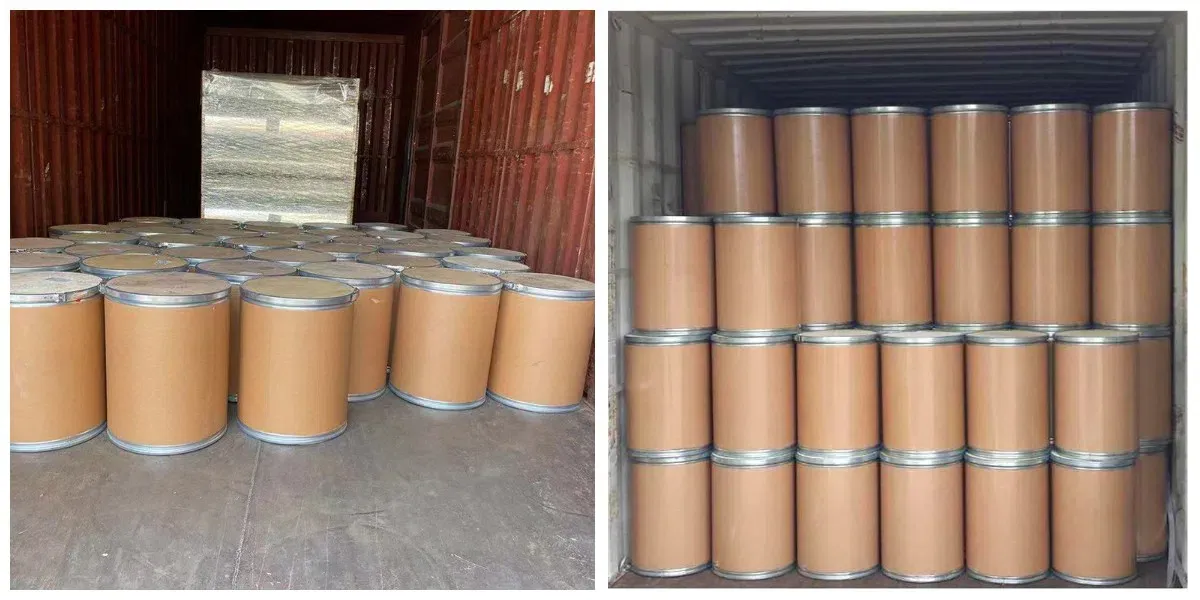
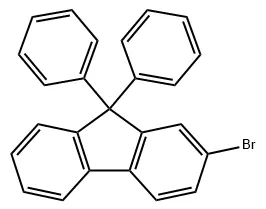
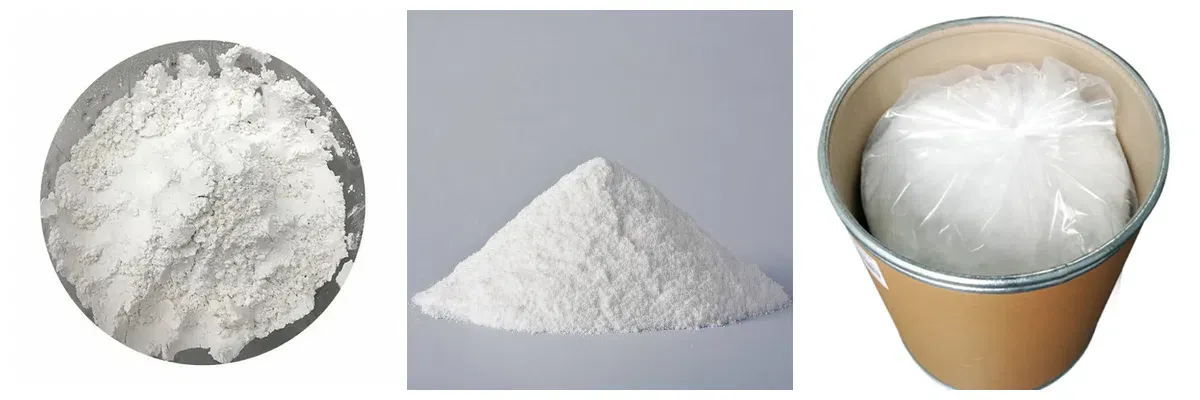
2-Bromo-9,9-diphenyl-9H-fluorene, CAS 474918-32-6, is a typical fluorene derivative supplied in uniform off-white solid form.
This key intermediate is widely applied in the synthesis of OLED functional materials. Via molecular modification based on its bromo reactive site, manufacturers can prepare 9,9-diphenylfluorene end-capped oligothiophenes. These synthesized compounds function as high-performance active materials for organic field-effect transistors and light-emitting diode devices, laying a vital raw material foundation for the mass production of organic optoelectronic products.
| 2-Bromo-9,9-diphenyl-9H-fluorene Chemical Properties |
| Melting point | 217.0 to 221.0 °C |
| Boiling point | 480.5±24.0 °C(Predicted) |
| density | 1.363±0.06 g/cm3(Predicted) |
| storage temp. | Sealed in dry,Room Temperature |
| solubility | soluble in Toluene |
| form | powder to crystal |
| color | White to Almost white |
| InChI | InChI=1S/C25H17Br/c26-20-15-16-22-21-13-7-8-14-23(21)25(24(22)17-20,18-9-3-1-4-10-18)19-11-5-2-6-12-19/h1-17H |
| InChIKey | WNXNWOBGPRKOJF-UHFFFAOYSA-N |
| SMILES | C1(C2=CC=CC=C2)(C2=CC=CC=C2)C2=C(C=CC=C2)C2=C1C=C(Br)C=C2 |
| CAS DataBase Reference | 474918-32-6 |
Core Product Merits & Application Advantages
Highly Versatile Synthetic Building Block
The reactive bromine substitution site enables efficient cross-coupling reactions including Suzuki-Miyaura coupling, serving as a foundational intermediate for synthesizing advanced optoelectronic functional materials. Its rigid fluorene conjugated backbone delivers superior thermal stability and excellent charge transport performance for OLED emitters, hole transport materials, organic photovoltaics (OPVs) and organic field-effect transistors (OFETs).
Outstanding Thermal & Structural Stability
With a high boiling point up to 480.5°C and melting range at 217–221°C, this fluorene derivative boasts high glass transition temperature, resisting thermal decomposition during high-temperature vacuum evaporation in OLED production, effectively extending device service life and improving color purity & luminous efficiency of final display panels.
Strict Quality Control for Electronic-Grade Purity
Manufactured under dust-free electronic chemical production workshops, with HPLC purity up to 99% minimum. Each batch is accompanied by complete COA, NMR and GC test reports, with controlled trace heavy metal and ion residues to meet the strict purification standards of semiconductor optoelectronic manufacturing, eliminating performance interference on finished electronic devices.
Wide Industrial Application Coverage
Beyond mainstream OLED luminescent material synthesis, it is also widely adopted as a key intermediate for conjugated fluorescent polymers, organic semiconductor materials, and fine pharmaceutical intermediates, delivering strong structural modifiability for custom molecular research and mass industrial production.