Glyceryl monostearate CAS#31566‑31‑1
Compliant with FDA §184.1324(a), glyceryl monostearate, also widely referred to as monostearin, is a complex blend composed of variable‑ratio glyceryl monostearate (C₂₁H₄₂O₄), alongside multiple glyceryl fatty‑acid esters derived from commercial‑grade stearic acidU.S. Gover.... Its component proportion will shift slightly depending on production techniques and raw‑material sources.
This multi‑functional monoglyceride material can be manufactured through two mainstream production routes. One approach is glycerolysis, where edible‑origin natural fats and oils undergo glycerolysis reaction. The alternative synthetic path is direct esterification: glycerin reacts with stearic acid which is also sourced from edible feedstock, ensuring the final product satisfies food‑contact safety requirementseCFR. Produced from food‑grade starting materials, it obtains GRAS qualification and is suitable for food processing, cosmetic formulation as well as polymer additive scenarios.
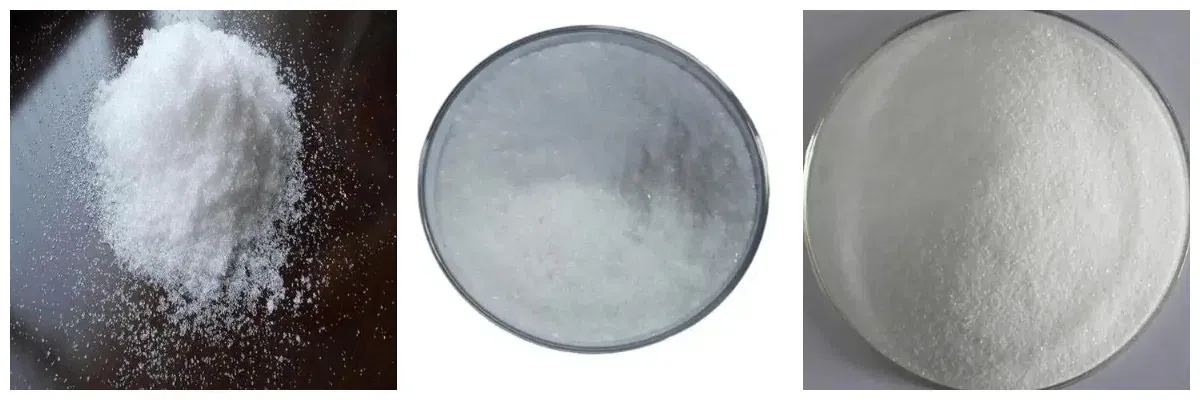
Glyceryl monostearate Chemical Properties |
Melting point | 78-81 °C |
Boiling point | 410.96°C (rough estimate) |
density | 0.9700 |
refractive index | 1.4400 (estimate) |
Fp | >500 |
storage temp. | Sealed in dry,Store in freezer, under -20°C |
solubility | Soluble in hot ethanol, ether, chloroform, hot acetone, mineral oil, and fixed oils. Practically insoluble in water, but may be dispersed in water with the aid of a small amount of soap or other surfactant. |
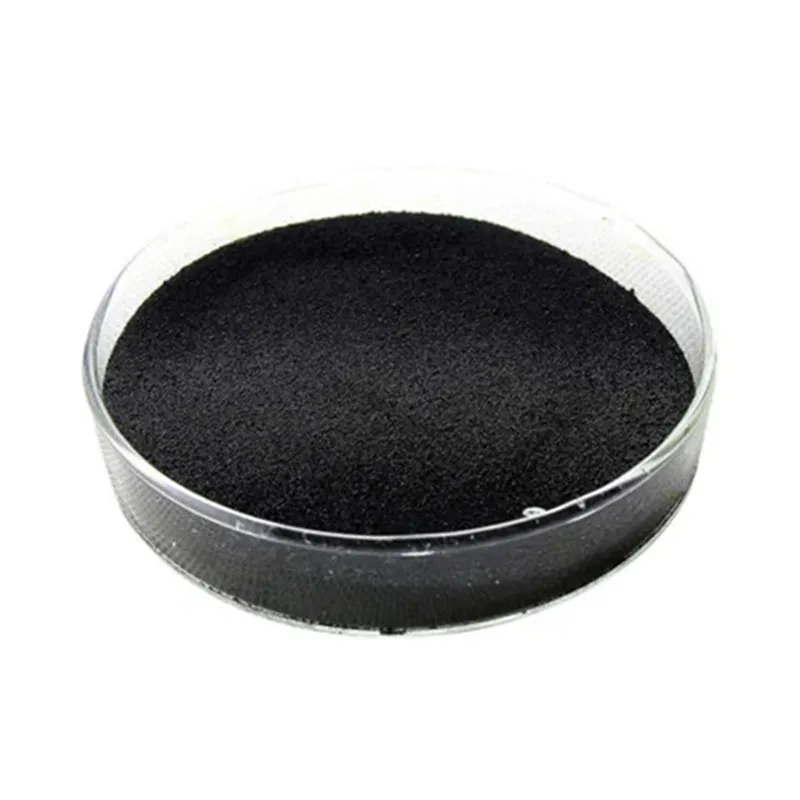
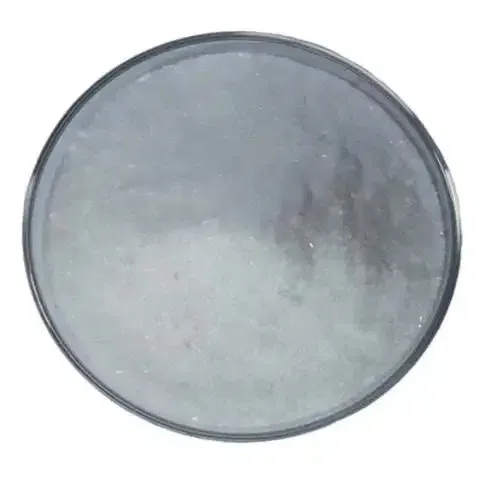
form | Powder |
color | Pure-white or cream-colored, wax-like solid |
Odor | faint odor |
Water Solubility | Soluble in hot organic solvents.Soluble in hot water. Slightly soluble in ethanol. Insoluble in aliphatic solvents. |
Merck | 14,4489 |
Exposure limits | ACGIH: TWA 10 mg/m3; TWA 3 mg/m3 |
Cosmetics Ingredients Functions | SKIN CONDITIONING - EMOLLIENT |
InChI | InChI=1S/C21H42O4/c1-2-3-4-5-6-7-8-9-10-11-12-13-14-15-16-17-21(24)25-19-20(23)18-22/h20,22-23H,2-19H2,1H3 |
InChIKey | VBICKXHEKHSIBG-UHFFFAOYSA-N |
SMILES | C(OCC(CO)O)(=O)CCCCCCCCCCCCCCCCC |
CAS DataBase Reference | 31566-31-1(CAS DataBase Reference) |
EPA Substance Registry System | Glyceryl monostearate (31566-31-1) |
Safety Information |
WGK Germany | 1 |
TSCA | TSCA listed |
HS Code | 2918199890 |
Toxicity | LD50 ipr-mus: 200 mg/kg NTIS** AD277-689 |
Available in multiple grades, glyceryl monostearate functions as a versatile non‑ionic additive serving as emulsifier, stabilizer, emollient and plasticizer across food, pharmaceutical and cosmetic industries. It works as an efficient compatibilizer between polar and non‑polar substances, facilitating the creation of both water‑in‑oil and oil‑in‑water emulsion systems. Thanks to these surface‑active characteristics, it can serve as an excellent dispersant for pigments within oil phases or solid particles dispersed in fatty media; additionally, it acts as a solubilizing agent for phospholipids such as lecithin.
Beyond conventional usages, glyceryl monostearate is adopted in innovative fluidized hot‑melt granulation processes to produce functional granules and tablet intermediates. Within pharmaceutical solid‑dose manufacturing, it performs as an effective tableting lubricant. It can also construct sustained‑release matrix systems for oral solid preparations. Typical sustained‑release scenarios cover tablet pellets, suppository formulations and veterinary bolus products. Moreover, it can be incorporated as a key matrix component for biodegradable implantable controlled‑release drug delivery systems.
Formulation developers need to take polymorphic transformation into account when deploying glyceryl monostearate in finished formulas. Its α‑crystal form features good dispersibility and foaming property, making it fit for emulsification and preservation purposes. By contrast, the denser and thermodynamically more stable β‑crystal form is well‑suited for wax‑based matrix systems. One practical example is flavour‑masking for clarithromycin within paediatric pharmaceutical preparations.