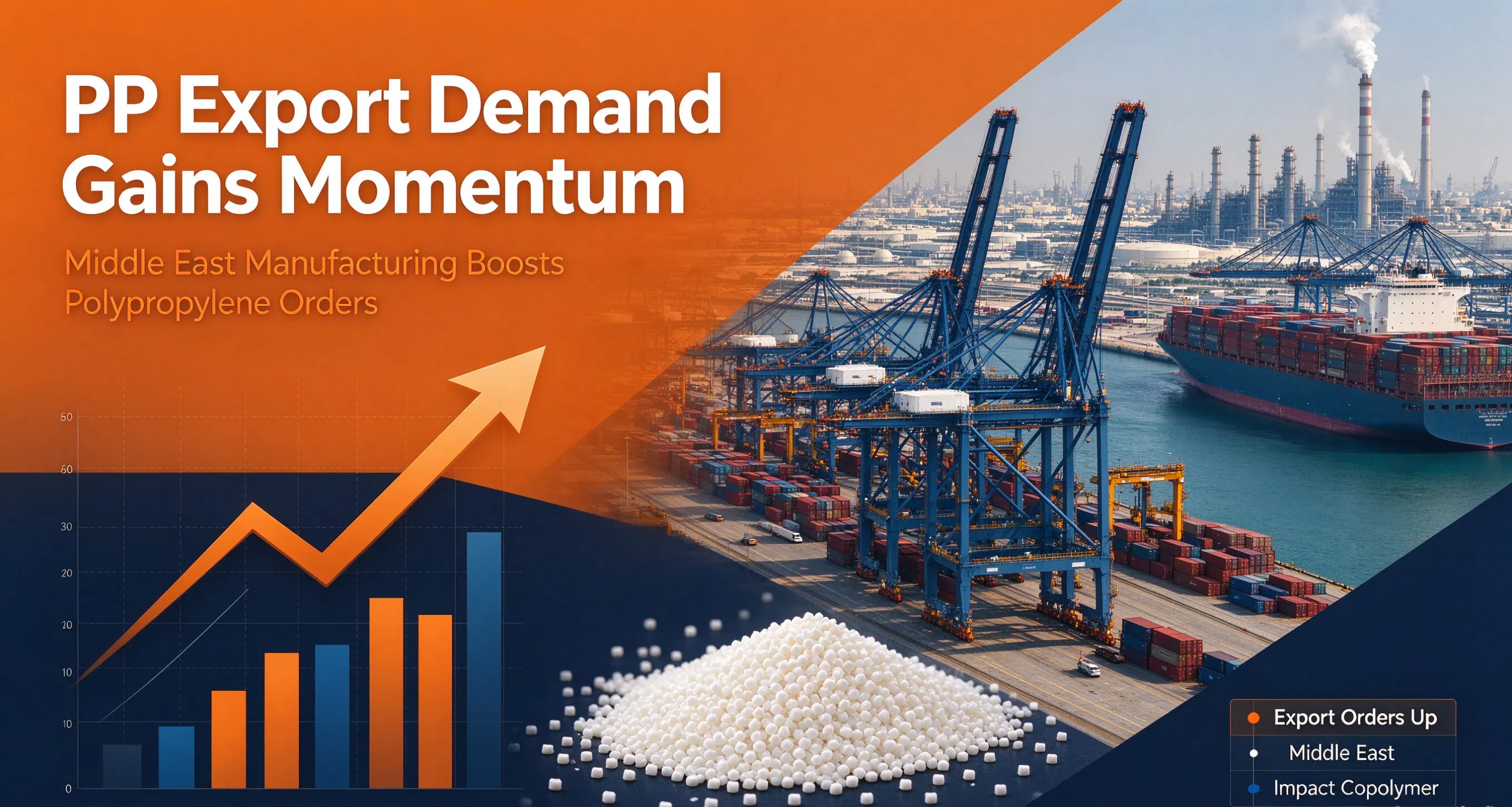
In recent periods, foreign trade inquiries for domestically produced Polypropylene (PP) resin have continued to heat up. Export orders for high-impact copolymer injection grade, raffia grade and film grade have grown steadily. The Middle East and Southeast Asia serve as core demand markets, with purchasing demand from injection molding plants, packaging manufacturers and irrigation supporting engineering clients in Jubail, Saudi Arabia, maintaining a steady release.
Polypropylene is a non-hazardous petrochemical raw material with simple export procedures and no supporting documents for dangerous goods required. Featuring low density, excellent chemical resistance, good rigidity and outstanding heat resistance, PP is widely used for plastic turnover parts, injection-molded pipe fittings, strapping tapes, geotextiles, nonwoven fabrics, agricultural irrigation fittings and industrial packaging containers. Its performance well meets the material requirements of the Middle East packaging industry, municipal water-saving projects and building material supporting processing. As local downstream processors in Saudi Arabia keep restocking, sample testing orders and full-container shipments of high-impact copolymer PP have increased concurrently.
On the domestic supply side, China’s oil-based and coal-based polypropylene plants operate at stable rates with a complete portfolio of grades. Stable supply is available for mainstream specifications including general raffia grade, homopolymer injection grade and low-temperature resistant copolymer grade. Compared with competing overseas materials, domestic PP offers advantages in flexible lead time, small-batch sample support and customized parameter adjustment. A growing number of overseas buyers arrange sample evaluation and gradually switch their procurement sources.
Logistically, PP pellets are normally packed in 25kg bags. Shipments can be arranged by full-container sea freight or LCL. Small-batch samples are available for delivery via consolidated air cargo on all-cargo freighters. Customs clearance documents are straightforward, complying with the import requirements of Saudi Arabia and other Gulf countries. Market analysts expect that demand for impact copolymer PP will remain strong as the Middle East packaging, water-saving irrigation and plastic processing sectors keep operating, while raffia-grade PP provides fundamental market support.
Industry note: Specifications such as impact strength, melt flow index and low-temperature toughness vary greatly among different grades. For export orders, grade type, test standards and destination certification requirements should be confirmed in advance to ensure smooth delivery. In the long run, the lightweight trend of global packaging and popularization of water-saving agriculture will continuously expand the overseas growth space for polypropylene.