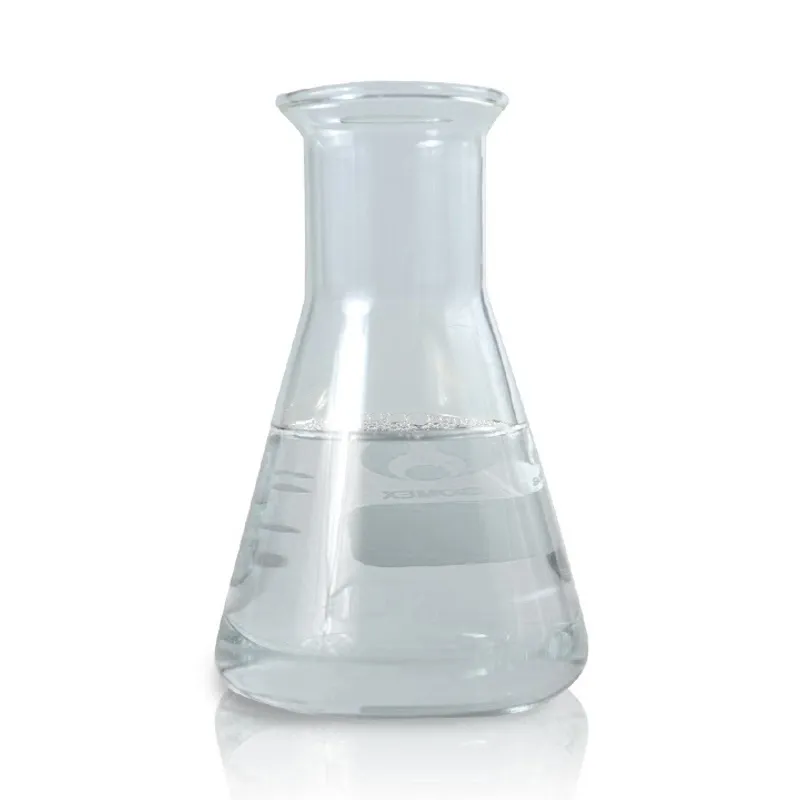
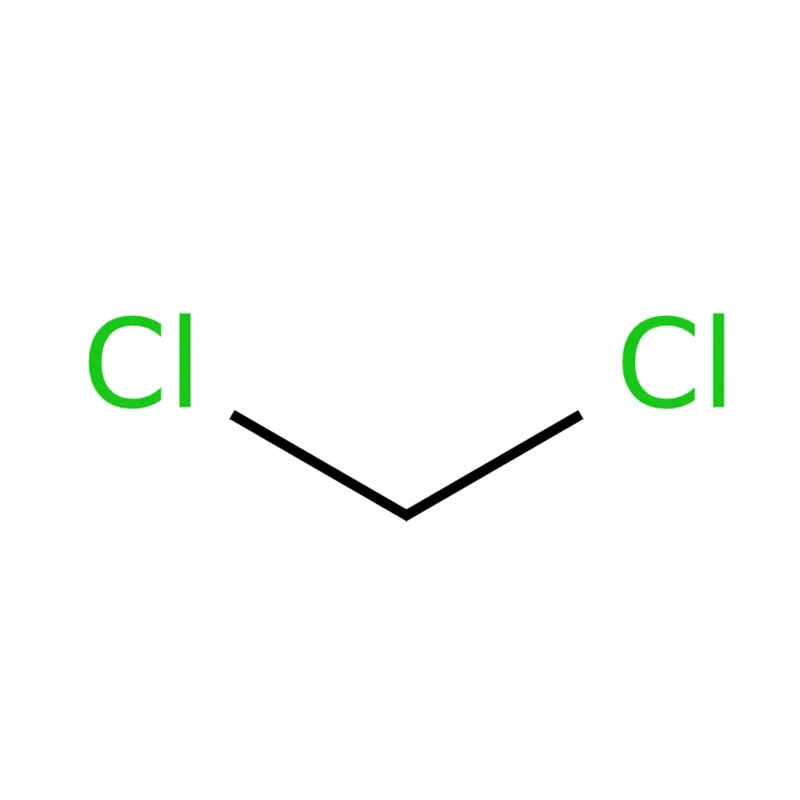
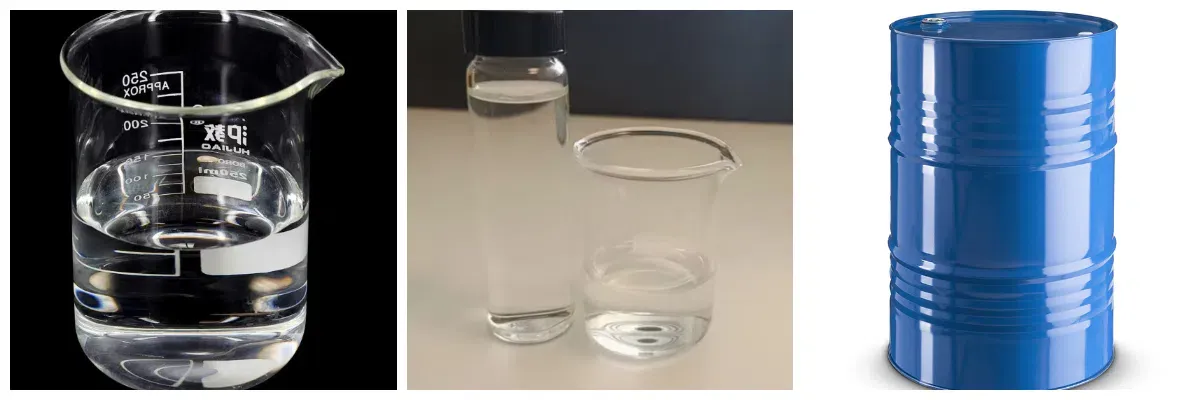
Commonly referred to as methylene chloride, dichloromethane has the chemical formula CH₂Cl₂. It belongs to halogenated methane compounds, which is synthesized by substituting two hydrogen atoms of methane with chlorine element It is a colourless clear liquid with a density greater than water, emitting a gentle sweet scent similar to ether. Though the pure solvent itself will not catch fire, mixing it with high-concentration oxygen can create explosive blends. Sparingly soluble in water, it can be infinitely blended with numerous organic solvents such as chlorinated hydrocarbons, diethyl ether, ethyl alcohol and N,N-dimethylformamide. Benefiting from its outstanding dissolving capacity and high volatility, it is widely applied in industrial fields for paint removal, workpiece cleaning and chemical extraction procedures
Parameters
Melting point | -97 °C |
Boiling point | 39.8-40 °C mm Hg(lit.) |
density | 1.325 g/mL at 25 °C(lit.) |
vapor density | 2.9 (vs air) |
vapor pressure | 24.45 psi ( 55 °C) |
refractive index | n |
Fp | 39-40°C |
storage temp | room temp |
solubility | Miscible in ethyl acetate, alcohol, hexanes, methanol, diethyl ether, n-octanol, acetone benzene, carbon tetrachloride, diethyl ether and chloroform. |
form | Liquid |
color | APHA: ≤10 |
Specific Gravity | 1.329 (20/20℃) |
Odor | Odor threshold 160 to 230 ppm |
PH | 7 (20°C) |
Odor Threshold | 160ppm |
explosive limit | 13-22%(V) |
Water Solubility | 20 g/L (20 ºC) |
λmax | λ: 235 nm Amax: 1.00 |
Merck | 14,6063 |
BRN | 1730800 |
Henry's Law Constant | 2.49 at 30 °C (headspace-GC, Sanz et al., 1997) |
Dielectric constant | 9.1(20℃) |
Exposure limits | TLV-TWA 50 ppm (~175 mg/m3) (ACGIH); carcinogenicity: Suspected Human Carcinogen (ACGIH), Animal Sufficient Evidence, Human Inadequate Evidence (IARC). |
Stability: | Volatile |
LogP | 1.250 |
Surface tension | 26.5mN/m at 20°C |
CAS DataBase Reference | 75-09-2(CAS DataBase Reference) |
NIST Chemistry Reference | Methylene chloride(75-09-2) |
IARC | 2A (Vol. Sup 7, 71, 110) 2017 |
EPA Substance Registry System | Methylene chloride (75-09-2) |
Absorption | in accordance |
Safety Information |
Hazard Codes | Xn,T,F,N,C |
Risk Statements | 40-39/23/24/25-23/24/25-11-67-36/37/38-68/20/21/22-20/21/22-50-37-34 |
Safety Statements | 23-24/25-36/37-45-16-7-26-61-36/37/39 |
RIDADR | UN 1593 6.1/PG 3 |
WGK Germany | 2 |
RTECS | PA8050000 |
F | 3-10 |
Autoignition Temperature | 556 °C |
Hazard Note | Harmful |
TSCA | Yes |
HS Code | 2903 12 00 |
HazardClass | 6.1 |
PackingGroup | III |
Hazardous Substances Data | 75-09-2(Hazardous Substances Data) |
Toxicity | LD50 orally in young adult rats: 1.6 ml/kg (Kimura) |
IDLA | 2,300 ppm |
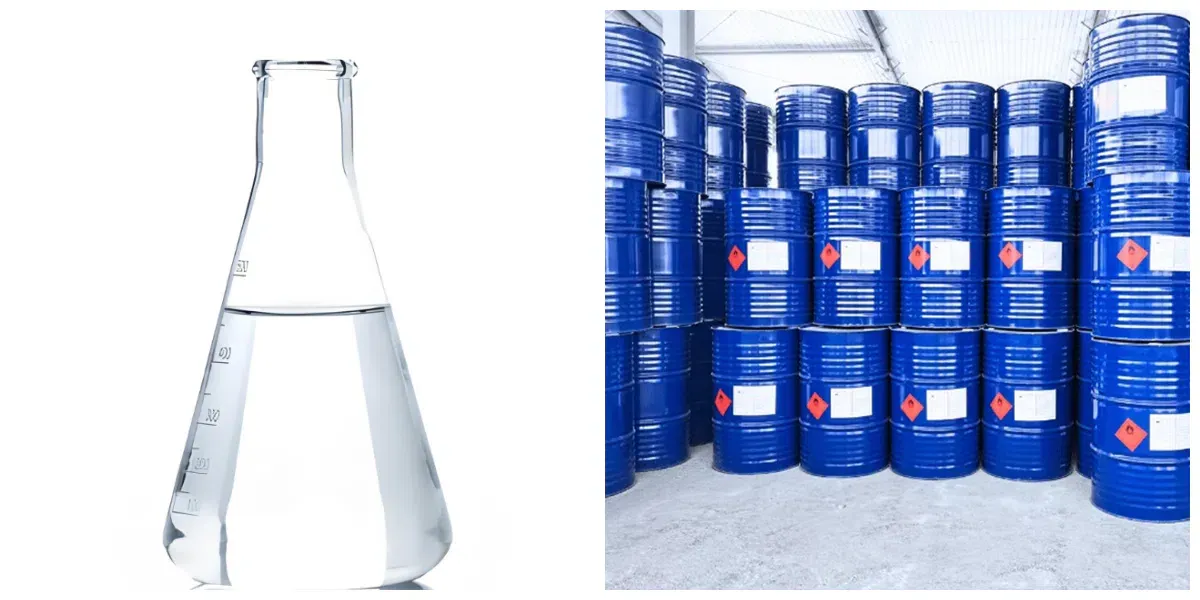
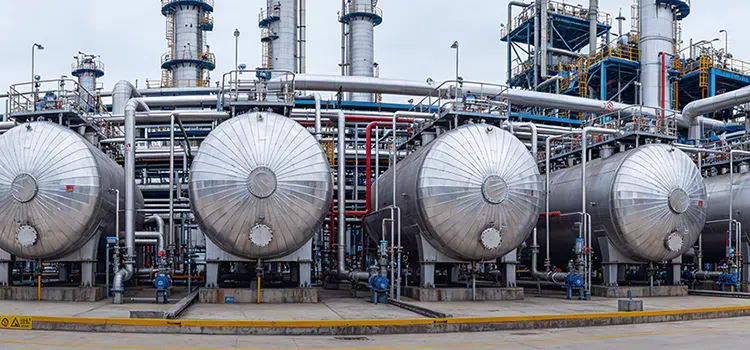
Boasting powerful dissolving performance coupled with comparatively mild toxicity, dichloromethane enjoys broad application across multiple industrial sectors. It is a key raw material for manufacturing safety films and polycarbonate resins. Beyond that, it can be deployed as a coating solvent, metal surface degreasing cleaner, aerosol propellant, polyurethane foaming agent, mould release agent as well as paint stripper. As a clear, colourless liquid, it is widely adopted within the pharmaceutical sector as an ideal reaction solvent. It plays an important role in the synthetic production of ampicillin, hetacillin and cephalosporin antibiotics. Meanwhile, it has versatile downstream uses: acting as a solvent for film production, a dewaxing reagent in petroleum refining, an extracting agent for organic chemical synthesis, a foaming auxiliary for polyurethane and various cellular plastics, and an efficient metal cleaning solvent.