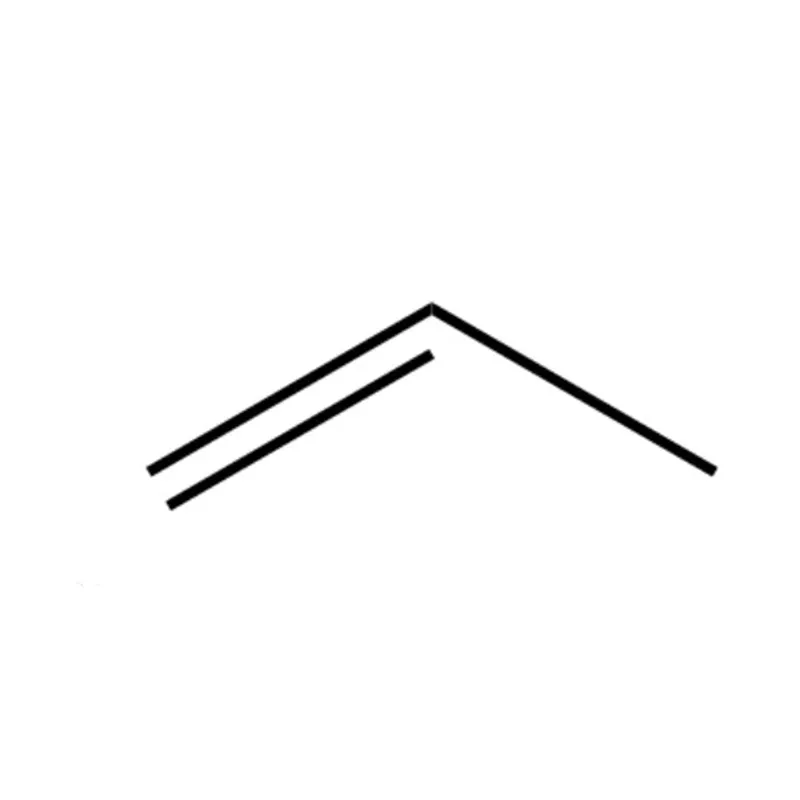
Propylene is the second simplest olefin compound, with the molecular structural formula CH₂=CHCH₃. Within the petrochemical industry chain, it stands as one of the core organic chemical feedstocks, only surpassed by ethylene and benzene in strategic importance.
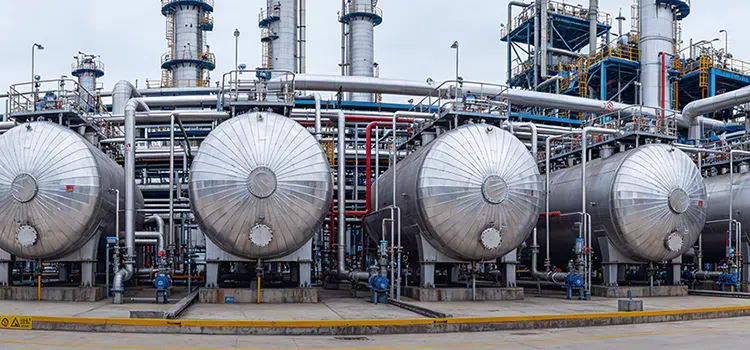
Commercially, propylene is mainly extracted from mixed gas streams yielded by two mainstream refining processes: thermal cracking and catalytic cracking of petroleum fractions. It is also generated as a major by-product when light oil feedstocks are cracked to manufacture ethylene.
A carbon-carbon unsaturated double bond exists within propylene’s molecular framework, which grants the substance excellent chemical reactivity. This structural feature allows propylene to readily participate in various addition reactions with hydrogen, halogen elements and hydrogen halides. Additionally, it can conduct addition polymerization to form polymer products.
Thanks to its unique reactive properties, propylene acts as an irreplaceable foundational monomer for mass production of numerous high-value chemical derivatives. Its core downstream products cover acrylonitrile, polypropylene, ethylene-propylene rubber, propylene oxide and acetone. Beyond chemical intermediates, it also functions as a vital raw material for manufacturing synthetic resins, synthetic rubber, synthetic fibers and all types of plastic materials, supporting the operation of countless downstream industrial sectors.
Melting point | -185 °C(lit.) |
Boiling point | -47.7 °C(lit.) |
Density | 1.49 |
Vapor density | 1.48 (vs air) |
Vapor pressure | 15.4 atm (37.7 °C) |
Refractive index | 1.3567 |
Flash point | -108°C |
Acidity coefficient (pKa) | 43(at 25°C) |
Form | colorless gas |
Explosion limits | 11.10% |
Odor threshold | 13ppm |
Water solubility | 0.33g/L(25 °C) |
Thermal conductivity | 0.11 W/(m-K) |
Freezing point | -185.25℃ |
Merck | 137,941 |
BRN | 1696878 |
Henry's Law Con stant | 5.6x10⁻⁵ mol/(m3Pa) at 25℃, Plyasunov and Shock (2000) |
Dielectric constant | 1.9 (20℃) |
Stability | Stable. Highly flammable. Easily forms explosive mixtures with air. Incompatible with strong oxidizers, strong acids, and halogens. |
InChI | 1S/C3H6/c1-3-2/h3H,1H2,2H3 |
InChIKey | QQONPFPTGQHPMA-UHFFFAOYSA-N |
SMILES | CC=C |
LogP | 1.77 at 20℃ |
Propylene occupies an irreplaceable position as a fundamental petrochemical feedstock, laying the groundwork for manufacturing an extensive range of downstream chemical derivatives.
When subjected to gas-phase oxidation treatment, propylene will be transformed into acrolein. This acrolein intermediate can then be further processed to synthesize acrylic acid, allyl alcohol, glyceraldehyde and glycolaldehyde. It is also a critical precursor for methionine, a widely adopted additive for human food and animal feed industries.
Via the ammoxidation reaction route, propylene generates acrylonitrile, a vital monomer for the mass production of synthetic fibers, synthetic rubber and multiple plastic materials.
Chlorination of propylene delivers chloropropylene as the primary output. This intermediate can undergo further synthesis to yield allyl alcohol, propylene dichlorohydrin, chloropropionitrile and more chemical intermediates. These substances are core raw materials for producing glycerol, epoxy resin, chlorohydrin rubber and various surfactant products.
The alkylation process utilizing propylene creates cumene, the key intermediate for phenol synthesis, while high-value acetone is simultaneously obtained as a co-product during this production process.
Through oxo synthesis reaction, propylene is converted into n-butyraldehyde and isobutyraldehyde. Both aldehydes act as indispensable intermediates for manufacturing plasticizers, dyestuffs, industrial solvents, agricultural pesticides and a full spectrum of other organic chemicals.
Moreover, propylene hydration technology enables the production of isopropyl alcohol. This alcohol can be further processed to manufacture acetone, isopropylamine and different isopropyl ester derivatives.
Propylene is also capable of undergoing dimerization, trimerization, tetramerization and polymerization reactions to create high-value finished products. The product portfolio includes ethylene-propylene oligomers, polypropylene resin and dodecene. Notably, dodecene functions as an essential intermediate for surfactant manufacturing.
Related Product Navigation
Previous Product: Isophorone diisocyanate, CAS#4098-71-9
Next Product: Chloro-3-methylphenol, CAS#59-50-7