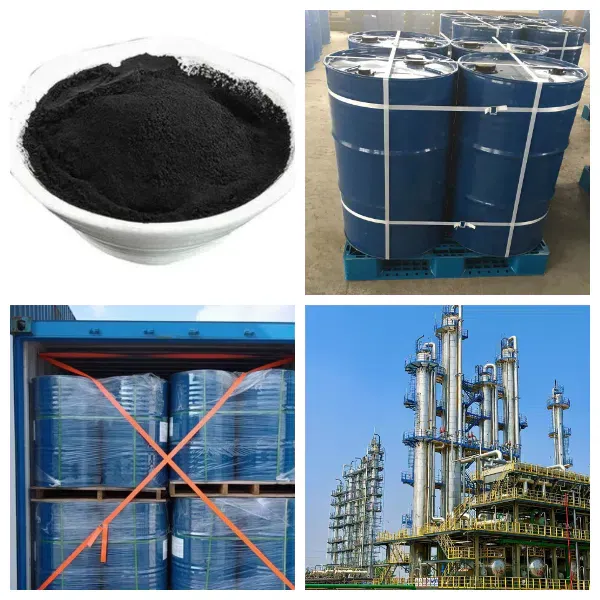
Cupric oxide (CAS# 1317-38-0)
Copper(II) oxide provides blue-green pigments for ceramics. Mined as a natural compound, it acts as an intermediate for fungicides and wood preservatives. It works as an antifouling paint additive for boat hulls and outdoor wooden structures in fresh and seawater.
It is not ideal for animal feed due to low copper bioavailability versus cupric acetate and basic copper carbonate. Additional uses include superconductor preparation, battery manufacturing and industrial catalysis.
Cupric oxide Chemical Properties |
Melting point | 1326 °C |
bulk density | 500kg/m3 |
density | 6.315 |
refractive index | 2.63 |
storage temp. | no restrictions. |
solubility | Aqueous Acid (Slightly), Methanol (Slightly) |
form | powder |
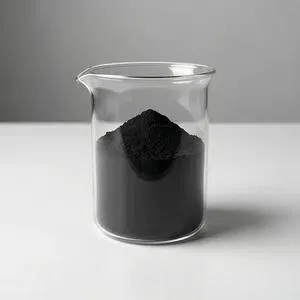
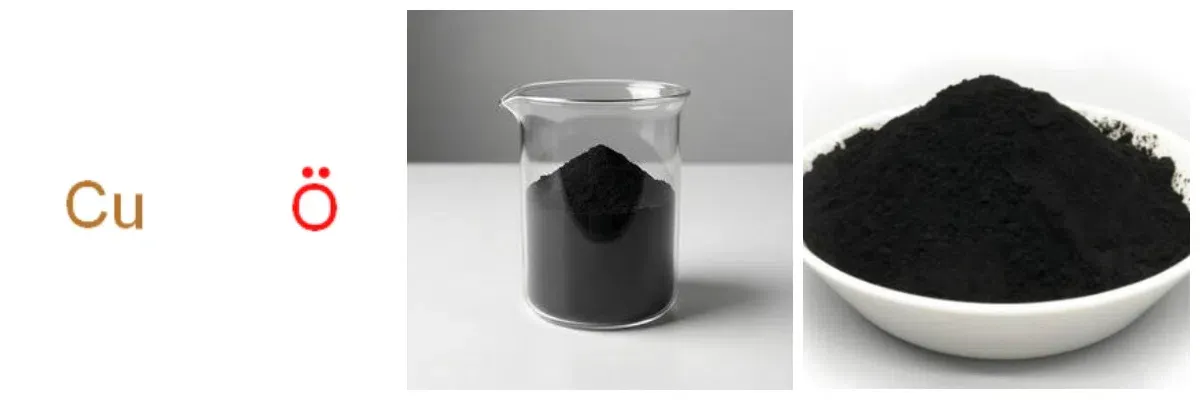
color | Brown to black |
Specific Gravity | 6.3-6.49 |
Odor | at 100.00?%. odorless |
PH | 7 (50g/l, H2O, 20℃)(slurry) |
Water Solubility | insoluble |
Merck | 14,2646 |
crystal system | Monoclinic |
Space group | C2/c |
Lattice constant | a/nmb/nmc/nmα/oβ/oγ/oV/nm30.468370.342260.512889099.54900.0811 |
Exposure limits | ACGIH: TWA 1 mg/m3 |
Dielectric constant | 18.1(Ambient) |
Stability: | Stable. Incompatible with reducing agents, hydrogen sulfide, aluminium, alkali metals, finely powdered metals. |
Major Application | battery manufacturing |
Cosmetics Ingredients Functions | ANTIMICROBIAL |
InChI | 1S/Cu.O |
InChIKey | QPLDLSVMHZLSFG-UHFFFAOYSA-N |
SMILES | [Cu]=O |
CAS DataBase Reference | 1317-38-0(CAS DataBase Reference) |
NIST Chemistry Reference | Copper(ii) oxide(1317-38-0) |
EPA Substance Registry System | Cupric oxide (1317-38-0) |
Safety Information |
Hazard Codes | Xn,Xi,N |
Risk Statements | 22-37-50 |
Safety Statements | 22-36-61-60-29 |
OEB | D |
OEL | TWA: 0.1 mg/m3 |
RIDADR | UN 3077 9 / PGIII |
WGK Germany | 1 |
RTECS | GL7900000 |
TSCA | TSCA listed |
HazardClass | 9 |
HS Code | 28255000 |
Storage Class | 13 - Non Combustible Solids |
Hazard Classifications | Aquatic Acute 1 |
Hazardous Substances Data | 1317-38-0(Hazardous Substances Data) |
Toxicity | LD50 orally in Rabbit: 470 mg/kg |
IDLA | 100 mg Cu/m3 |
Cupric oxide CAS# 1317‑38‑0
Product Application
Main Industrial Scenarios
Copper(II) oxide provides blue-green pigments for ceramic products. Mined as a natural mineral compound, it acts as a key intermediate for manufacturing fungicides and wood preservatives. It serves as an antifouling paint additive for boat hulls and outdoor wooden structures exposed to freshwater and seawater environments.
It is not recommended for animal feed formulation due to low copper bioavailability compared with cupric acetate and alkaline copper carbonate. Additional application fields include superconductor material preparation, battery component production, and catalyst for multiple industrial synthesis processes.
Extended Application Fields
Glass & enamel industry: Used as coloring agent, optical glass polishing powder, paint anti-wrinkle additive.
Chemical manufacturing: Raw material for producing various copper salts, oil desulfurizer and hydrogenation catalyst.
Advanced material: Applied in artificial gemstone production and rayon manufacturing.
Product Specifications & Chemical Properties
Basic Parameters
CAS No.: 1317‑38‑0
Formula: CuO
Appearance: Black to brown-black powder
Melting Point: 1326 °C
Water Solubility: Insoluble in water
Stability: Stable under normal conditions; incompatible with reducing agents, aluminium, alkali metals and hydrogen sulfide.
Packaging & Transportation
Standard Packaging Options
Inner packing adopts double-layer sealed PE plastic bag for dust-proof and moisture-proof. Outer packing is 25 kg fiber drum or iron drum. Customized packaging scheme is acceptable upon customer request.
It is classified as UN 3077, Hazard Class 9, Packing Group III, fully compliant with IMDG and ADR shipping regulations.
Transport Notes
Handle gently to avoid package breakage and powder leakage. Keep away from rain, direct sunlight and incompatible reactive substances during transit. Do not mix-load with food, feed or strong reducing agents.
Storage Requirements
Store in a cool, dry and well-ventilated warehouse. Keep containers tightly sealed at all times. Isolate the material from reducing agents, metal powders, strong acids and food-related goods. Place goods on pallets for moisture insulation instead of direct contact with the ground. Regular cleaning is needed to avoid accumulated dust.
Delivery & After-sales Service
Lead Time
In-stock goods: 2-3 working days
New production order: 7-10 working days
Our Service Support
Pre-shipment inspection: We provide factory test report for every batch before shipment.
Sample support: Small test samples are available for your laboratory evaluation.
Customization: We can adjust particle size and packaging according to your technical requirements.
After-sales response: We will reply promptly once you raise any quality concerns after cargo arrival.
Document supply: Complete export documents including SDS and COA can be provided.
Cooperation & Customer Cases
We supply cupric oxide steadily for ceramic pigment factories, fine chemical catalyst manufacturers, battery material plants and agrochemical intermediate enterprises. We have established long-term cooperative customers across Southeast Asia, the Middle East, Europe and North America. We can supply different grades to match the requirements of ceramic, catalyst and electronic material industries.
FAQ
Q1: What is your MOQ for cupric oxide?
A1: Standard MOQ is 1 FCL. Small trial orders can be negotiated for potential long-term partners.
Q2: Is cupric oxide suitable for animal feed additive?
A2: Not recommended. Its copper bioavailability is much lower than cupric acetate or alkaline copper carbonate, so it is not a preferred feed-grade copper source.
Q3: What protective measures are needed during operation?
A3: Avoid dust inhalation. Operators should wear dust masks, goggles and protective gloves. Prevent the material from entering water systems, for it is highly toxic to aquatic organisms.
Q4: Can you provide SDS and COA documents?
A4: Yes, batch-specific COA and SDS will be arranged together with other shipping documents.
Q5: What payment terms can you accept?
A5: T/T and irrevocable L/C at sight are available for bulk orders.
Safety Reminder
Harmful if swallowed. May irritate respiratory tract and skin. It is very toxic to aquatic life with long-lasting effects. Prevent powder leakage into rivers, lakes or sewer systems. Waste residues shall be disposed in accordance with local environmental protection rules.