Silymarin CAS#65666-07-1
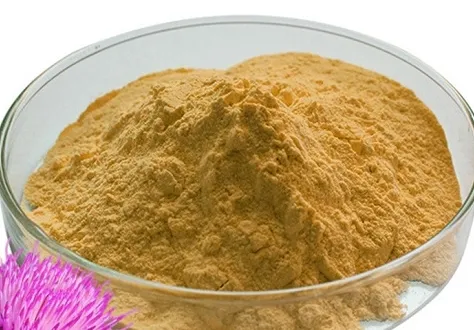
Obtained from milk thistle, silymarin is a flavonoid mixture made up of silybin, silydianin and silychristin. It possesses strong antioxidant, anti-cancer and hepatoprotective properties, supporting a wide range of pharmacological applications.
It helps sustain healthy liver performance, strengthens cellular defenses to shield liver tissue, and assists the liver in removing accumulated toxins. Additionally, it can raise the survival rate of cirrhosis patients, defend the organism against industrial poisons, and work as an antidote for death cap mushroom intoxication.
The active substance achieves these functions through diverse mechanisms. It scavenges free radicals, raises liver glutathione levels for detoxification, enhances the activity of antioxidant enzymes such as superoxide dismutase, promotes liver protein synthesis, and suppresses leukotriene formation.
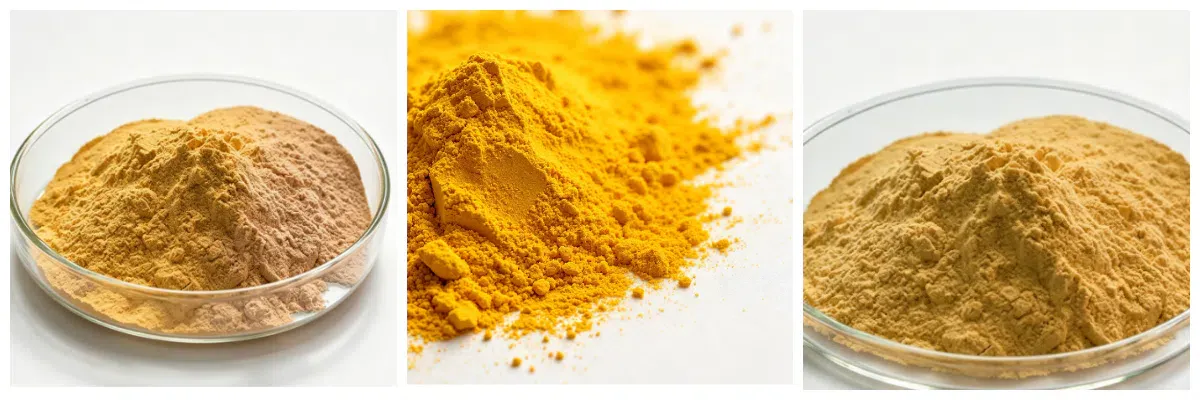
| Silymarin Chemical Properties |
| Melting point | 158 °C |
| storage temp. | -20°C |
| solubility | Acetone (Slightly), DMSO (Slightly), Methanol (Very Slightly) |
| form | Solid |
| color | Light Orange to Brown |
| biological source | plant (Silybum marianum) |
| Major Application | microbiology |
| InChI | InChI=1S/C25H22O10/c1-32-17-6-11(2-4-14(17)28)24-20(10-26)33-18-7-12(3-5-16(18)34-24)25-23(31)22(30)21-15(29)8-13(27)9-19(21)35-25/h2-9,20,23-29,31H,10H2,1H3 |
| InChIKey | FDQAOULAVFHKBX-UHFFFAOYSA-N |
| SMILES | C1(C2=CC=C3OC(C4=CC=C(O)C(OC)=C4)C(CO)OC3=C2)OC2=CC(O)=CC(O)=C2C(=O)C1O |
| CAS DataBase Reference | 65666-07-1(CAS DataBase Reference) |
| Safety Information |
| Safety Statements | 22-24/25 |
| WGK Germany | 3 |
| Storage Class | 11 - Combustible Solids |
Its core benefits include the following aspects:
(1) Support normal liver function and maintain overall physical wellness;
(2) Reinforce the cellular defense system to safeguard liver tissue from damage;
(3) Facilitate the clearance of toxins accumulated within the liver;
(4) Improve survival outcomes for patients suffering from liver cirrhosis;
(5) Deliver protective effects against exposure to industrial toxicants;
(6) Serve as an antidote for poisoning caused by death cap mushrooms.