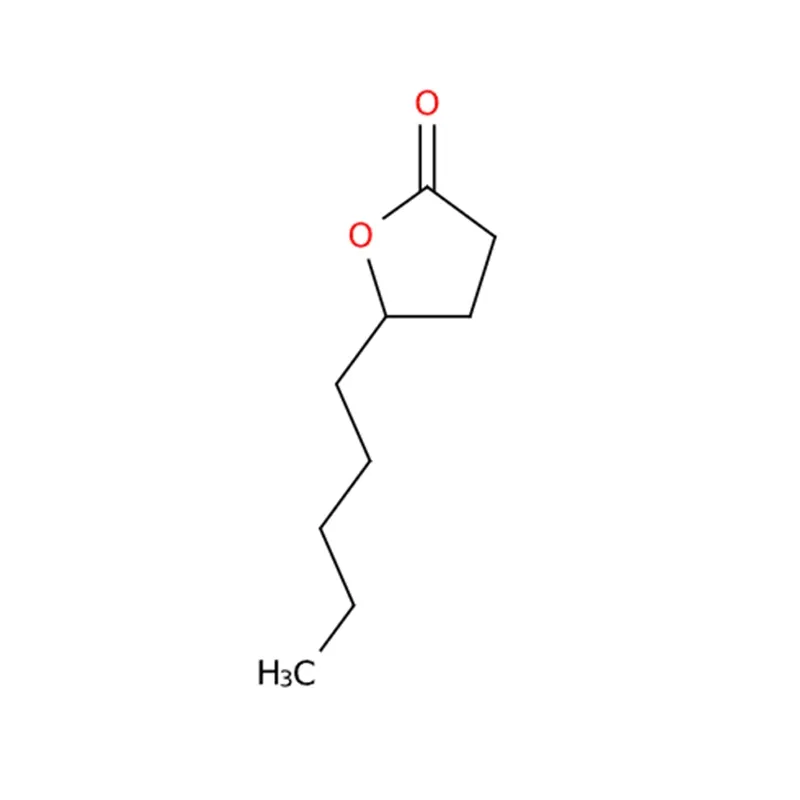
CAS Number:104-61-0
Systematic Chemical Name:5-Pentyloxolan-2-one
Gamma-Nonalactone, also commonly known as coconut lactone, is a transparent oily liquid with an appearance ranging from completely colorless to light pale yellow. This lactone compound widely exists in natural food sources and fermented drinks, featuring in bourbon whiskey, ripe blackcurrants, juicy melons, sweet papayas, fresh pineapples and plump wild blackberries. It is one of the natural aroma substances that form the fruity and creamy notes of these foods.
The product possesses a soft, rich and creamy coconut fragrance with delicate milky undertones, which is its most distinctive characteristic. Thanks to its stable aroma performance and natural scent profile, it is extensively applied as a high-quality food flavoring raw material. It can endow baked goods, beverages, candies, dairy products and multiple processed foods with authentic, long-lasting coconut taste and fragrance, greatly enhancing the layered sense of product flavor.
Apart from its mainstream application in the flavor industry, gamma-nonalactone has drawn growing attention in agricultural pest control research. Multiple academic studies have confirmed its reliable attraction effect on various kinds of grain beetle pests that cause severe loss to stored grain. It holds great development potential as an environment-friendly multi-species insect attractant for grain storage pest monitoring and trapping.
Product Name: | gamma-Nonanolactone |
Synonyms: | G-NONALACTONE;FEMA 2781;GAMMA-NONALACTONE;GAMMA-NONANOIC LACTONE;GAMMA-NONANOLACTONE;GAMMA-PELARGONOLACTONE;δ-n-Amylbutyrolactone;ALDEHYDE C-18 |
CAS: | 104-61-0 |
MF: | C9H16O2 |
MW: | 156.22 |
EINECS: | 203-219-1 |
Product Categories: | lactone flavors;Carbonyl Compounds;Lactones;Organic Building Blocks;Cosmetics;Food Additive |
Mol File: | 104-61-0.mol |
Gamma-Nonanolactone Chemical Properties
Boiling point | 121-122 °C6 mm Hg(lit.) |
Density | 0.976 g/mL at 25 °C(lit.) |
Vapor pressure | 1.9Pa at 25℃ |
Refractive index | n20/D 1.447(lit.) |
FEMA | 2781 | GAMMA-NONALACTONE |
Fp | >230 °F |
Storage temp | Sealed in dry,Room Temperature |
Solubility | Chloroform (Sparingly), Hexanes (Slightly) |
Color | Colourless |
Odor | at 100.00 %. coconut creamy waxy sweet buttery oily |
Odor Type | coconut |
Biological source | synthetic |
Water Solubility | 9.22g/L(25 ºC) |
JECFA Number | 229 |
Stability | Hygroscopic |
LogP | 2.5 at 25℃ |
CAS DataBase Reference | 104-61-0(CAS DataBase Reference) |
NIST Chemistry Reference | 2(3H)-Furanone, dihydro-5-pentyl-(104-61-0) |
EPA Substance Registry System | Dihydro-5-pentyl-2(3H)-furanone (104-61-0) |
γ-Nonalactone
γ-Nonalactone is a vital aroma-active component naturally detected in freshly steamed rice, delivering a prominent, distinctive coconut fragrance that defines its sensory identity. Apart from cooked rice, this lactone substance can also be identified in matured beer and a broad range of fermented food commodities, acting as a natural source of rich, rounded aromatic layers.
This raw material boasts versatile functionality across both food flavor and daily fragrance industries.
When deployed as a food flavor additive, γ-Nonalactone brings warm caramel undertones to flavor formulas, effectively enriching the depth and dimensionality of finished food’s overall taste and aroma.
In fine fragrance compounding, it serves as an excellent auxiliary scent modifier and booster. It can build and intensify a diverse array of classic fragrance themes, including amber, balsamic resin, delicate floral, juniper berry, nutmeg, pine, tropical coconut, sweet maple, and rich oriental accord, greatly improving the fullness and persistence of mixed fragrances.
Related Product Navigation
Previous Item: Salicylic acid, CAS# 69-72-7
Next Item: Chromanone, CAS# 491-37-2