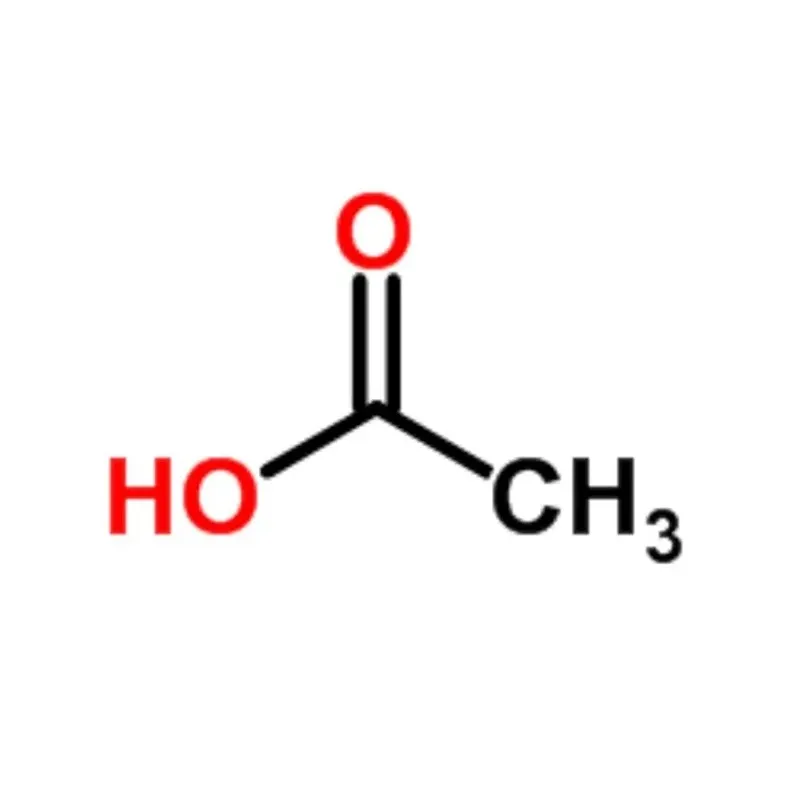
Acetic acid, chemically named ethanoic acid and commonly abbreviated as AcOH, is a ubiquitous aliphatic carboxylic acid. It gains its prevalent name owing to its major composition in table vinegar, and it is universally recognized as one of the most essential aliphatic fatty acids. With a simple molecular structure consisting of one methyl group and one carboxyl group, it possesses the molecular formula CH₃COOH. In the natural environment, this organic acid widely exists in a variety of plants, existing in two forms: free monomers or combined organic esters. Human beings have a long history of utilizing acetic acid-related products; vinegar production and application can be traced back to thousands of years ago, and relevant vinegar-brewing records were documented in ancient China. Nevertheless, purified concentrated acetic acid was not separated successfully until 1700, accomplished by the chemist Stahl.
In terms of physical characteristics, high-purity acetic acid is a transparent colorless liquid with pungent and irritating odor. Its fundamental physical parameters include a melting point of 16.6°C, a boiling point of 117.9°C, and a relative density of 1.049 under 20°C reference temperature. It features good universal solubility, miscible with water, ethanol, glycerol, diethyl ether and carbon tetrachloride, whereas it cannot dissolve in carbon disulfide. Anhydrous acetic acid is prone to condense into ice-shaped crystalline solids under low-temperature conditions, which contributes to its well-known alias: glacial acetic acid. Chemically, it is classified as a weak organic acid with moderate corrosivity, owning typical carboxylic acid acidity properties. Most importantly, it can trigger classic esterification reactions when reacting with diverse alcohols.
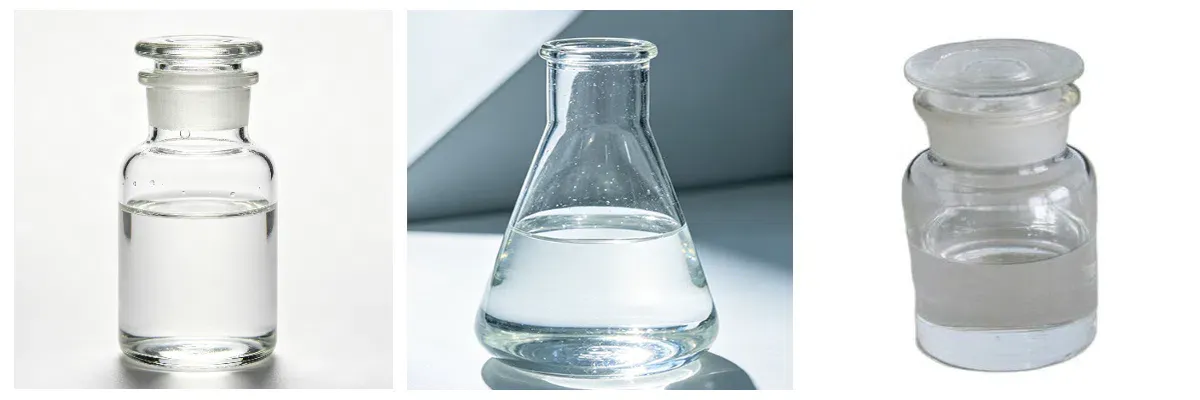
Acetic acid Chemical Properties
| Melting point | 16.2 °C(lit.) |
| Boiling point | 117-118 °C(lit.) |
| density | 1.049 g/mL at 25 °C(lit.) |
| vapor density | 2.07 (vs air) |
| vapor pressure | 11.4 mm Hg ( 20 °C) |
| refractive index | n20/D 1.371(lit.) |
| FEMA | 2006 | ACETIC ACID |
| Fp | 104 °F |
| storage temp. | Store below +30°C. |
| solubility | alcohol: miscible(lit.) |
| form | Solution |
| pka | 4.74(at 25℃) |
| Specific Gravity | 1.0492 (20℃) |
| color | colorless |
| Odor | Strong, pungent, vinegar-like odor detectable at 0.2 to 1.0 ppm |
| PH | 3.91(1 mM solution);3.39(10 mM solution);2.88(100 mM solution); |
| PH Range | 2.4 (1.0M solution) |
| Odor Threshold | 0.006ppm |
| Odor Type | acidic |
| explosive limit | 4-19.9%(V) |
| Water Solubility | miscible |
| λmax | λ: 260 nm Amax: 0.05 λ: 270 nm Amax: 0.02 λ: 300 nm Amax: 0.01 λ: 500 nm Amax: 0.01 |
| Merck | 14,55 |
| JECFA Number | 81 |
| BRN | 506007 |
| Henry's Law Constant | 133, 122, 6.88, and 1.27 at pH values of 2.13, 3.52, 5.68, and 7.14, respectively (25 °C, Hakuta et al., 1977) |
| Dielectric constant | 4.1(2℃) |
| Exposure limits | TLV-TWA 10 ppm ~25 mg/m3) (ACGIH, OSHA, and MSHA); TLV-STEL 15 ppm (37.5 mg/m3) (ACGIH). |
| Stability: | Volatile |
| LogP | -0.170 |
| CAS DataBase Reference | 64-19-7(CAS DataBase Reference) |
| NIST Chemistry Reference | Acetic acid(64-19-7) |
| EPA Substance Registry System | Acetic acid (64-19-7) |
Safety Information
| Hazard Codes | C,Xi |
| Risk Statements | 34-42-35-10-36/38 |
| Safety Statements | 26-36/37/39-45-23-24/25 |
| RIDADR | UN 1792 8/PG 2 |
| WGK Germany | 3 |
| RTECS | NN1650000 |
| F | 1-8-10 |
| Autoignition Temperature | 426 °C |
| TSCA | Yes |
| HazardClass | 8 |
| PackingGroup | II |
| HS Code | 29152100 |
| Hazardous Substances Data | 64-19-7(Hazardous Substances Data) |
| Toxicity | LD50 in rats (g/kg): 3.53 orally (Smyth) |
| IDLA | 50 ppm |
Applications of Acetic Acid
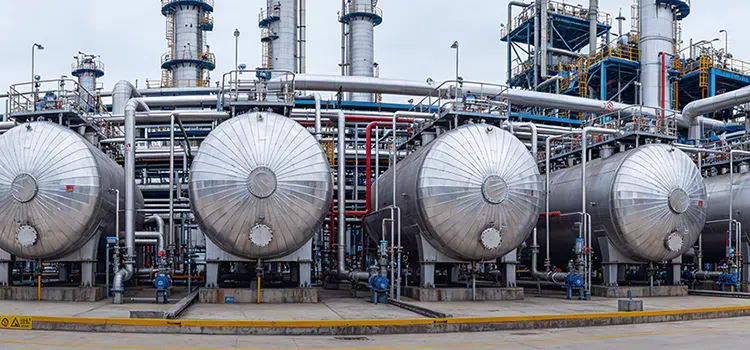
As a vital bulk chemical raw material, acetic acid is widely applied in multiple industries. In chemical production, it synthesizes vinyl acetate monomer, acetic anhydride and acetate solvents for adhesives, coatings, inks and synthetic fibers. It works as an acid catalyst and solvent to manufacture pharmaceutical intermediates and medicines. Food-grade acetic acid forms edible vinegar, and serves as an acidulant, preservative and flavor agent in pickles, canned goods and beverages. In textile finishing, it adjusts pH and helps dye fixation. Additionally, it removes limescale, aids leather making and water treatment, and acts as a standard titration reagent in chemical labs.
![N-[3-(Trimethoxysilyl)propyl]ethylenediamine CAS#1760-24-3](https://tianjinxinming.cdn.aihuazhi.cn/54/73/3_af4f8a3c0b.webp)