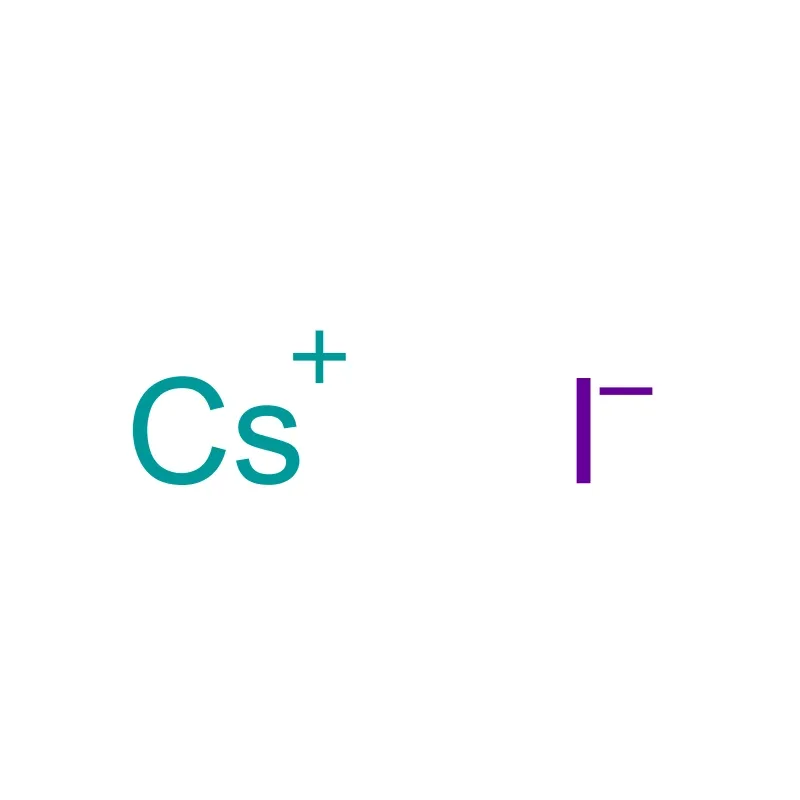
Product Description: Cesium Iodide, CAS No. 7789-17-5
Cesium iodide (CsI), together with its thallium-doped derivative CsI(Tl) and other inorganic halide scintillants, serves as a core scintillation medium for equipment built to track high-energy particles and monitor ionizing radiation. Manufactured via vacuum deposition, CsI(Tl) thin films were first developed as premium photoelectric conversion layers and quickly became a foundational material for X-ray imaging technology.
When deployed in state-of-the-art digital X-ray imaging equipment, CsI(Tl) scintillator thin films remain the preferred choice thanks to three standout core strengths. They deliver exceptional X-ray light conversion efficiency for stable, high-signal output, produce crisp imaging with superior spatial resolution to capture tiny structural details, and feature ideal spectral alignment with silicon sensor readout panels. This seamless matching with silicon detection chips minimizes light signal loss, enabling broad, reliable integration into all mainstream modern digital X-ray imaging systems.
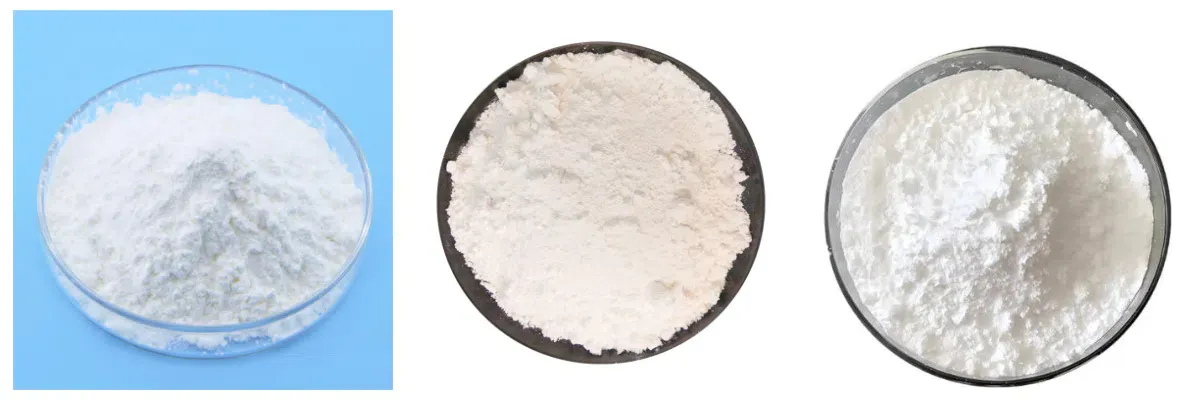
Melting point | 626 °C (lit.) |
Boiling point | 1280 °C |
density | 4.51 g/mL at 25 °C (lit.) |
refractive index | 1.7876 |
Fp | 1280°C |
storage temp. | Keep in dark place,Inert atmosphere,Room temperature |
solubility | soluble in ethanol, methanol, acetone |
form | beads |
Specific Gravity | 4.51 |
color | White |
PH | pH(50g/l, 25℃) : 5.0~9.0 |
Water Solubility | 74 g/100 mL (20 ºC) |
Sensitive | Hygroscopic |
Merck | 142014 |
Exposure limits | ACGIH: TWA 0.01 ppm |
Dielectric constant | 5.6(Ambient) |
Stability: | Stable. Deliquescent. |
CAS DataBase Reference | 7789-17-5(CAS DataBase Reference) |
NIST Chemistry Reference | Cesium iodide(7789-17-5) |
EPA Substance Registry System | Cesium iodide (CsI) (7789-17-5) |
Hazard Codes | Xn,Xi |
Risk Statements | 36/37/38-42/43-43 |
Safety Statements | 22-36/37-45 |
RIDADR | UN 3077 9 / PGIII |
WGK Germany | 2 |
RTECS | FL0350000 |
F | 8 |
TSCA | Yes |
HS Code | 28276000 |
Toxicity | LD50 i.p. in rats: 1.4 g/kg (Cochran) |
Cesium iodide crystals are vital scintillation materials adopted in electromagnetic calorimeters for particle physics experiments, and they are also popular optical spectroscopic elements for Fourier transform infrared (FT-IR) spectrometers.
In contrast to conventional potassium bromide spectroscopy crystals, cesium iodide possesses a broader optical transmission spectrum, which covers an extended far-infrared wavelength band. Nevertheless, the material is soft and free of natural cleavage planes, bringing certain difficulties to the processing of ultra-flat, high-gloss polished surfaces.
Cesium iodide optical crystals must be preserved under dry conditions to avoid chemical deterioration caused by moisture absorption. A germanium coating deposited on the crystal surface can greatly mitigate moisture interference when installing and replacing components in spectrometers.
previous : Formaldehyde CAS#50-00-0
next : N,N-Dimethyl-N-dodecyl-N-(2-hydroxy-3-sulfopropyl)ammonium betaine CAS#13197-76-7